Division of Endocrinology, Diabetes, Metabolism and Nutrition, Departments of Medicine and Biochemistry and Molecular Biology, Mayo Clinic, 200 First Street SW, Rochester, MN, 55905, USA.
University of Iowa, Iowa City, IA, USA.
Geroscience. 2023 Aug;45(4):2525-2543. doi: 10.1007/s11357-023-00772-y. Epub 2023 Apr 4.
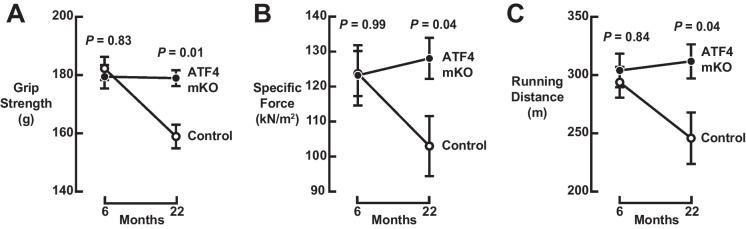
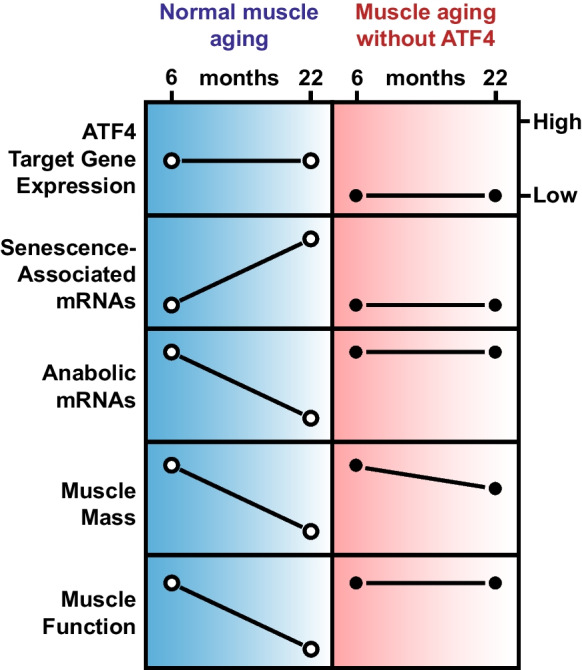
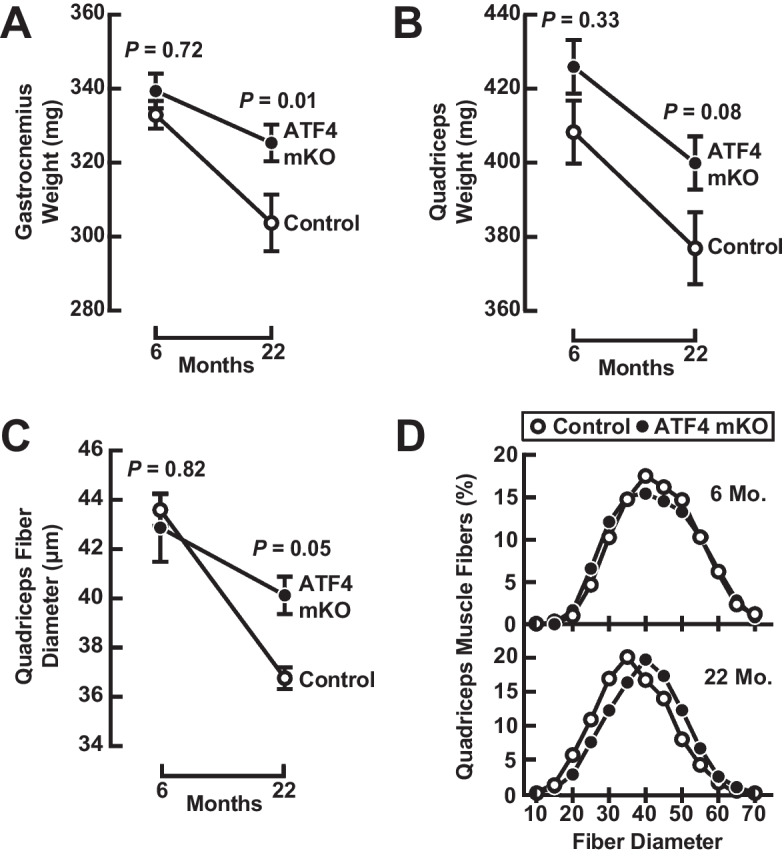
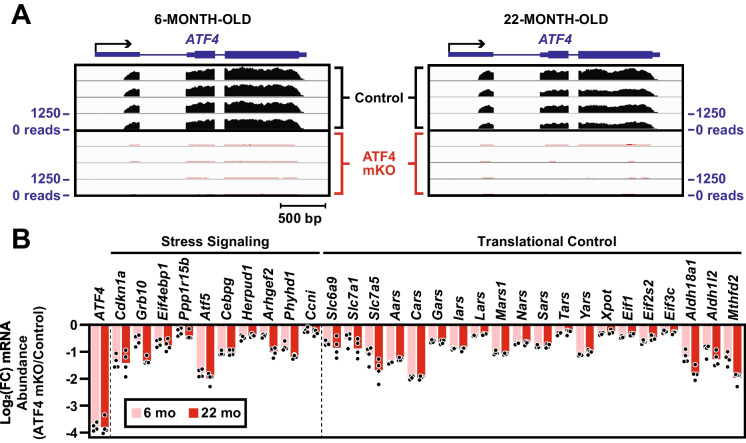
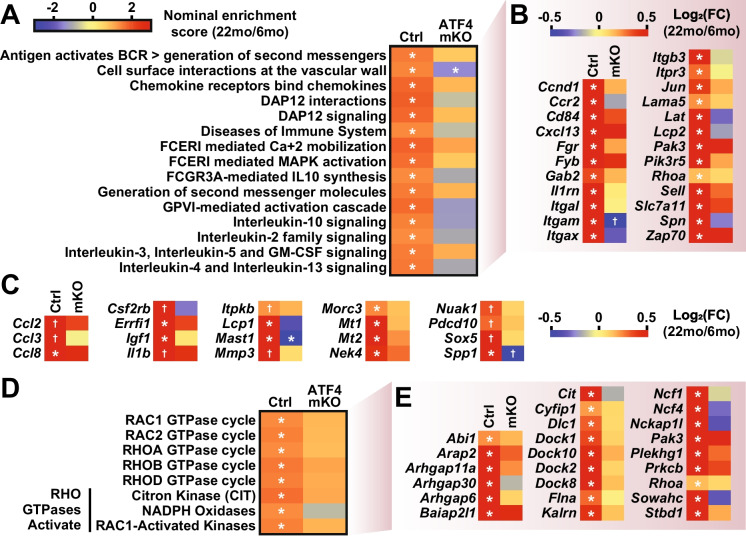
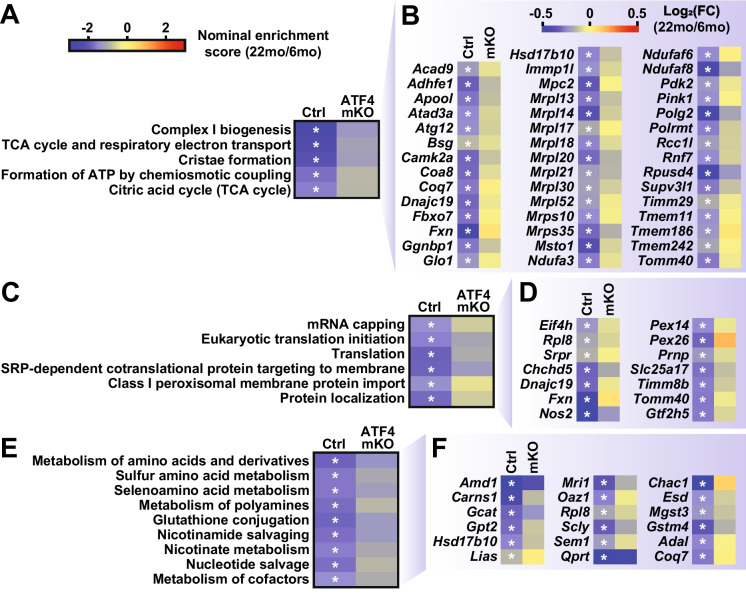
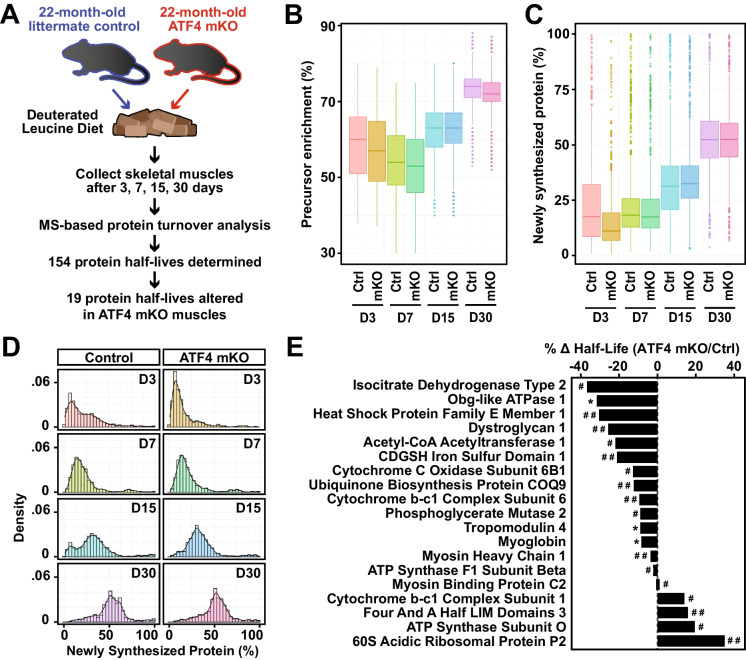
Aging slowly erodes skeletal muscle strength and mass, eventually leading to profound functional deficits and muscle atrophy. The molecular mechanisms of skeletal muscle aging are not well understood. To better understand mechanisms of muscle aging, we investigated the potential role of ATF4, a transcription regulatory protein that can rapidly promote skeletal muscle atrophy in young animals deprived of adequate nutrition or activity. To test the hypothesis that ATF4 may be involved in skeletal muscle aging, we studied fed and active muscle-specific ATF4 knockout mice (ATF4 mKO mice) at 6 months of age, when wild-type mice have achieved peak muscle mass and function, and at 22 months of age, when wild-type mice have begun to manifest age-related muscle atrophy and weakness. We found that 6-month-old ATF4 mKO mice develop normally and are phenotypically indistinguishable from 6-month-old littermate control mice. However, as ATF4 mKO mice become older, they exhibit significant protection from age-related declines in strength, muscle quality, exercise capacity, and muscle mass. Furthermore, ATF4 mKO muscles are protected from some of the transcriptional changes characteristic of normal muscle aging (repression of certain anabolic mRNAs and induction of certain senescence-associated mRNAs), and ATF4 mKO muscles exhibit altered turnover of several proteins with important roles in skeletal muscle structure and metabolism. Collectively, these data suggest ATF4 as an essential mediator of skeletal muscle aging and provide new insight into a degenerative process that impairs the health and quality of life of many older adults.
衰老缓慢地侵蚀着骨骼肌的力量和质量,最终导致严重的功能缺陷和肌肉萎缩。骨骼肌衰老的分子机制尚不清楚。为了更好地了解肌肉衰老的机制,我们研究了 ATF4 的潜在作用,ATF4 是一种转录调节蛋白,可在营养或活动不足的年轻动物中迅速促进骨骼肌萎缩。为了测试 ATF4 可能参与骨骼肌衰老的假设,我们研究了在 6 个月大时具有正常饮食和活动的肌肉特异性 ATF4 敲除小鼠(ATF4 mKO 小鼠),此时野生型小鼠已经达到了肌肉质量和功能的峰值,以及在 22 个月大时,野生型小鼠已经开始表现出与年龄相关的肌肉萎缩和虚弱。我们发现,6 个月大的 ATF4 mKO 小鼠正常发育,表型与 6 个月大的同窝对照小鼠无法区分。然而,随着 ATF4 mKO 小鼠年龄的增长,它们表现出对与年龄相关的力量、肌肉质量、运动能力和肌肉质量下降的显著保护作用。此外,ATF4 mKO 肌肉免受一些与正常肌肉衰老特征性的转录变化的保护(某些合成代谢 mRNA 的抑制和某些衰老相关 mRNA 的诱导),并且 ATF4 mKO 肌肉中几种具有重要作用的蛋白质的周转率发生改变骨骼肌结构和代谢。总的来说,这些数据表明 ATF4 是骨骼肌衰老的必需介质,并为损害许多老年人健康和生活质量的退行性过程提供了新的见解。