Tschentscher Nadja, Sauseng Paul
Research Unit Biological Psychology, Department of Psychology, Ludwig Maximilian University Munich, Munich, Germany.
Research Unit Clinical Psychology, Department of Psychiatry and Psychotherapy, Ludwig Maximilian University Munich, Munich, Germany.
Front Hum Neurosci. 2022 Mar 3;16:820780. doi: 10.3389/fnhum.2022.820780. eCollection 2022.
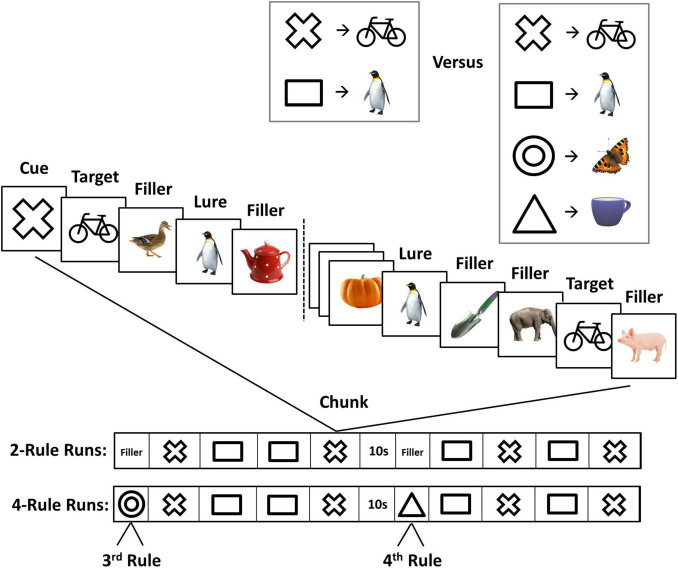
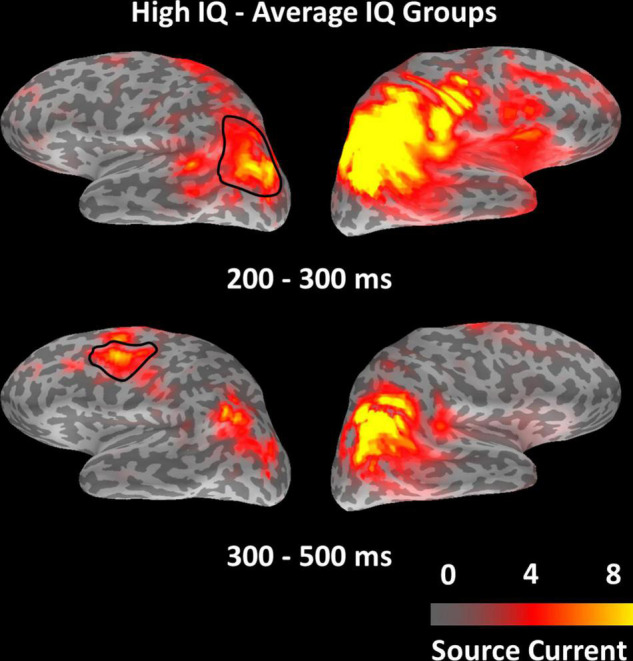
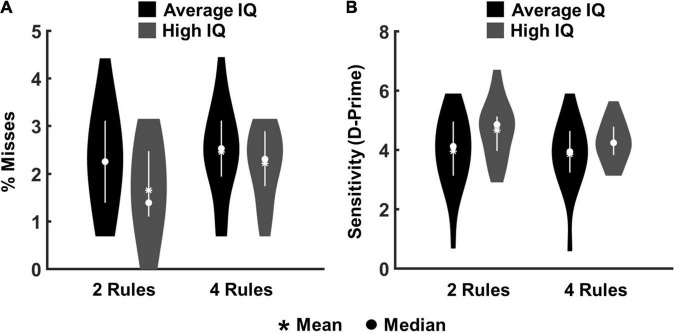
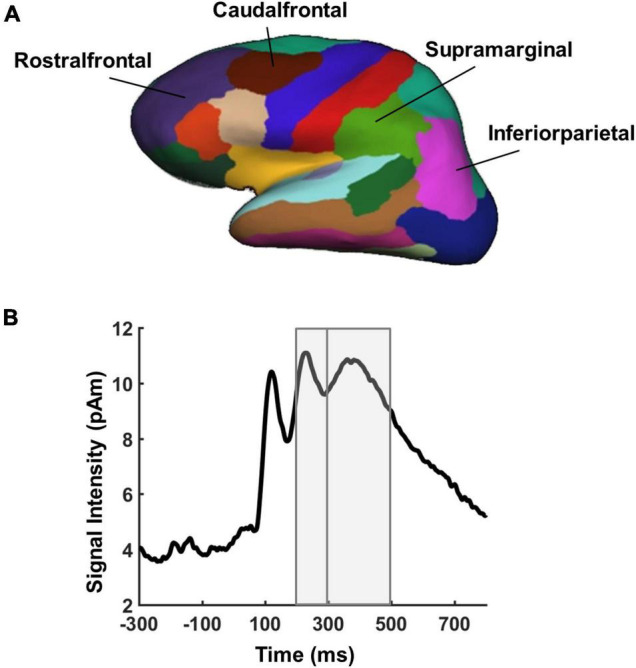
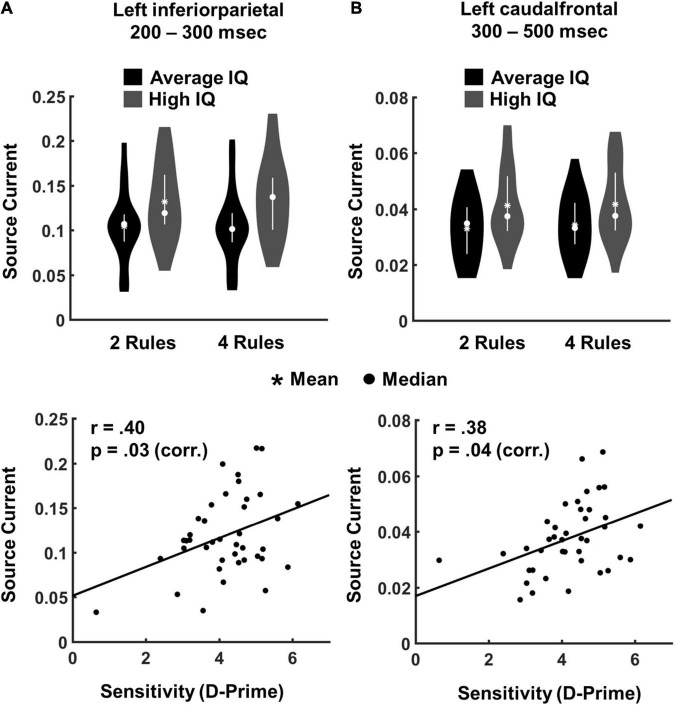
Human fluid intelligence is closely linked to the sequential solving of complex problems. It has been associated with a distributed cognitive control or multiple-demand (MD) network, comprising regions of lateral frontal, insular, dorsomedial frontal, and parietal cortex. Previous neuroimaging research suggests that the MD network may orchestrate the allocation of attentional resources to individual parts of a complex task: in a complex target detection task with multiple independent rules, applied one at a time, reduced response to rule-critical events across the MD network in lower fluid intelligence was observed. This was in particular the case with increasing task complexity (i.e., larger sets of rules), and was accompanied by impairment in performance. Here, we examined the early spatiotemporal neural dynamics of this process in electroencephalography (EEG) source analyses using a similar task paradigm. Levels of fluid intelligence specifically predicted early neural responses in a left inferiorparietal MD region around 200-300 ms post stimulus onset. Evoked source amplitudes in left parietal cortex within this early time window also correlated with behavioural performance measures. Like in previous research, we observed impaired performance in lower fluid intelligence with increasing number of task rules. This links fluid intelligence to a process of attentional focus on those parts of a task that are most critical for the current behaviour. Within the MD system, our time re-resolved measures suggest that the left parietal cortex specifically impacts on early processes of attentional focus on task critical features. This is novel evidence on the neurocognitive correlates of fluid intelligence suggesting that individual differences are critically linked to an early process of attentional focus on task-relevant information, which is supported by left parietal MD regions.
人类的流体智力与复杂问题的顺序解决密切相关。它与一个分布式认知控制或多需求(MD)网络有关,该网络包括外侧额叶、岛叶、背内侧额叶和顶叶皮质区域。先前的神经影像学研究表明,MD网络可能会协调将注意力资源分配到复杂任务的各个部分:在一个具有多个独立规则、每次应用一个规则的复杂目标检测任务中,观察到流体智力较低的个体在整个MD网络中对规则关键事件的反应减少。随着任务复杂性的增加(即规则集更大),情况尤其如此,同时伴有表现受损。在这里,我们使用类似的任务范式,通过脑电图(EEG)源分析研究了这一过程的早期时空神经动力学。流体智力水平特别预测了刺激开始后约200 - 300毫秒时左下顶叶MD区域的早期神经反应。在这个早期时间窗口内,左顶叶皮质的诱发源振幅也与行为表现指标相关。与先前的研究一样,我们观察到随着任务规则数量的增加,流体智力较低的个体表现受损。这将流体智力与对任务中当前行为最关键部分的注意力聚焦过程联系起来。在MD系统中,我们的时间分辨测量表明,左顶叶皮质特别影响对任务关键特征的注意力聚焦的早期过程。这是关于流体智力神经认知相关性的新证据,表明个体差异与对任务相关信息的注意力聚焦早期过程密切相关,这一过程得到左顶叶MD区域的支持。