Ma Kai, Zheng Yanyan, An Lizhe, Liu Jiyang
Urology and Lithotripsy Center, Peking University People's Hospital, Beijing, China.
Peking University Applied Lithotripsy Institute, Peking University, Beijing, China.
Front Chem. 2022 Mar 3;10:851178. doi: 10.3389/fchem.2022.851178. eCollection 2022.
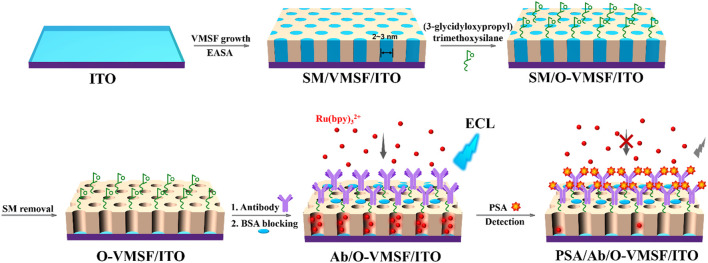
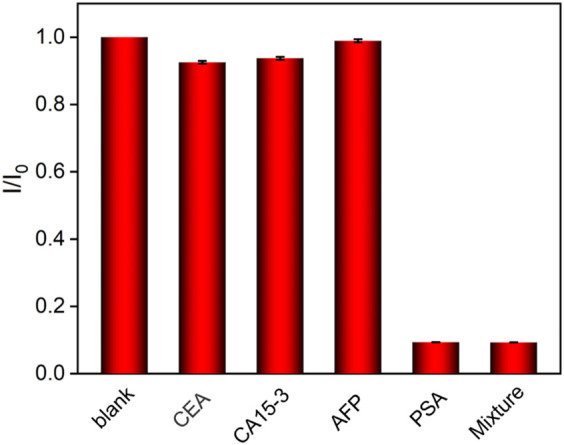
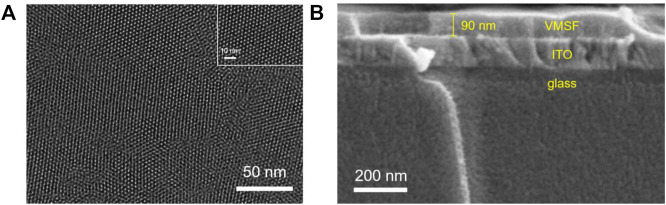
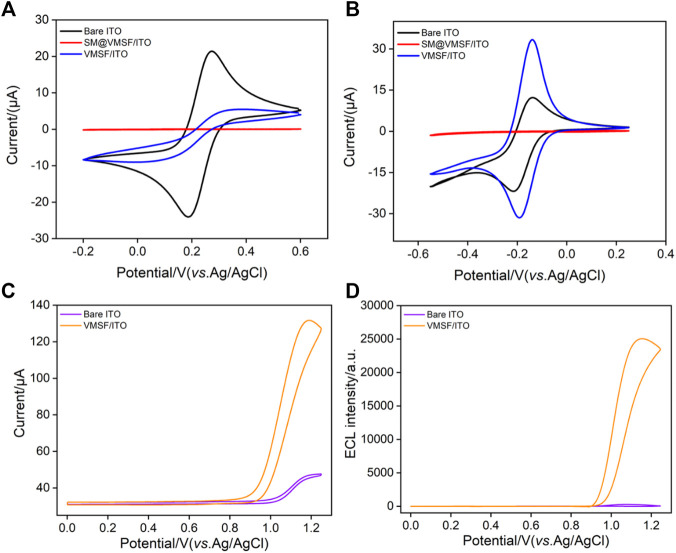
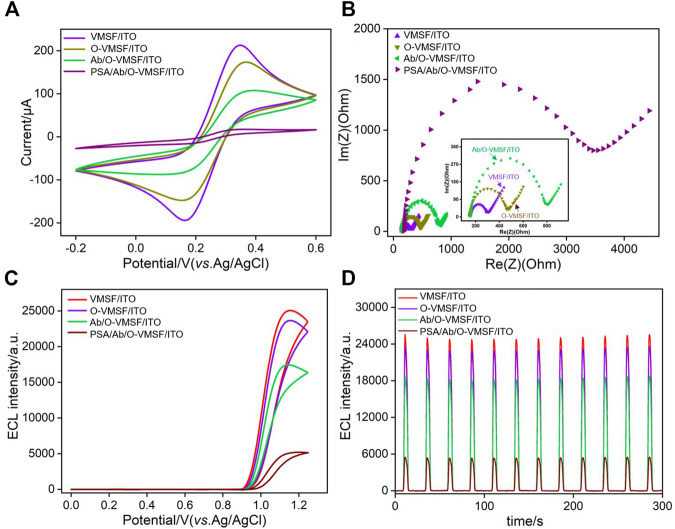
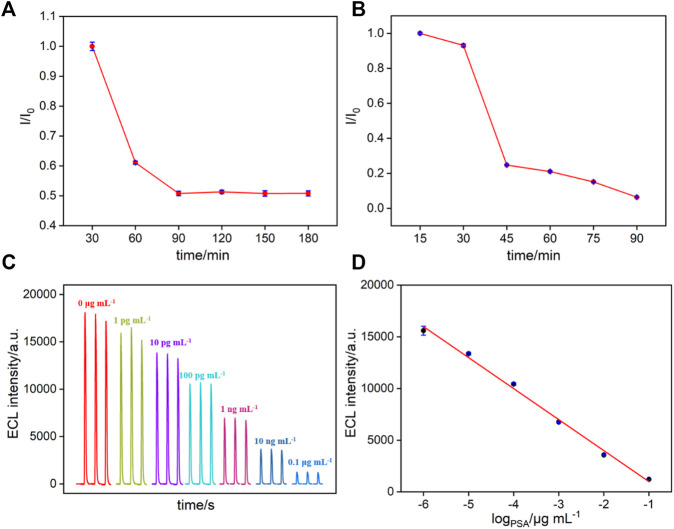
Ultrasensitive and specific detection of prostate-specific antigen (PSA) in complex biological samples is crucial for early diagnosis and treatment of prostate-related diseases. Immunoassay with a simple sensing interface and ultrahigh sensitivity is highly desirable. Herein, a novel electroluminescence (ECL) immunosensing platform is demonstrated based on the equipment of vertically ordered mesoporous silica-nanochannel films (VMSFs) with PSA antibody, which is able to realize ultrasensitive detection of PSA in human serum. Through the electrochemically assisted self-assembly (EASA) method, the VMSF is easily grown on an indium tin oxide (ITO) electrode in a few seconds. Owing to a large surface area and the negatively charged surface, VMSF nanochannels display strong electrostatic attraction to the positively charged ECL luminophores (tris(2,2-bipyridyl) dichlororuthenium (II), (Ru(bpy) ), leading to two orders-of-magnitude enhancement of ECL emission compared with that of the bare ITO electrode. The outer surface of the VMSF is functionalized with reactive epoxy groups, which further allows covalent attachment of PSA antibody (Ab) on the entry of nanochannels. As the combination of PSA with Ab decreases the ECL signal by hindering the mass transfer of ECL luminophores and coreactant, the developed immunosensor can achieve ultrasensitive detection of PSA ranging from 1 pg ml to 100 ng ml with a limit of detection (LOD) of 0.1 pg ml. Considering the antifouling ability of the VMSF, sensitive detection of PSA in human serum is also realized. The proposed nanochannel-based immunosensor may open up a new way for the facile development of the universal immunosensing platform for rapid and ultrasensitive detection of disease markers.
在复杂生物样本中对前列腺特异性抗原(PSA)进行超灵敏且特异的检测对于前列腺相关疾病的早期诊断和治疗至关重要。具有简单传感界面和超高灵敏度的免疫测定法是非常理想的。在此,基于配备有PSA抗体的垂直有序介孔二氧化硅纳米通道膜(VMSF)展示了一种新型的电化学发光(ECL)免疫传感平台,其能够实现对人血清中PSA的超灵敏检测。通过电化学辅助自组装(EASA)方法,VMSF能在几秒钟内轻松生长在氧化铟锡(ITO)电极上。由于具有大表面积和带负电的表面,VMSF纳米通道对带正电的ECL发光体(二氯三(2,2 - 联吡啶)钌(II),(Ru(bpy) )显示出强烈的静电吸引力,与裸ITO电极相比,导致ECL发射增强两个数量级。VMSF的外表面用反应性环氧基团进行功能化,这进一步允许PSA抗体(Ab)共价连接到纳米通道的入口处。由于PSA与Ab的结合通过阻碍ECL发光体和共反应剂的传质而降低ECL信号,所开发的免疫传感器能够实现对PSA的超灵敏检测,检测范围为1 pg/ml至100 ng/ml,检测限(LOD)为0.1 pg/ml。考虑到VMSF的抗污染能力,也实现了对人血清中PSA的灵敏检测。所提出的基于纳米通道的免疫传感器可能为快速、超灵敏检测疾病标志物的通用免疫传感平台的简便开发开辟一条新途径。