Wen Didi, An Rui, Lin Shushen, Yang Wangwei, Jia Yuyang, Zheng Minwen
Department of Radiology, Xijing Hospital, Fourth Military Medical University, Xi'an, China.
Siemens Healthineers Ltd., Shanghai, China.
Front Cardiovasc Med. 2022 Mar 3;9:773524. doi: 10.3389/fcvm.2022.773524. eCollection 2022.
To investigate the influence of different segmentations on the diagnostic performance of pericoronary adipose tissue (PCAT) CT attenuation and radiomics features for the prediction of ischemic coronary artery stenosis.
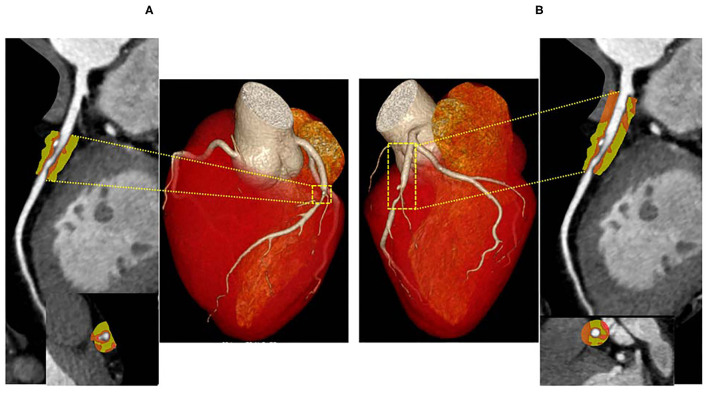
From June 2016 to December 2018, 108 patients with 135 vessels were retrospectively analyzed in the present study. Vessel-based PCAT was segmented along the 40 mm-long proximal segments of three major epicardial coronary arteries, while lesion-based PCAT was defined around coronary lesions. CT attenuation and radiomics features derived from two segmentations were calculated and extracted. The diagnostic performance of PCAT CT attenuation or radiomics models in predicting ischemic coronary stenosis were also compared between vessel-based and lesion-based segmentations.
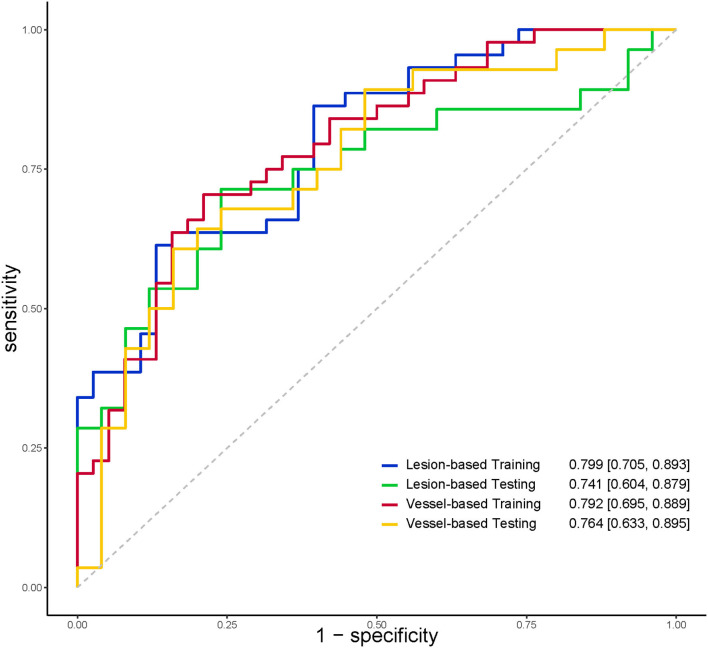
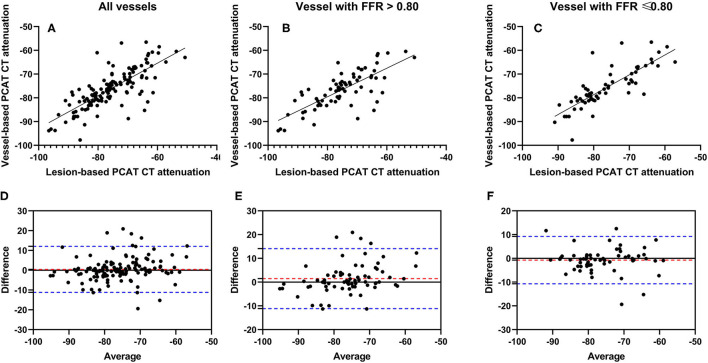
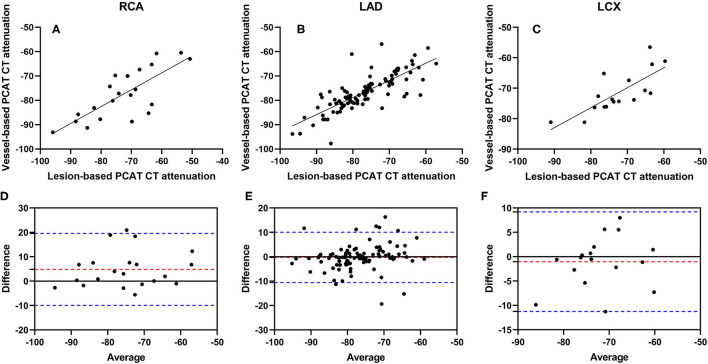
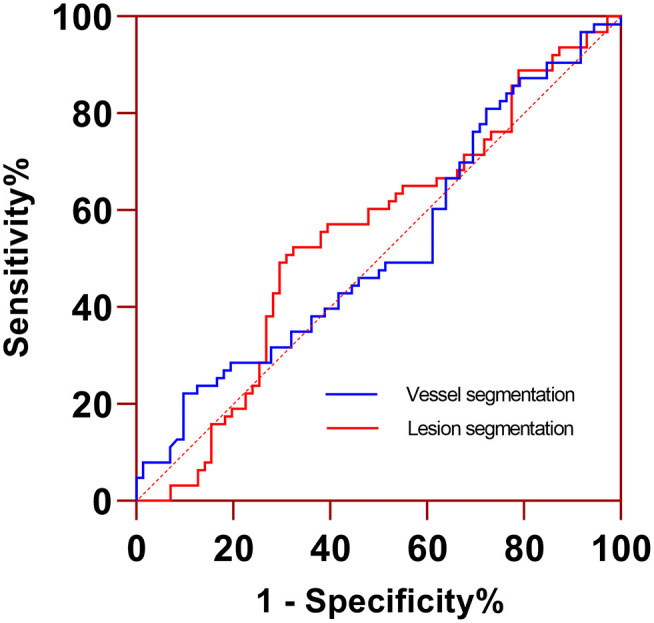
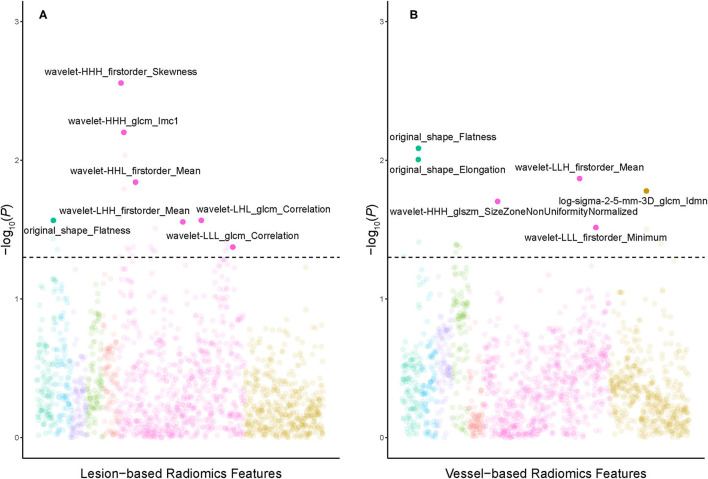
The mean PCAT CT attenuation was -75.7 ± 9.1 HU and -76.1 ± 8.1 HU ( = 0.395) for lesion-based and vessel-based segmentations, respectively. A strong correlation was found between vessel-based and lesion-based PCAT CT attenuation for all cohort and subgroup analyses (all < 0.01). A good agreement for all cohort and subgroup analyses was also detected between two segmentations. The diagnostic performance was comparable between vessel-based and lesion based PCAT CT attenuation in predicting ischemic stenosis. The radiomics features of PCAT based on vessel or lesion segmentation can both adequately identify the ischemic stenosis. However, no significant difference was detected between the two segmentations.
The quantitative evaluation of PCAT can be reliably measured both from vessel-based and lesion-based segmentation. Furthermore, the radiomics analysis of PCAT may potentially help predict hemodynamically significant coronary artery stenosis.
探讨不同分割方法对冠状动脉周围脂肪组织(PCAT)CT衰减及影像组学特征在预测缺血性冠状动脉狭窄诊断性能方面的影响。
本研究回顾性分析了2016年6月至2018年12月期间108例患者的135条血管。基于血管的PCAT沿着三条主要心外膜冠状动脉40毫米长的近端节段进行分割,而基于病变的PCAT则定义在冠状动脉病变周围。计算并提取了两种分割方法得出的CT衰减及影像组学特征。还比较了基于血管和基于病变的分割方法在PCAT CT衰减或影像组学模型预测缺血性冠状动脉狭窄方面的诊断性能。
基于病变和基于血管的分割方法的平均PCAT CT衰减分别为-75.7±9.1 HU和-76.1±8.1 HU(P = 0.395)。在所有队列和亚组分析中,基于血管和基于病变的PCAT CT衰减之间均发现有很强的相关性(所有P<0.01)。两种分割方法在所有队列和亚组分析中也显示出良好的一致性。在预测缺血性狭窄方面,基于血管和基于病变的PCAT CT衰减的诊断性能相当。基于血管或病变分割的PCAT影像组学特征均能充分识别缺血性狭窄。然而,两种分割方法之间未检测到显著差异。
PCAT的定量评估可通过基于血管和基于病变的分割方法可靠地进行测量。此外,PCAT的影像组学分析可能有助于预测具有血流动力学意义的冠状动脉狭窄。