Department of Physics, LMU Munich, 80799 Munich, Germany.
Center for NanoScience, LMU Munich, 80799 Munich, Germany.
Proc Natl Acad Sci U S A. 2022 Apr 5;119(14):e2114397119. doi: 10.1073/pnas.2114397119. Epub 2022 Mar 21.
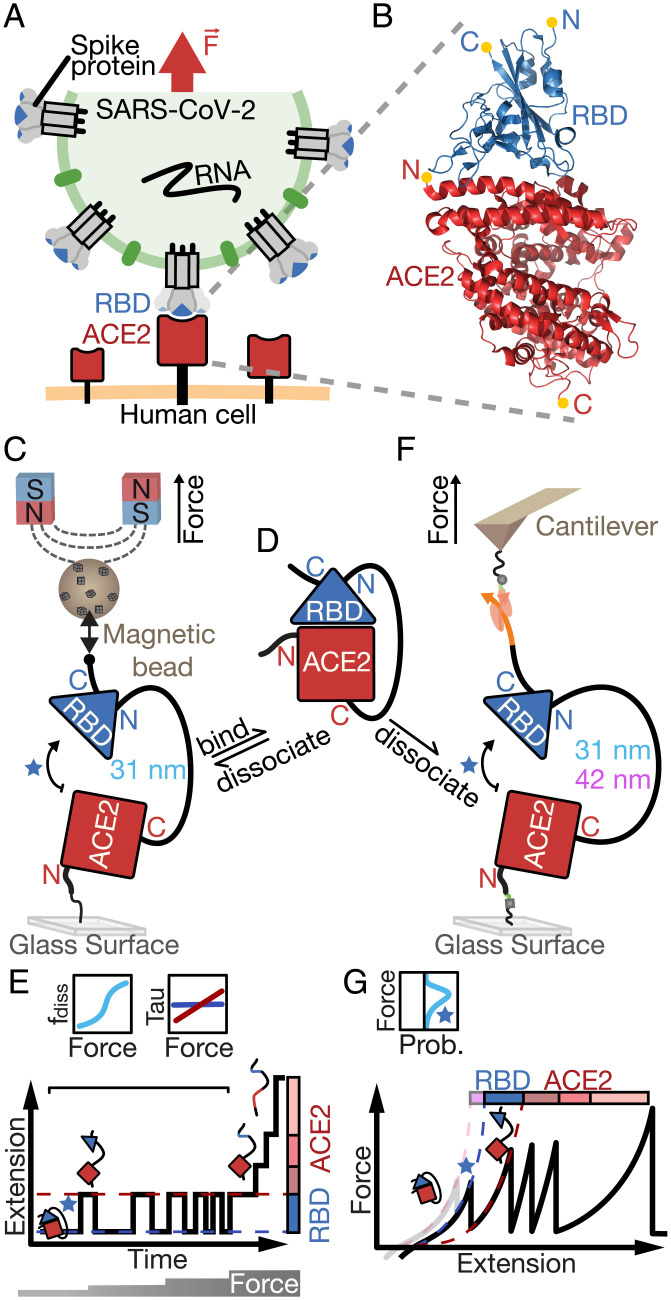
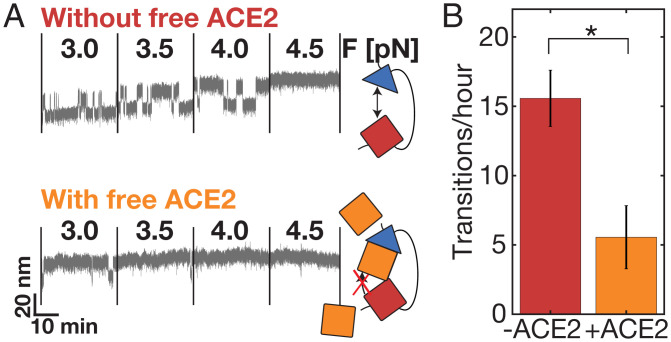
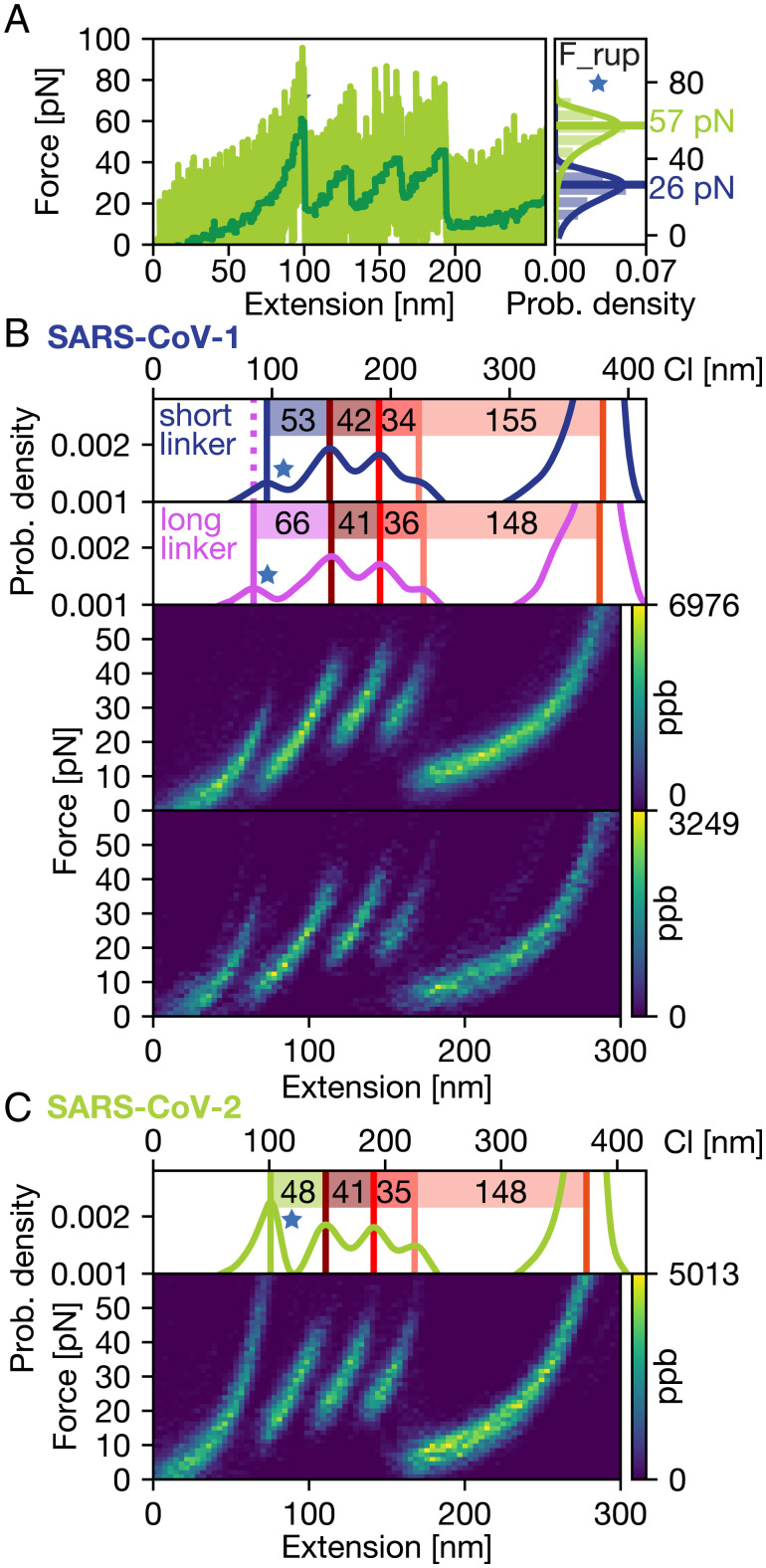
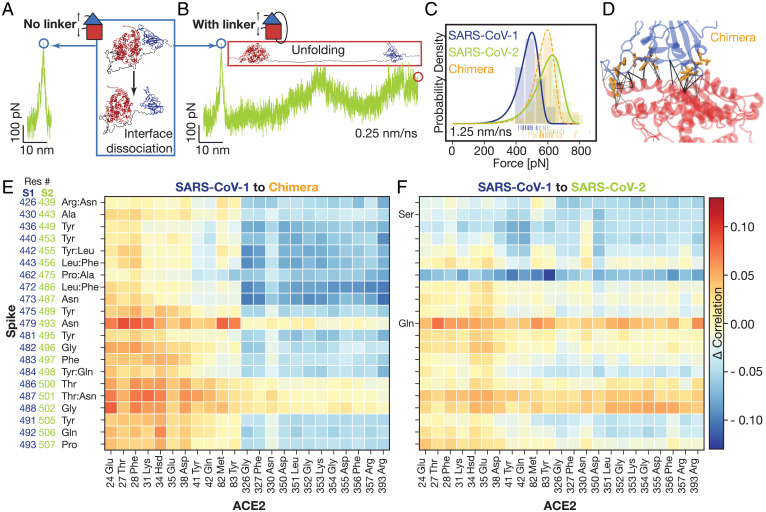
SignificanceIn the dynamic environment of the airways, where SARS-CoV-2 infections are initiated by binding to human host receptor ACE2, mechanical stability of the viral attachment is a crucial fitness advantage. Using single-molecule force spectroscopy techniques, we mimic the effect of coughing and sneezing, thereby testing the force stability of SARS-CoV-2 RBD:ACE2 interaction under physiological conditions. Our results reveal a higher force stability of SARS-CoV-2 binding to ACE2 compared to SARS-CoV-1, causing a possible fitness advantage. Our assay is sensitive to blocking agents preventing RBD:ACE2 bond formation. It will thus provide a powerful approach to investigate the modes of action of neutralizing antibodies and other agents designed to block RBD binding to ACE2 that are currently developed as potential COVID-19 therapeutics.
意义在呼吸道的动态环境中,SARS-CoV-2 通过与人类宿主受体 ACE2 结合而引发感染,病毒附着的机械稳定性是一个至关重要的适应优势。我们使用单分子力谱技术模拟咳嗽和打喷嚏的效果,从而在生理条件下测试 SARS-CoV-2 RBD:ACE2 相互作用的力稳定性。我们的结果表明,SARS-CoV-2 与 ACE2 的结合比 SARS-CoV-1 具有更高的力稳定性,这可能导致其具有更高的适应性。我们的测定方法对阻止 RBD:ACE2 键形成的阻断剂敏感。因此,它将为研究中和抗体和其他设计用于阻止 RBD 与 ACE2 结合的药物的作用模式提供一种强大的方法,这些药物目前被开发为潜在的 COVID-19 治疗药物。