Department of Microbial Pathogenesis, Yale University School of Medicine, New Haven, CT, USA.
Department of Microbial Pathogenesis, Yale University School of Medicine, New Haven, CT, USA.
Cell Host Microbe. 2020 Dec 9;28(6):880-891.e8. doi: 10.1016/j.chom.2020.11.001. Epub 2020 Nov 13.
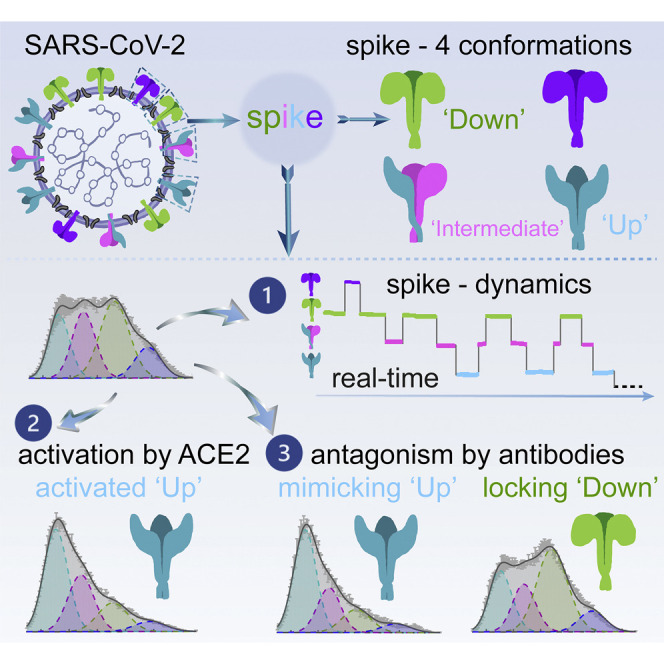
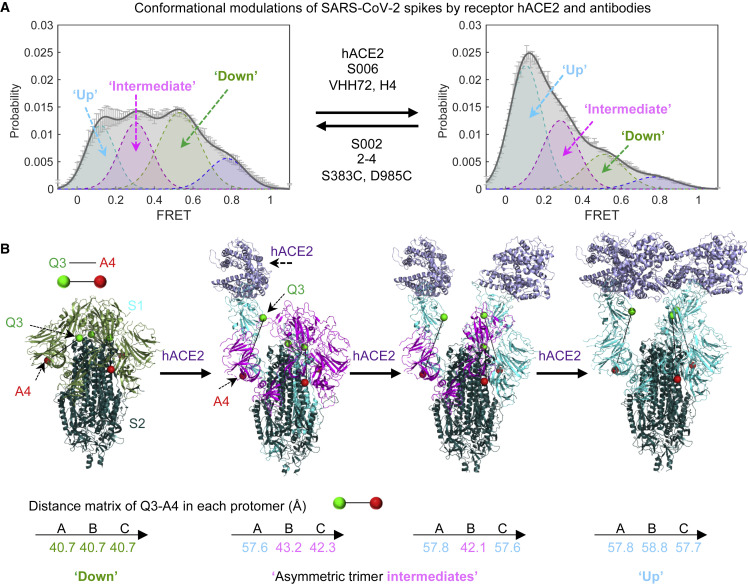
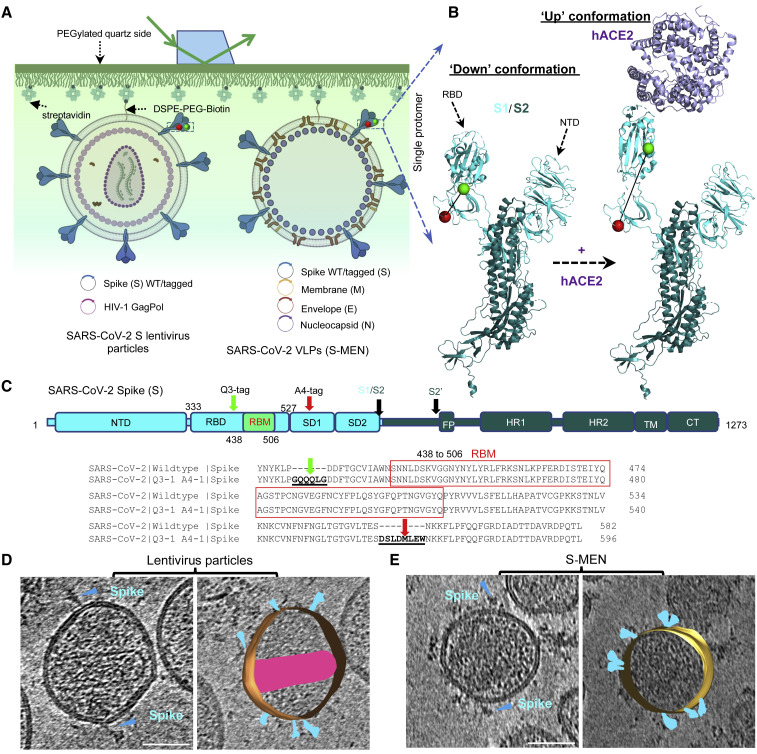
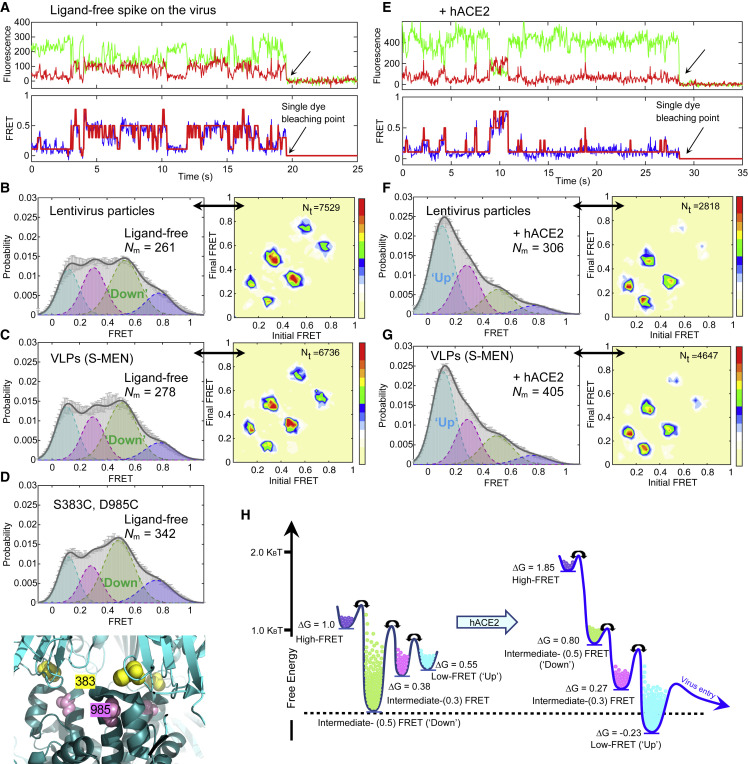
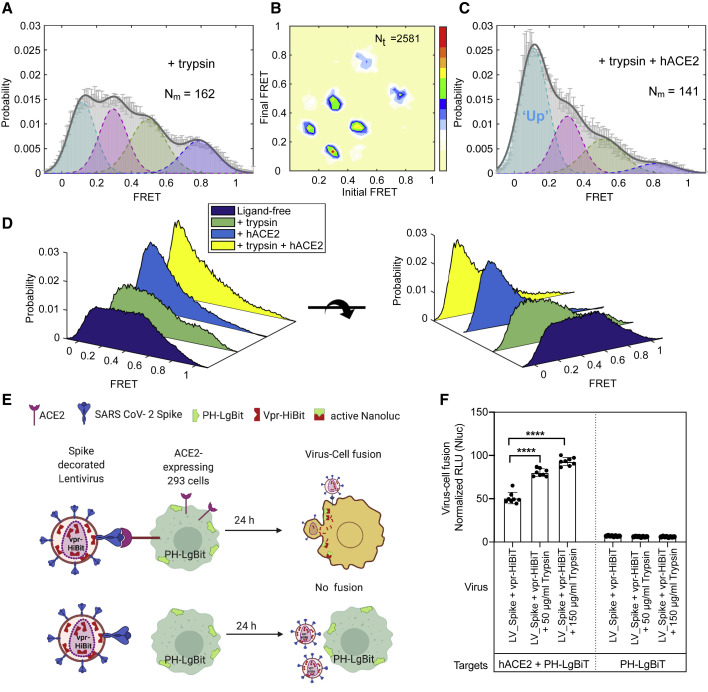
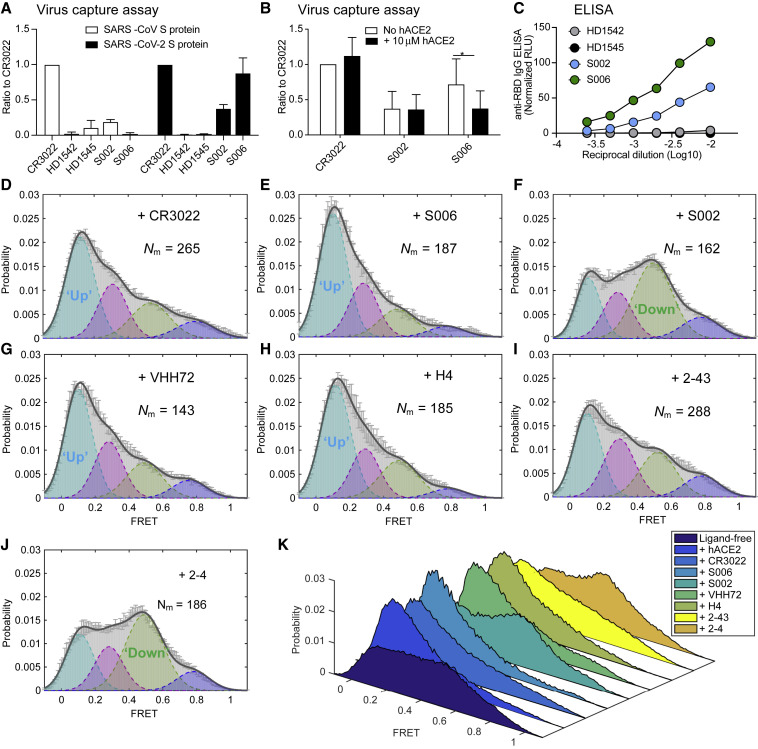
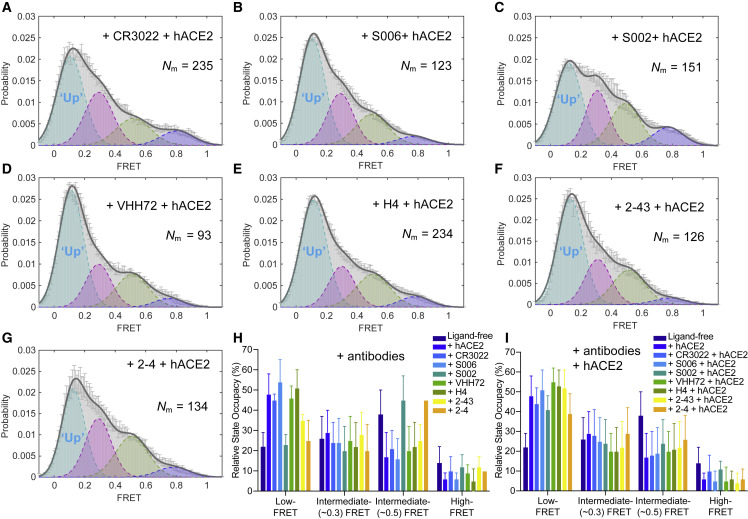
The severe acute respiratory syndrome coronavirus 2 (SARS-CoV-2) spike (S) mediates viral entry into cells and is critical for vaccine development against coronavirus disease 2019 (COVID-19). Structural studies have revealed distinct conformations of S, but real-time information that connects these structures is lacking. Here we apply single-molecule fluorescence (Förster) resonance energy transfer (smFRET) imaging to observe conformational dynamics of S on virus particles. Virus-associated S dynamically samples at least four distinct conformational states. In response to human receptor angiotensin-converting enzyme 2 (hACE2), S opens sequentially into the hACE2-bound S conformation through at least one on-path intermediate. Conformational preferences observed upon exposure to convalescent plasma or antibodies suggest mechanisms of neutralization involving either competition with hACE2 for binding to the receptor-binding domain (RBD) or allosteric interference with conformational changes required for entry. Our findings inform on mechanisms of S recognition and conformations for immunogen design.
严重急性呼吸综合征冠状病毒 2(SARS-CoV-2)的刺突(S)介导病毒进入细胞,对于开发针对 2019 年冠状病毒病(COVID-19)的疫苗至关重要。结构研究揭示了 S 的不同构象,但缺乏连接这些结构的实时信息。在这里,我们应用单分子荧光(Förster)共振能量转移(smFRET)成像来观察病毒颗粒上 S 的构象动力学。与病毒相关的 S 动态地至少采样四个不同的构象状态。在响应人类受体血管紧张素转换酶 2(hACE2)时,S 通过至少一个路径中间物依次打开到与 hACE2 结合的 S 构象。在接触恢复期血浆或抗体时观察到的构象偏好表明涉及中和的机制,包括与 hACE2 竞争结合受体结合域(RBD)或变构干扰进入所需的构象变化。我们的发现为 S 的识别机制和免疫原设计的构象提供了信息。