Department of Cardiology, Jiangxi Provincial People's Hospital Affiliated to Nanchang University, Nanchang, Jiangxi 330006, P.R. China.
Department of Cardiology, People's Hospital of Zixi County, Fuzhou, Jiangxi 335300, P.R. China.
Mol Med Rep. 2022 May;25(5). doi: 10.3892/mmr.2022.12692. Epub 2022 Mar 22.
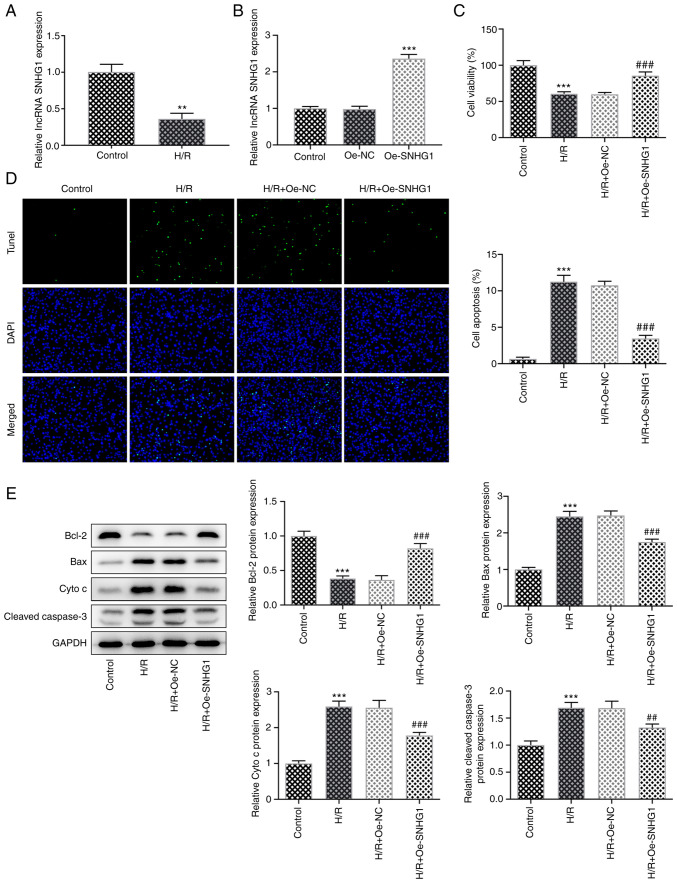
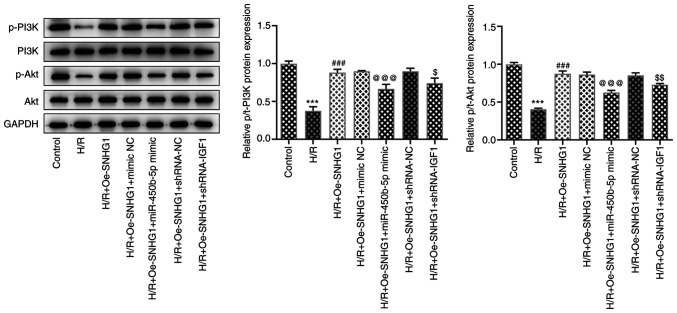
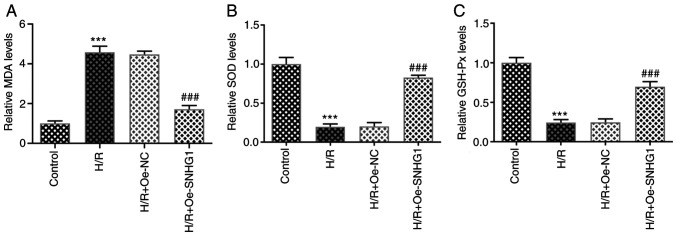
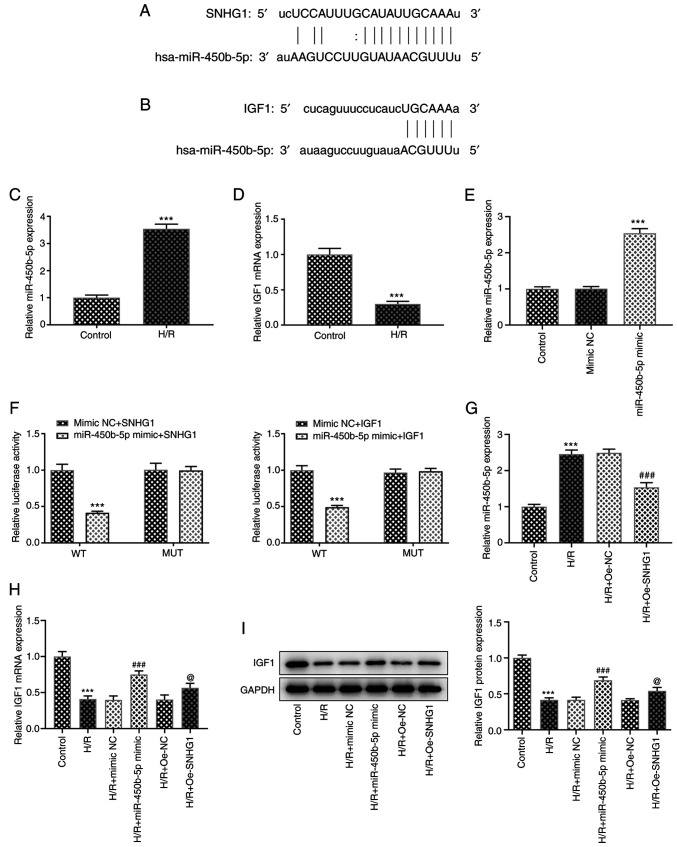
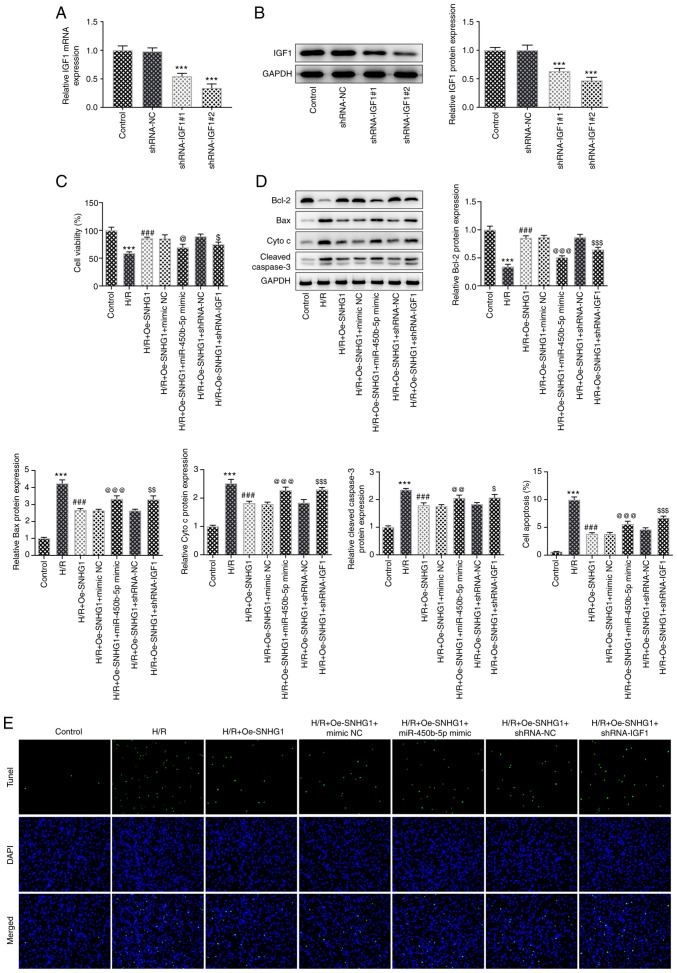
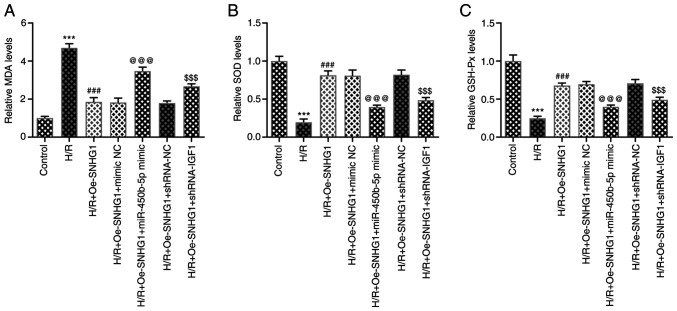
The increasing rates of morbidity and mortality caused by ischemic heart disease pose a serious threat to human health. Long non‑coding (lnc)RNA small nucleolar RNA host gene 1 (SNHG1) has a protective effect on the myocardium. In the present study, the role of lncRNA SNHG1 in myocardial ischemia reperfusion injury (MIRI) and the underlying mechanisms were investigated. After hypoxia/reoxygenation (H/R) induction, the expression levels of lncRNA SNHG1 were detected using reverse transcription‑quantitative PCR. After lncRNA SNHG1 overexpression via cell transfection, cell viability was detected using an MTT assay, apoptotic rates were detected using TUNEL staining, apoptosis‑related protein expression levels were detected using western blotting and respective kits were used to measure the oxidative stress levels. The Encyclopedia of RNA Interactomes database predicted the presence of binding sites between lncRNA SNHG1 and microRNA (miR)‑450b‑5p, and between miR‑450b‑5p and insulin‑like growth factor 1 (IGF1). These interactions were then verified using luciferase reporter assays. Subsequently, the regulatory mechanism underlying the lncRNA SNHG1/miR‑450b‑5p/IGF1 axis in MIRI was investigated by overexpressing miR‑450b‑5p and knocking down IGF1 expression in H/R‑induced cells. Finally, the expression of PI3K/Akt signaling pathway‑related proteins was detected using western blotting. lncRNA SNHG1 expression was significantly downregulated in H/R‑induced AC16 cells. lncRNA SNHG1 overexpression significantly inhibited apoptosis and decreased oxidative stress levels in H/R‑induced AC16 cells, which was mediated via regulation of the miR‑450b‑5p/IGF1 axis and activation of the PI3K/Akt signaling pathway. Therefore, the present study suggested that activation of the PI3K/Akt signaling pathway via the lncRNA SNHG1/miR‑450b‑5p/IGF1 axis inhibited the apoptosis and oxidative stress levels of H/R‑induced AC16 cells.
缺血性心脏病导致的发病率和死亡率不断上升,对人类健康构成了严重威胁。长链非编码 RNA 小核仁 RNA 宿主基因 1(SNHG1)对心肌具有保护作用。本研究旨在探讨 lncRNA SNHG1 在心肌缺血再灌注损伤(MIRI)中的作用及其潜在机制。通过缺氧/复氧(H/R)诱导后,采用逆转录-定量 PCR 检测 lncRNA SNHG1 的表达水平。通过细胞转染过表达 lncRNA SNHG1 后,采用 MTT 检测细胞活力,采用 TUNEL 染色检测细胞凋亡率,采用 Western blot 检测细胞凋亡相关蛋白表达水平,采用试剂盒检测氧化应激水平。RNA 相互作用组百科全书数据库预测了 lncRNA SNHG1 与 microRNA(miR)-450b-5p 以及 miR-450b-5p 与胰岛素样生长因子 1(IGF1)之间存在结合位点。然后通过荧光素酶报告基因检测验证了这些相互作用。随后,通过在 H/R 诱导的细胞中转染 miR-450b-5p 并敲低 IGF1 表达,研究了 MIRI 中 lncRNA SNHG1/miR-450b-5p/IGF1 轴的调节机制。最后,通过 Western blot 检测 PI3K/Akt 信号通路相关蛋白的表达。H/R 诱导的 AC16 细胞中 lncRNA SNHG1 表达明显下调。lncRNA SNHG1 过表达显著抑制 H/R 诱导的 AC16 细胞凋亡,降低氧化应激水平,其机制是通过调节 miR-450b-5p/IGF1 轴和激活 PI3K/Akt 信号通路。因此,本研究表明通过 lncRNA SNHG1/miR-450b-5p/IGF1 轴激活 PI3K/Akt 信号通路抑制了 H/R 诱导的 AC16 细胞的凋亡和氧化应激水平。