Department of Cardiology, The Second Affiliated Hospital of Xi'an Jiaotong University, Xi'an 710004, Shaanxi Province, China.
National-Local Joint Engineering Research Center of Biodiagnostics and Biotherapy, The Second Affiliated Hospital of Xi'an Jiaotong University, Xi'an 710004, Shaanxi Province, China.
Aging (Albany NY). 2021 Sep 9;13(17):20906-20914. doi: 10.18632/aging.203503.
Cardiac injury is common and associated with poor clinical outcomes in COVID-19. Data are lacking whether high-dose intravenous vitamin C (HIVC) could help to ameliorate myocardial injury in the pandemic.
The retrospective cohort study included consecutive severe and critically ill COVID-19 patients with cardiac injury receiving symptomatic supportive treatments alone or together with HIVC. Troponin I and inflammatory markers were collected at admission and day 21 during hospitalization from the electronic medical records.
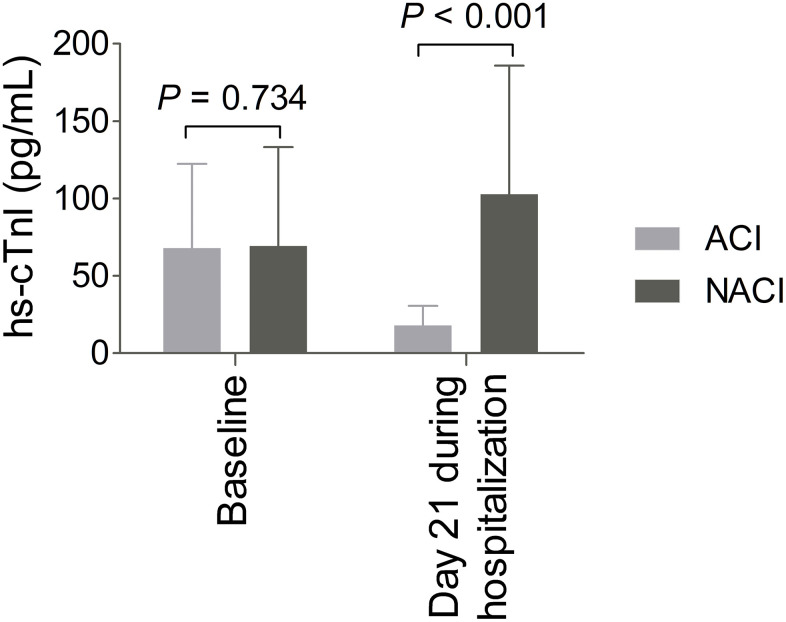
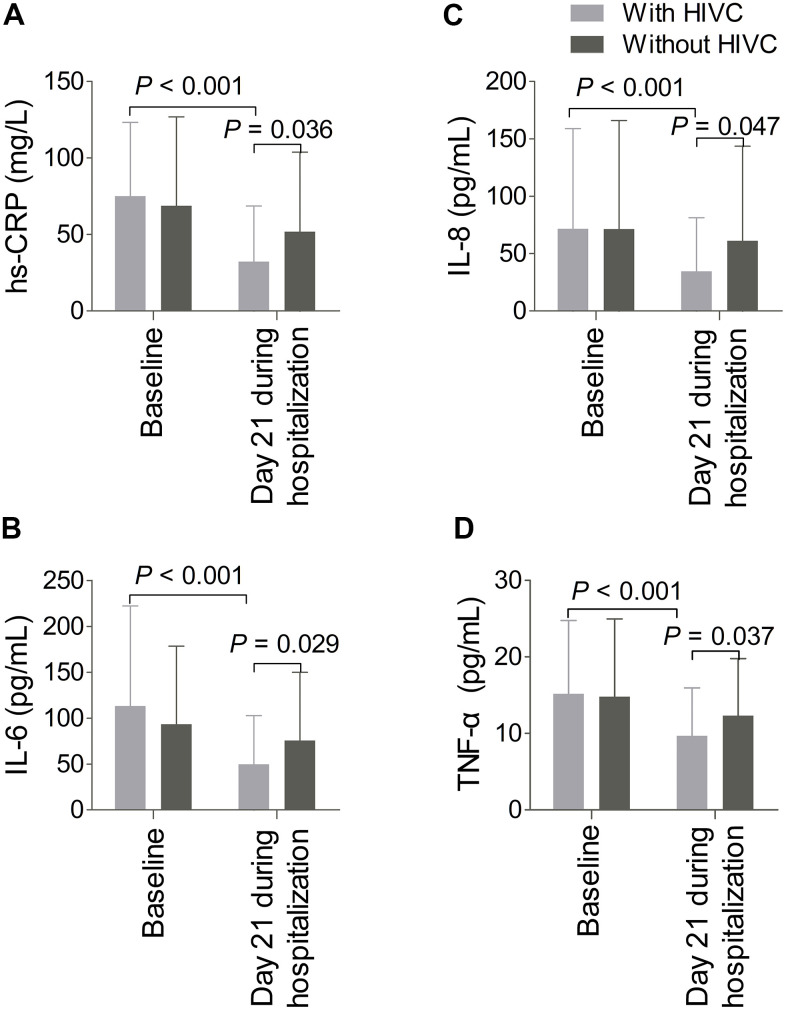
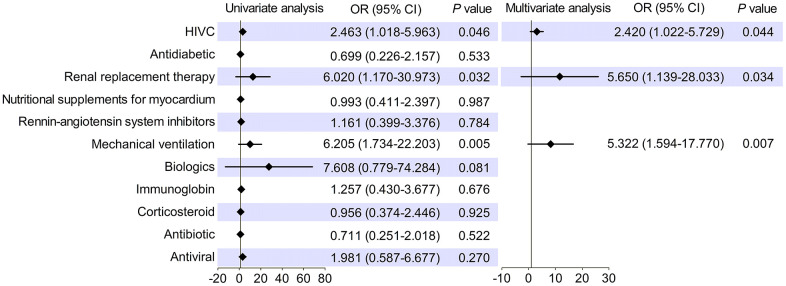
The patients (n = 113) were categorized into the ameliorated cardiac injury (ACI) group (n = 70) and the non-ameliorated cardiac injury (NACI) group (n = 43). Overall, fifty-one (45.1%) patients were administered with HIVC, the percentages of patients with HIVC were higher in the ACI group than those in the NACI group. Logistic regression analysis revealed that HIVC was independently associated with the improvement of myocardial injury. Further analysis showed that inflammatory markers levels significantly decreased at day 21 during hospitalization in patients with HIVC therapy compared to those administered with symptomatic supportive treatments alone. Meanwhile, similar results were also observed regarding changes in inflammatory markers levels from baseline to day 21 during hospitalization in the patients treated with HIVC.
HIVC can ameliorate cardiac injury through alleviating hyperinflammation in severe and critically ill patients with COVID-19.
心脏损伤在 COVID-19 中很常见,并与不良临床结局相关。目前缺乏大剂量静脉注射维生素 C(HIVC)是否有助于改善大流行期间心肌损伤的数据。
这项回顾性队列研究纳入了仅接受对症支持治疗或同时接受 HIVC 治疗的连续重症和危重症 COVID-19 伴有心脏损伤的患者。从电子病历中收集入院时和住院第 21 天的肌钙蛋白 I 和炎症标志物。
患者(n=113)分为心肌损伤改善(ACI)组(n=70)和心肌损伤未改善(NACI)组(n=43)。总体而言,51 例(45.1%)患者接受了 HIVC 治疗,ACI 组接受 HIVC 治疗的患者比例高于 NACI 组。Logistic 回归分析显示,HIVC 与心肌损伤的改善独立相关。进一步分析显示,与仅接受对症支持治疗的患者相比,HIVC 治疗的患者在住院第 21 天的炎症标志物水平显著降低。同时,在 HIVC 治疗的患者中,从基线到住院第 21 天期间,炎症标志物水平的变化也观察到了类似的结果。
HIVC 可通过减轻 COVID-19 重症和危重症患者的过度炎症反应来改善心肌损伤。