Perugini Valeria, Schmid Ruth, Mørch Ýrr, Texier Isabelle, Brodde Martin, Santin Matteo
Centre for Regenerative Medicine and Devices, School of Applied Sciences, University of Brighton - Huxley Building, Lewes Road, Brighton, BN2 4GJ, UK.
Department of Biotechnology and Nanomedicine, SINTEF, Trondheim, Norway.
Drug Deliv Transl Res. 2022 Sep;12(9):2089-2100. doi: 10.1007/s13346-022-01141-6. Epub 2022 Mar 22.
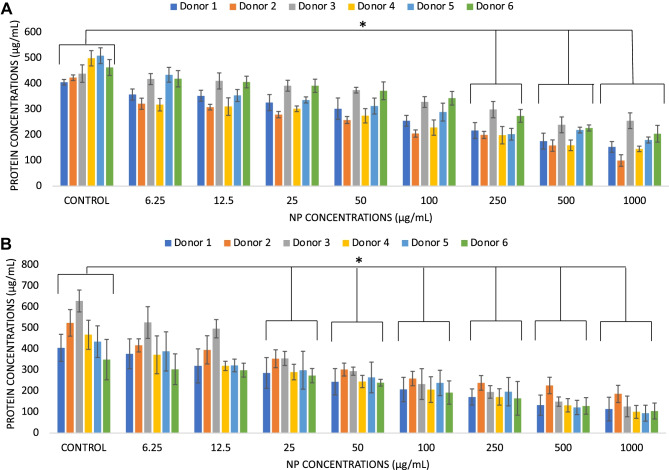
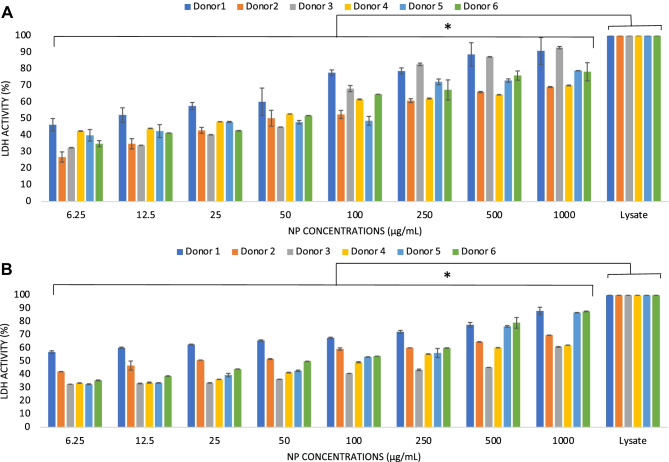
The development of drug nanocarriers based on polymeric, lipid and ceramic biomaterials has been paving the way to precision medicine, where the delivery of poorly soluble active compounds and personalized doses are made possible. However, the nano-size character of these carriers has been demonstrated to have the potential to elicit pathways of the host response different from those of the same biomaterials when engineered as larger size implants and of the drugs when administered without a carrier. Therefore, a specific regulatory framework needs to be made available that can offer robust scientific insights and provide safety data by reliable tests of these novel nano-devices. In this context, the present work presents a multistep protocol for the in vitro assessment of the hemocompatibility of nanocarriers of different physicochemical properties. Poly (ethyl butyl cyanoacrylate) nanoparticles and lipid-based (LipImage™ 815) nanoparticles of comparable hydrodynamic diameter were tested through a battery of assays using human peripheral blood samples and recapitulating the main pathways of the host response upon systemic administration; i.e., protein interactions, fibrinogen-platelet binding, cytotoxicity, and inflammatory response. The data showed the sensitivity and reproducibility of the methods adopted that were also demonstrated to determine individual variability as well as to discriminate between activation of pathways of inflammation and unintended release of inflammatory signaling caused by loss of cell integrity. Therefore, this multistep testing is proposed as a reliable protocol for nanoparticle development and emerging regulatory frameworks.
基于聚合物、脂质和陶瓷生物材料的药物纳米载体的发展为精准医学铺平了道路,在精准医学中,难溶性活性化合物的递送和个性化剂量成为可能。然而,这些载体的纳米尺寸特性已被证明有可能引发与相同生物材料制成较大尺寸植入物时以及无载体给药时药物所引发的宿主反应途径不同的宿主反应途径。因此,需要提供一个特定的监管框架,该框架能够提供有力的科学见解,并通过对这些新型纳米装置的可靠测试提供安全数据。在此背景下,本研究提出了一种多步骤方案,用于体外评估不同理化性质纳米载体的血液相容性。使用人外周血样本并概括全身给药后宿主反应的主要途径,通过一系列试验对具有可比流体动力学直径的聚(氰基丙烯酸乙丁酯)纳米颗粒和脂质基(LipImage™ 815)纳米颗粒进行了测试;即蛋白质相互作用、纤维蛋白原 - 血小板结合、细胞毒性和炎症反应。数据显示了所采用方法的敏感性和可重复性,这些方法还被证明能够确定个体差异,并区分炎症途径的激活以及由细胞完整性丧失导致的炎症信号的意外释放。因此,建议将这种多步骤测试作为纳米颗粒开发和新兴监管框架的可靠方案。