Ernst Lena M, Casals Eudald, Italiani Paola, Boraschi Diana, Puntes Victor
Vall d'Hebron Research Institute (VHIR), 08035 Barcelona, Spain.
School of Biotechnology and Health Sciences, Wuyi University, Jiangmen 529020, China.
Nanomaterials (Basel). 2021 Nov 6;11(11):2991. doi: 10.3390/nano11112991.
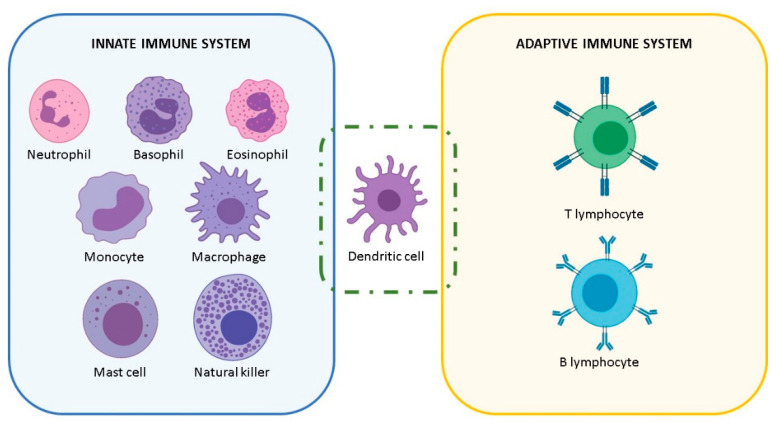
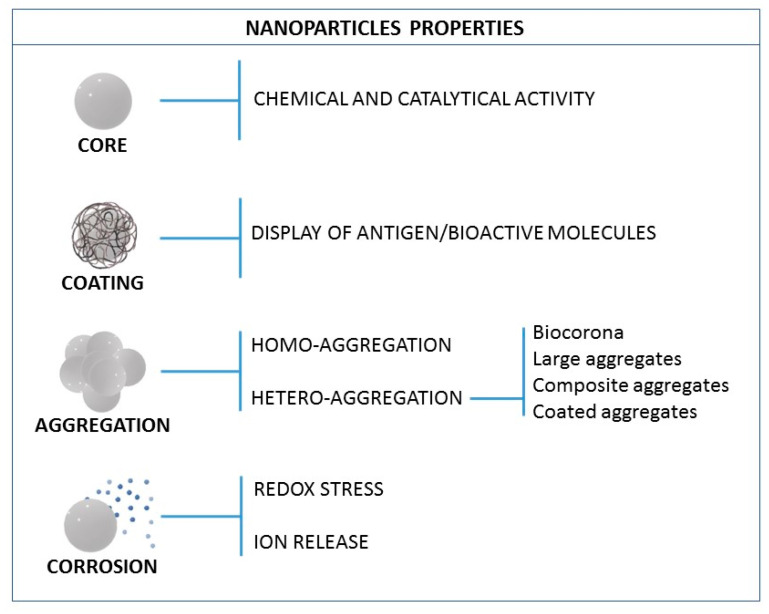
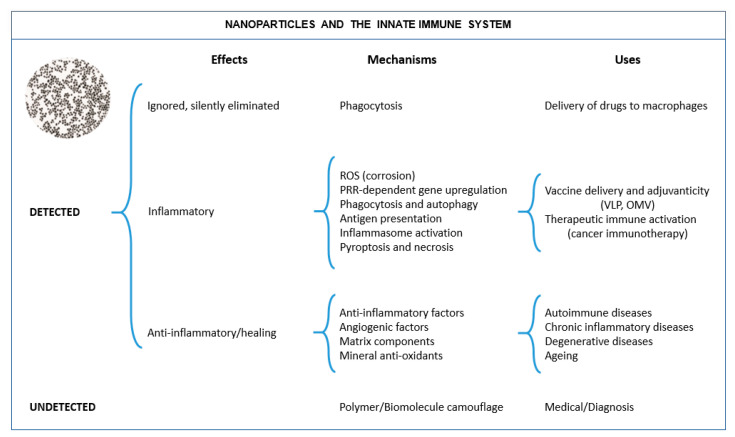
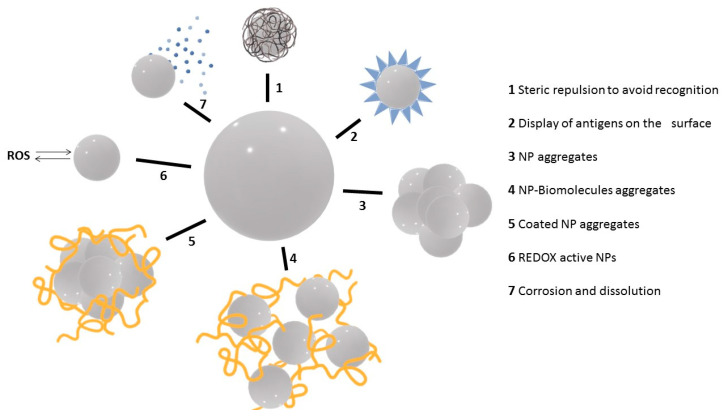
The immune system contributes to maintaining the body's functional integrity through its two main functions: recognizing and destroying foreign external agents (invading microorganisms) and identifying and eliminating senescent cells and damaged or abnormal endogenous entities (such as cellular debris or misfolded/degraded proteins). Accordingly, the immune system can detect molecular and cellular structures with a spatial resolution of a few nm, which allows for detecting molecular patterns expressed in a great variety of pathogens, including viral and bacterial proteins and bacterial nucleic acid sequences. Such patterns are also expressed in abnormal cells. In this context, it is expected that nanostructured materials in the size range of proteins, protein aggregates, and viruses with different molecular coatings can engage in a sophisticated interaction with the immune system. Nanoparticles can be recognized or passed undetected by the immune system. Once detected, they can be tolerated or induce defensive (inflammatory) or anti-inflammatory responses. This paper describes the different modes of interaction between nanoparticles, especially inorganic nanoparticles, and the immune system, especially the innate immune system. This perspective should help to propose a set of selection rules for nanosafety-by-design and medical nanoparticle design.
识别并摧毁外来病原体(入侵的微生物),以及识别并清除衰老细胞和受损或异常的内源性物质(如细胞碎片或错误折叠/降解的蛋白质)。因此,免疫系统能够以几纳米的空间分辨率检测分子和细胞结构,这使得它能够检测多种病原体中表达的分子模式,包括病毒和细菌蛋白以及细菌核酸序列。这些模式在异常细胞中也会表达。在这种情况下,可以预期,尺寸范围在蛋白质、蛋白质聚集体以及具有不同分子包膜的病毒大小的纳米结构材料,能够与免疫系统进行复杂的相互作用。纳米颗粒可能会被免疫系统识别,也可能未被检测到而通过。一旦被检测到,它们可能会被耐受,或者引发防御性(炎症性)或抗炎反应。本文描述了纳米颗粒,尤其是无机纳米颗粒,与免疫系统,特别是固有免疫系统之间不同的相互作用模式。这一观点应有助于提出一套通过设计实现纳米安全性以及医学纳米颗粒设计的选择规则。