Department of Microbiology and Immunology, University of California, San Francisco, San Francisco, CA.
Parker Institute for Cancer Immunotherapy, University of California, San Francisco, San Francisco, CA.
J Exp Med. 2022 May 2;219(5). doi: 10.1084/jem.20220022. Epub 2022 Mar 23.
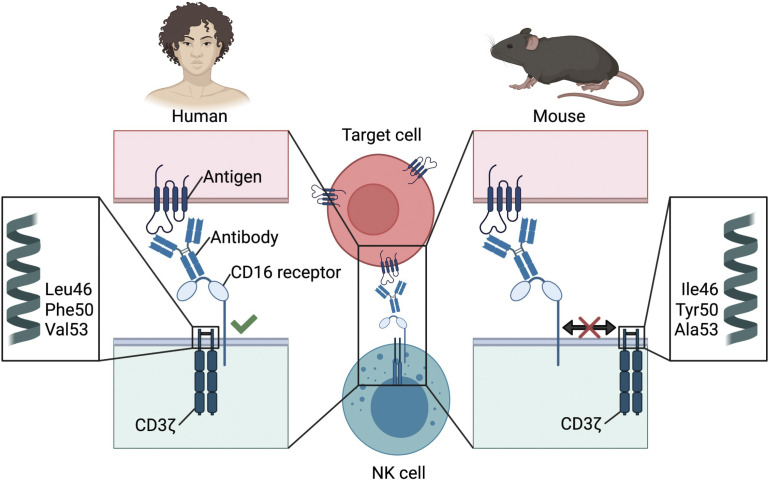
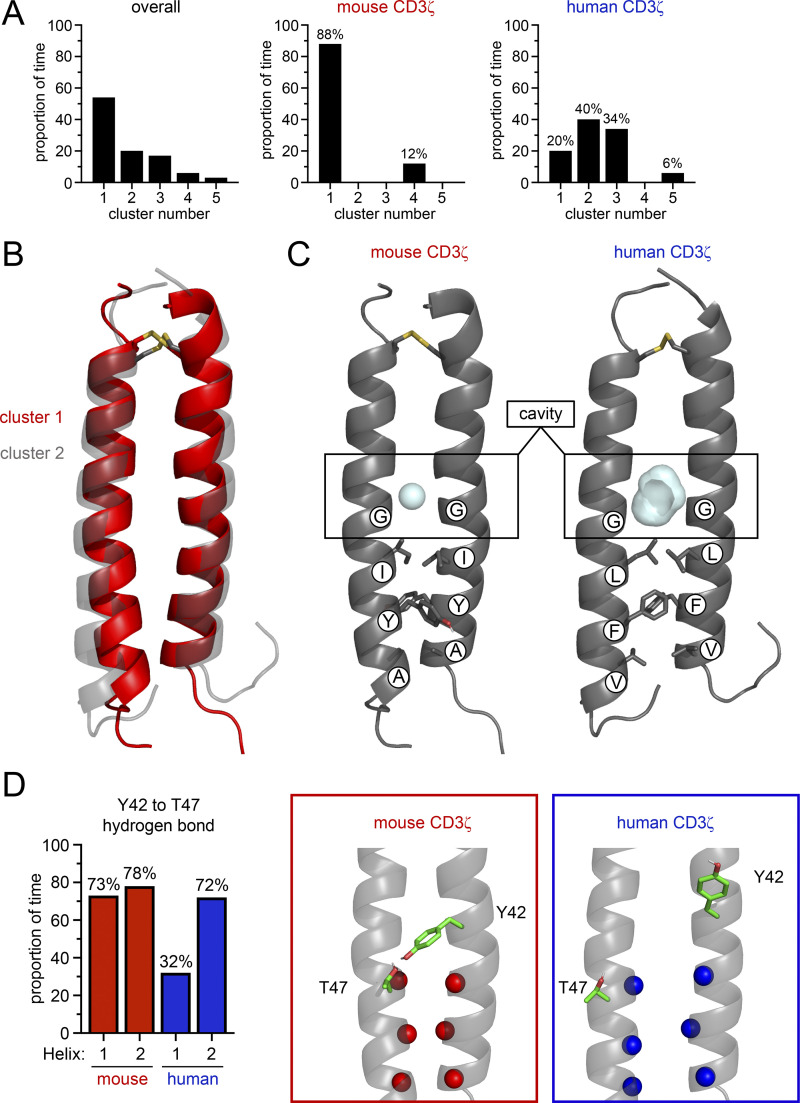
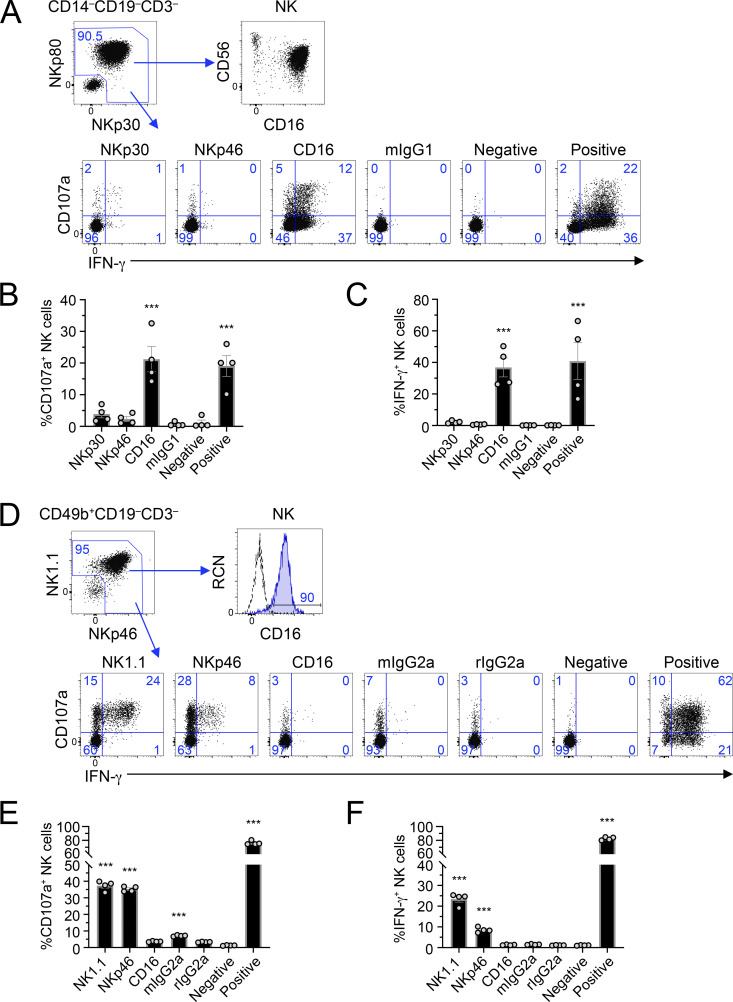
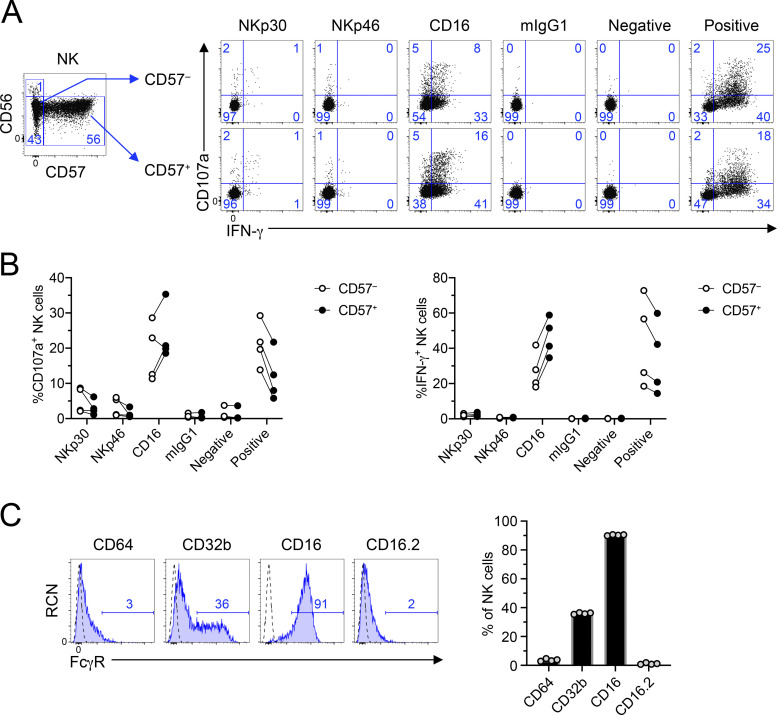
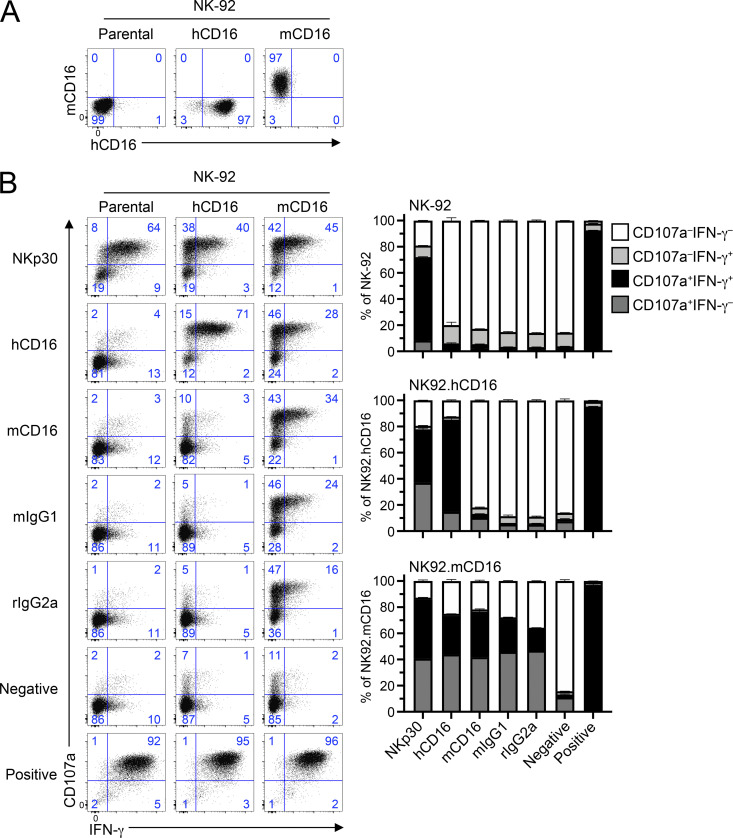
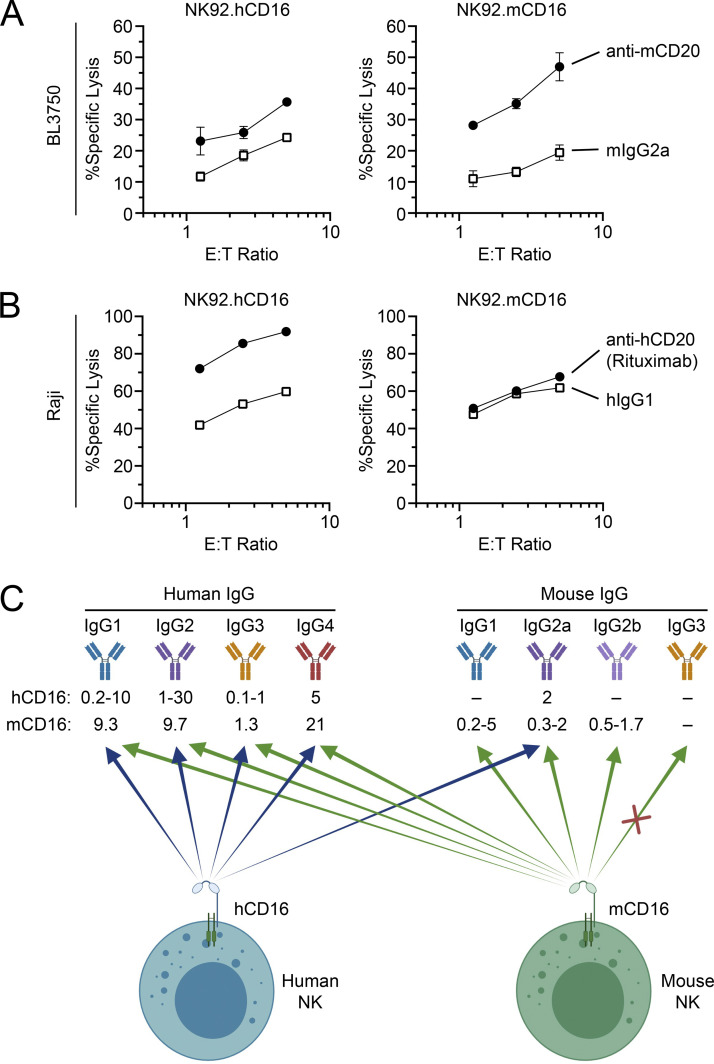
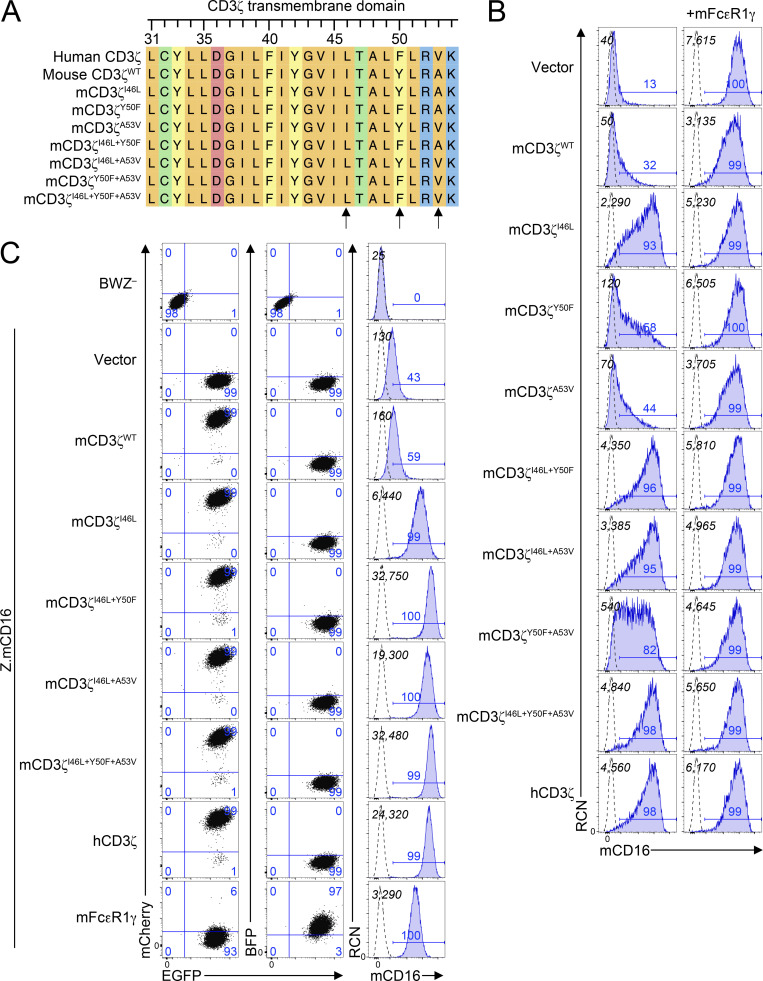
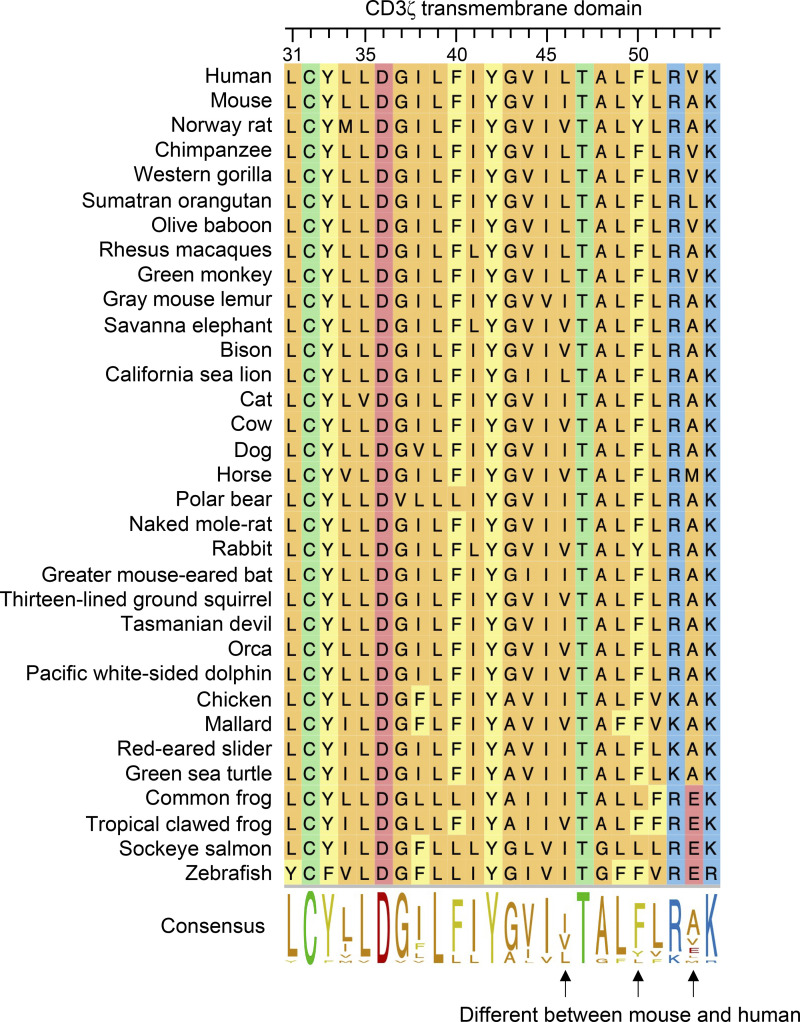
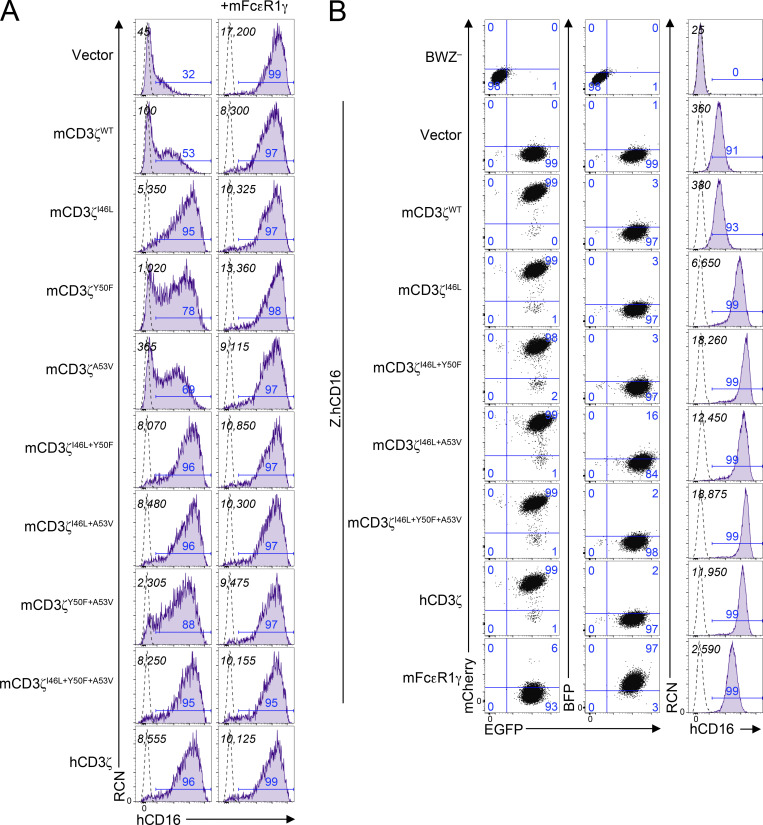
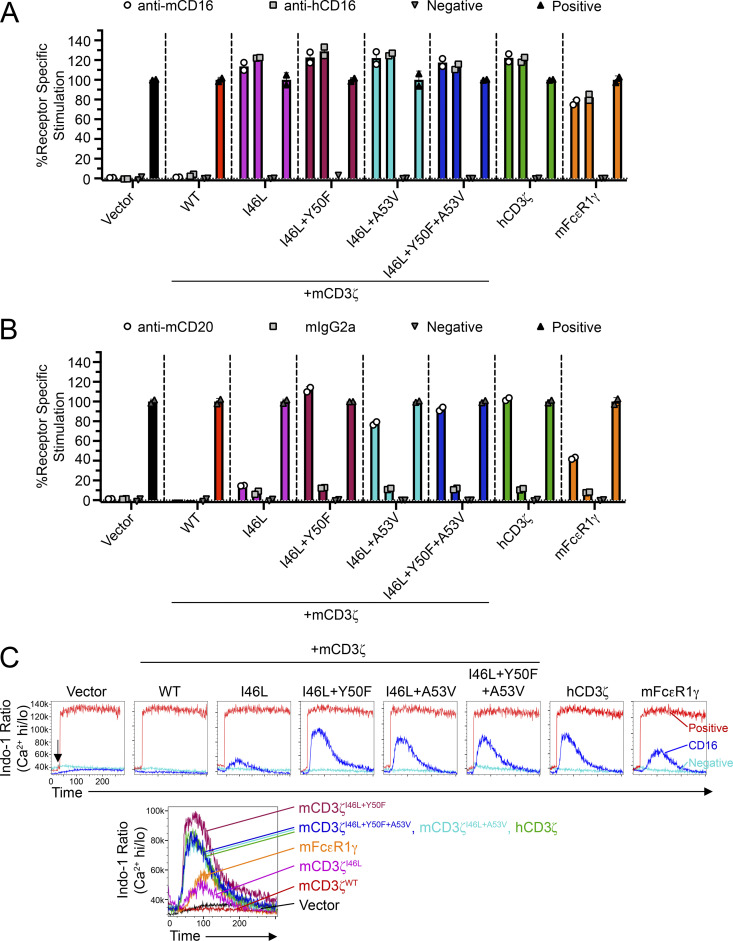
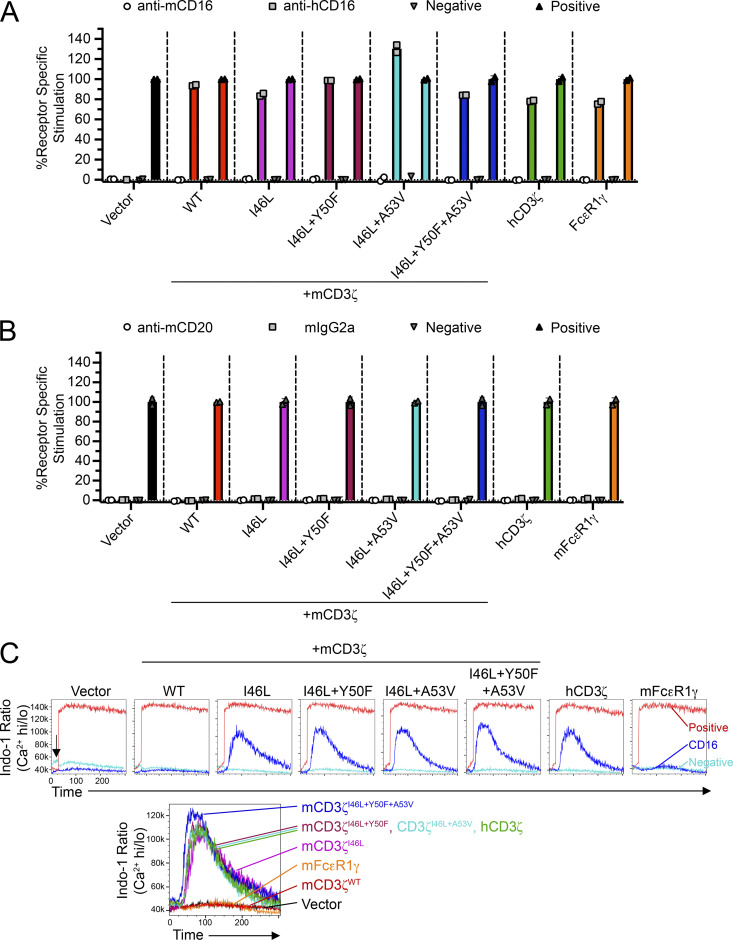
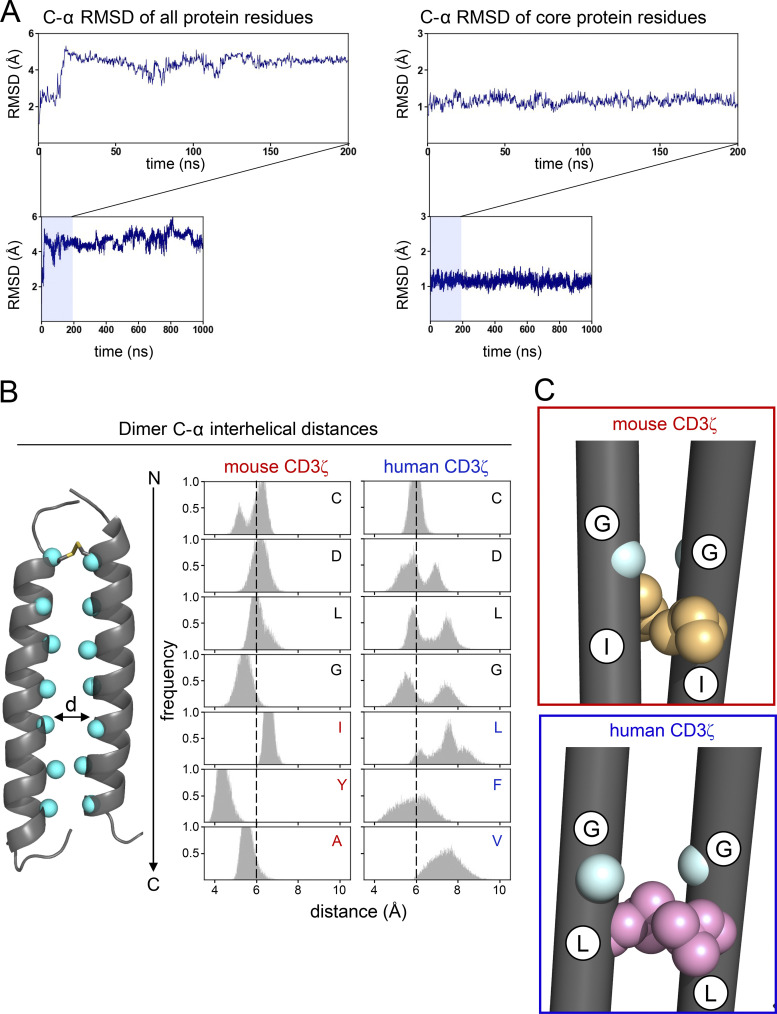
Natural killer (NK) cells can detect antibody-coated cells through recognition by the CD16 Fc receptor. The importance of CD16 in human NK cell biology has long been appreciated, but how CD16 functions in mouse NK cells remains poorly understood. Here, we report drastic differences between human and mouse CD16 functions in NK cells. We demonstrate that one of the adaptor molecules that CD16 associates with and signals through, CD3ζ, plays a critical role in these functional differences. Using a systematic approach, we demonstrate that residues in the transmembrane domain of the mouse CD3ζ molecule prevent efficient complex formation with mouse CD16, thereby dampening receptor function. Mutating these residues in mouse CD3ζ to those encoded by human CD3ζ resulted in rescue of CD16 receptor function. We reveal that the mouse CD3ζ transmembrane domain adopts a tightly packed confirmation, preventing association with CD16, whereas human CD3ζ adopts a versatile configuration that accommodates receptor assembly.
自然杀伤 (NK) 细胞可以通过识别 CD16 Fc 受体来检测抗体包被的细胞。CD16 在人类 NK 细胞生物学中的重要性早已被人们所认识,但 CD16 在小鼠 NK 细胞中的作用仍知之甚少。在这里,我们报告了人类和小鼠 NK 细胞中 CD16 功能的巨大差异。我们证明,CD16 与之结合并通过其信号传导的衔接分子之一,CD3ζ,在这些功能差异中起着关键作用。通过系统的方法,我们证明了小鼠 CD3ζ 分子跨膜结构域中的残基阻止了与小鼠 CD16 的有效复合物形成,从而抑制了受体功能。将这些残基突变为人类 CD3ζ 编码的残基,可挽救 CD16 受体功能。我们揭示了小鼠 CD3ζ 跨膜结构域采用紧密堆积的构象,从而阻止与 CD16 的结合,而人类 CD3ζ 则采用灵活的构象,可容纳受体组装。