Fan Shuhao, Lin Wensen, Huang Yifan, Xia Jiaojiao, Xu Jun-Fa, Zhang Junai, Pi Jiang
Institute of Laboratory Medicine, Guangdong Provincial Key Laboratory of Medical Molecular Diagnostics, School of Medical Technology, The First Dongguan Affiliated Hospital, Guangdong Medical University, Dongguan, China.
Front Pharmacol. 2022 Mar 7;13:829712. doi: 10.3389/fphar.2022.829712. eCollection 2022.
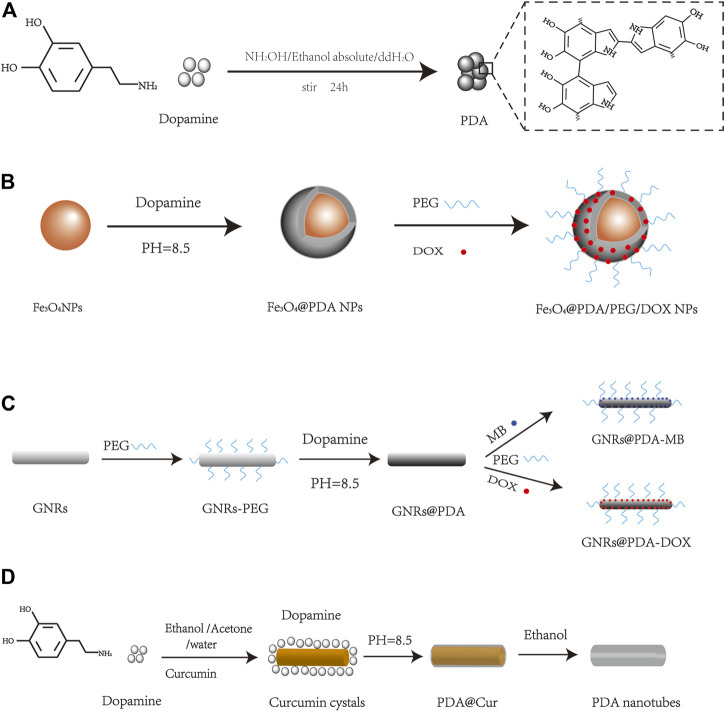
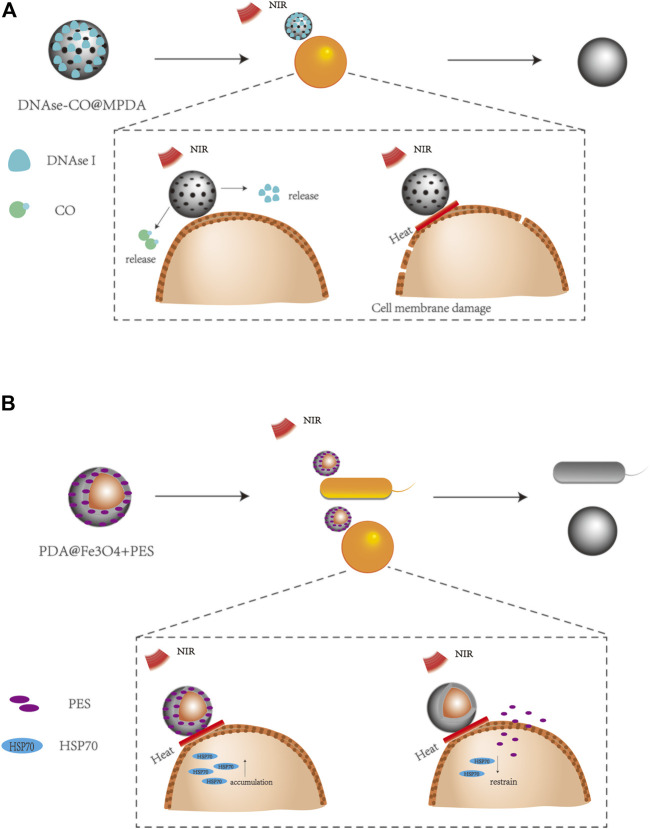
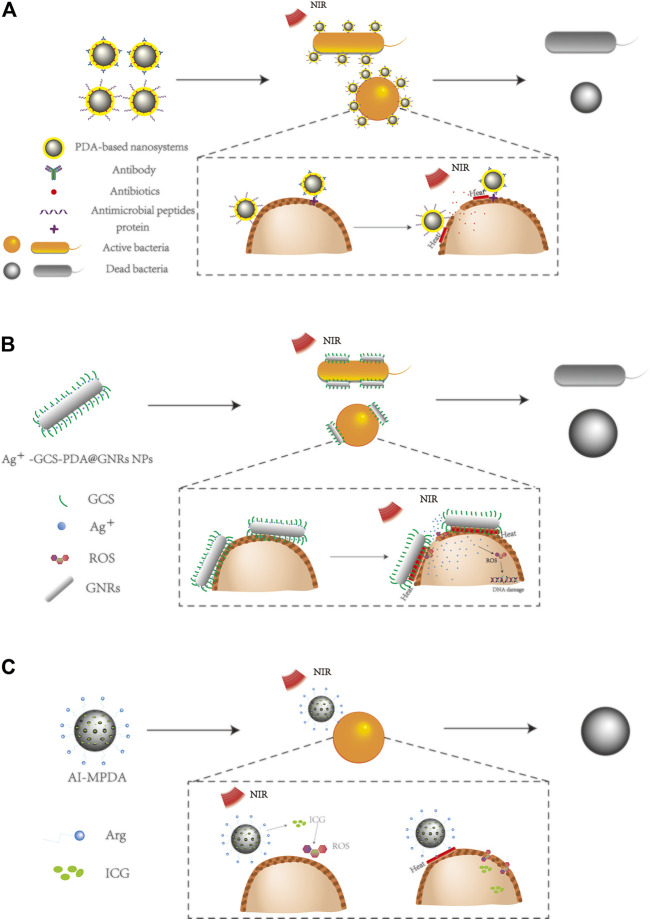
Bacterial infection remains one of the most dangerous threats to human health due to the increasing cases of bacterial resistance, which is caused by the extensive use of current antibiotics. Photothermal therapy (PTT) is similar to photodynamic therapy (PDT), but PTT can generate heat energy under the excitation of light of specific wavelength, resulting in overheating and damage to target cells or sites. Polydopamine (PDA) has been proved to show plenty of advantages, such as simple preparation, good photothermal conversion effects, high biocompatibility, and easy functionalization and adhesion. Taking these advantages, dopamine is widely used to synthesize the PDA nanosystem with excellent photothermal effects, good biocompatibility, and high drug loading ability, which therefore play more and more important roles for anticancer and antibacterial treatment. PDA nanosystem-mediated PTT has been reported to induce significant tumor inhibition, as well as bacterial killings due to PTT-induced hyperthermia. Moreover, combined with other cancer or bacterial inhibition strategies, PDA nanosystem-mediated PTT can achieve more effective tumor and bacterial inhibitions. In this review, we summarized the progress of preparation methods for the PDA nanosystem, followed by advances of their biological functions and mechanisms for PTT uses, especially in the field of antibacterial treatments. We also provided advances on how to combine PDA nanosystem-mediated PTT with other antibacterial methods for synergistic bacterial killings. Moreover, we further provide some prospects of PDA nanosystem-mediated PTT against intracellular bacteria, which might be helpful to facilitate their future research progress for antibacterial therapy.
由于当前抗生素的广泛使用导致细菌耐药性病例不断增加,细菌感染仍然是对人类健康最危险的威胁之一。光热疗法(PTT)与光动力疗法(PDT)类似,但PTT可在特定波长光的激发下产生热能,导致靶细胞或部位过热并受损。聚多巴胺(PDA)已被证明具有诸多优点,如制备简单、光热转换效果良好、生物相容性高、易于功能化和粘附。利用这些优点,多巴胺被广泛用于合成具有优异光热效应、良好生物相容性和高载药能力的PDA纳米系统,因此在抗癌和抗菌治疗中发挥着越来越重要的作用。据报道,PDA纳米系统介导的PTT可诱导显著的肿瘤抑制以及由于PTT诱导的热疗导致的细菌杀伤。此外,与其他癌症或细菌抑制策略相结合,PDA纳米系统介导的PTT可实现更有效的肿瘤和细菌抑制。在本综述中,我们总结了PDA纳米系统制备方法的进展,随后介绍了其生物学功能以及PTT应用的机制进展,特别是在抗菌治疗领域。我们还介绍了如何将PDA纳米系统介导的PTT与其他抗菌方法相结合以实现协同细菌杀伤的进展。此外,我们进一步展望了PDA纳米系统介导的PTT对抗细胞内细菌的前景,这可能有助于推动其在抗菌治疗方面的未来研究进展。