Department of Plant Physiology, Umeå Plant Science Centre, Umeå University, Umeå, SE, 901 87, Sweden.
New Phytol. 2022 Jul;235(1):188-203. doi: 10.1111/nph.18115. Epub 2022 Apr 12.
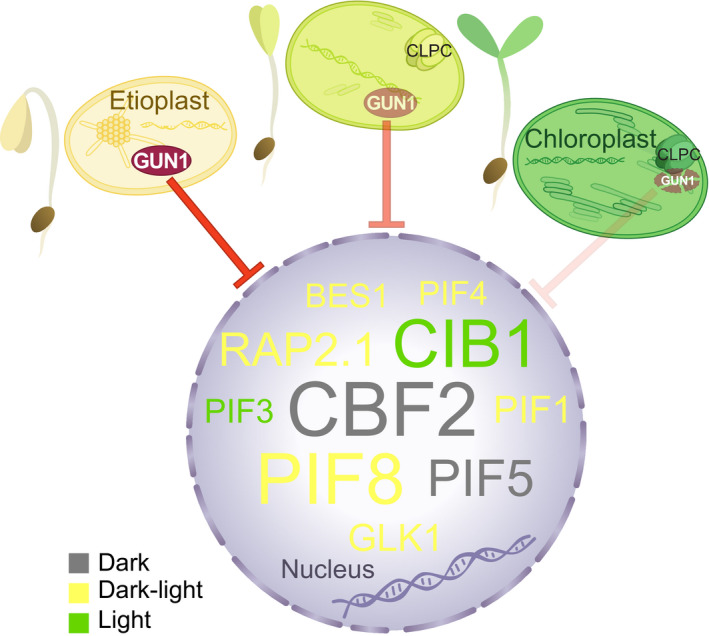
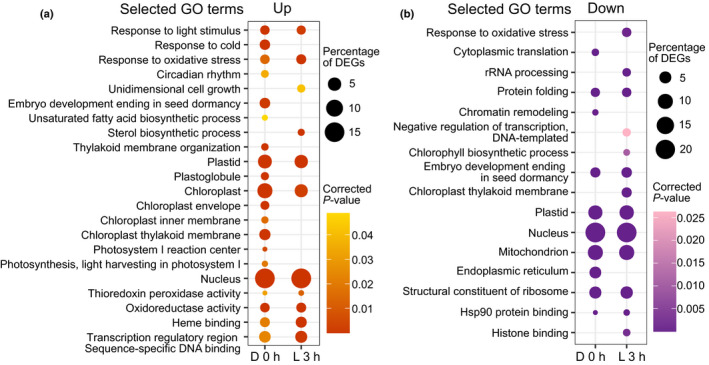
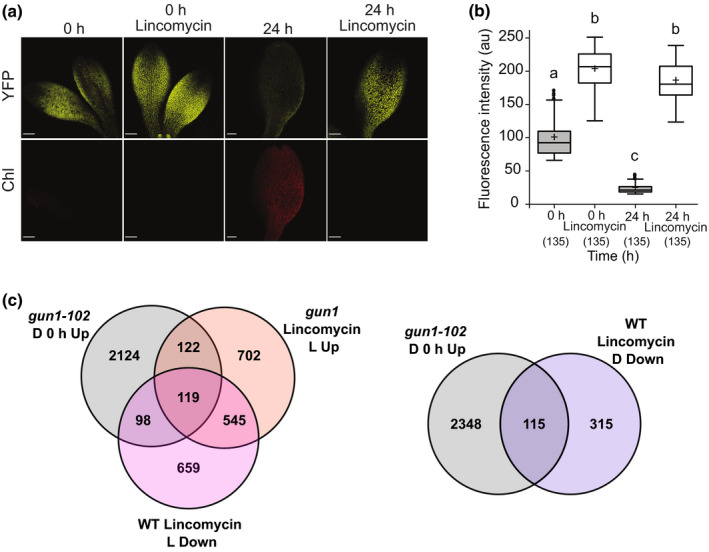
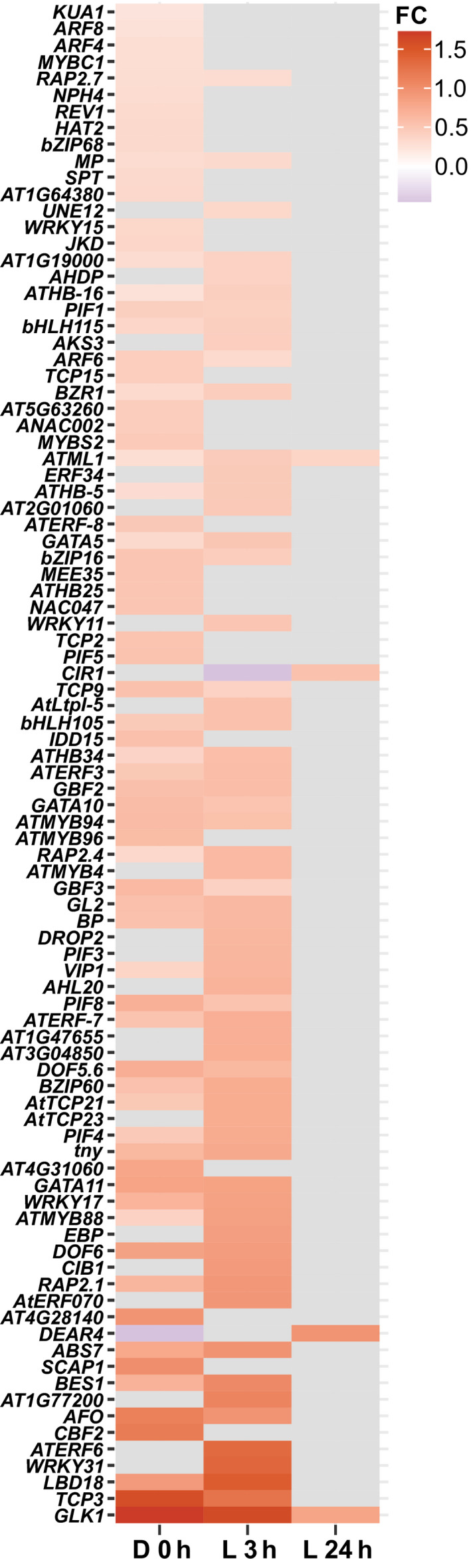
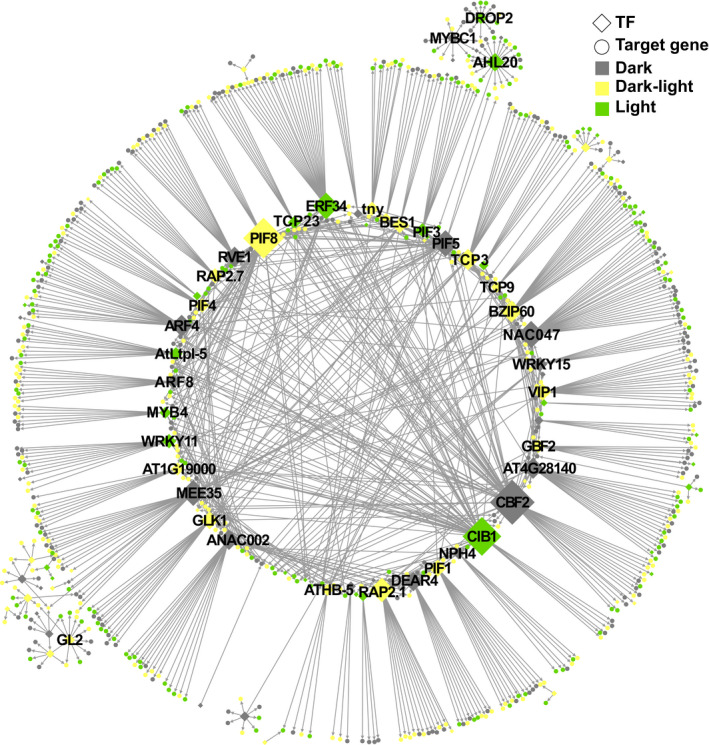
One of the most dramatic challenges in the life of a plant occurs when the seedling emerges from the soil and exposure to light triggers expression of genes required for establishment of photosynthesis. This process needs to be tightly regulated, as premature accumulation of light-harvesting proteins and photoreactive Chl precursors causes oxidative damage when the seedling is first exposed to light. Photosynthesis genes are encoded by both nuclear and plastid genomes, and to establish the required level of control, plastid-to-nucleus (retrograde) signalling is necessary to ensure correct gene expression. We herein show that a negative GENOMES UNCOUPLED1 (GUN1)-mediated retrograde signal restricts chloroplast development in darkness and during early light response by regulating the transcription of several critical transcription factors linked to light response, photomorphogenesis, and chloroplast development, and consequently their downstream target genes in Arabidopsis. Thus, the plastids play an essential role during skotomorphogenesis and the early light response, and GUN1 acts as a safeguard during the critical step of seedling emergence from darkness.
当幼苗从土壤中冒出,并且光照引发了光合作用所需基因的表达时,植物生命中最具戏剧性的挑战之一就出现了。这个过程需要严格调控,因为当幼苗第一次暴露在光照下时,过早积累的光捕获蛋白和光反应性 Chl 前体物会导致氧化损伤。光合作用基因由核基因组和质体基因组共同编码,为了建立所需的控制水平,需要质体到核(逆行)信号来确保正确的基因表达。我们在此表明,负调控因子 GENOMES UNCOUPLED1(GUN1)介导的逆行信号通过调节与光反应、光形态建成和质体发育相关的几个关键转录因子的转录,来限制黑暗中以及早期光反应中的质体发育,从而调控其在拟南芥中的下游靶基因。因此,质体在暗中发育和早期光反应中起着至关重要的作用,而 GUN1 在幼苗从黑暗中冒出的关键步骤中充当了保护者。