Chmielewski Frank-M, Götz Klaus-P
Agricultural Climatology, Faculty of Life Sciences, Humboldt-University of Berlin, Albrecht-Thaer-Weg 5, 14195 Berlin, Germany.
Metabolites. 2022 Mar 16;12(3):247. doi: 10.3390/metabo12030247.
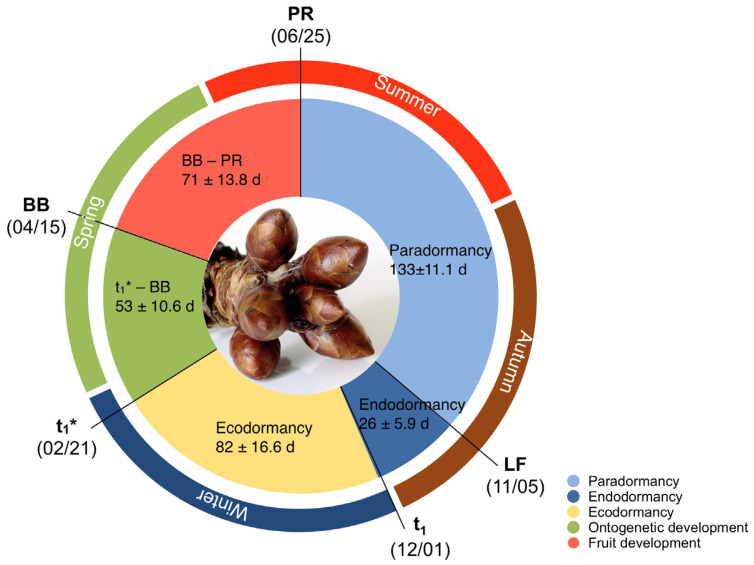
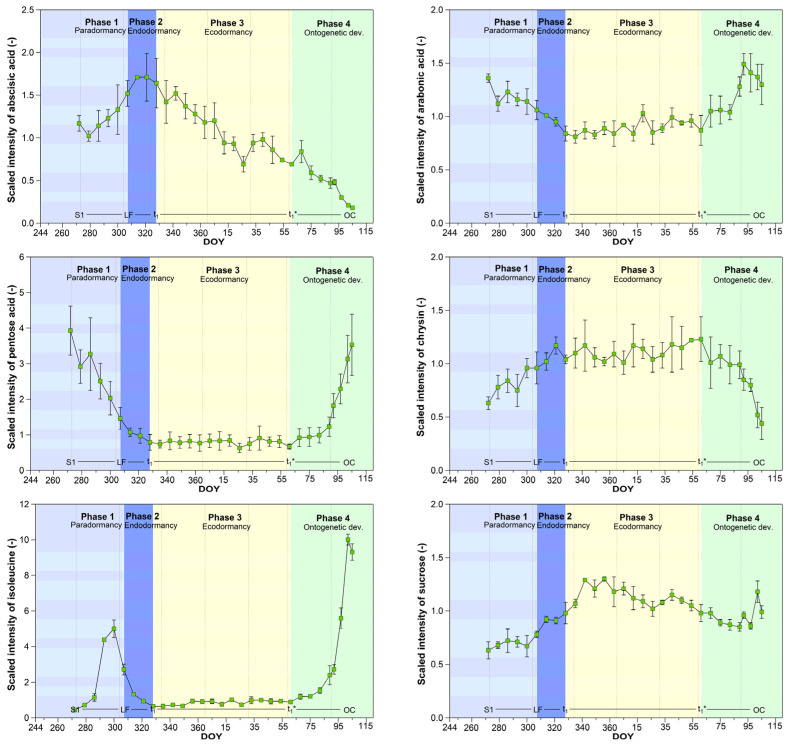
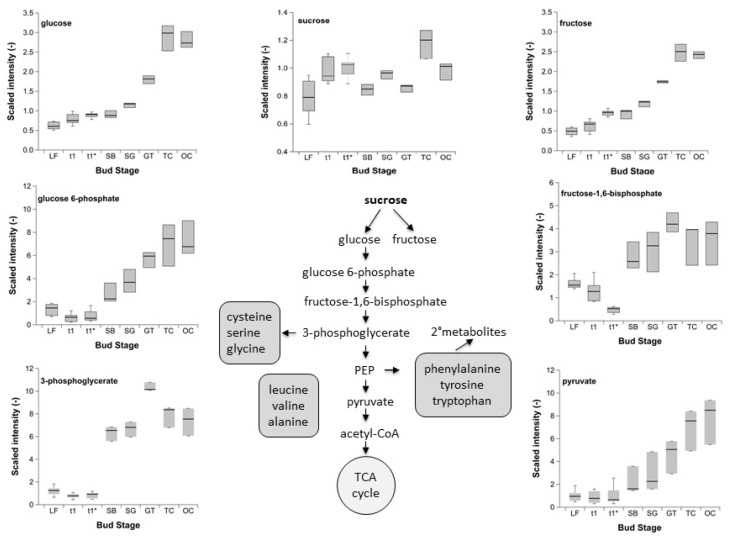
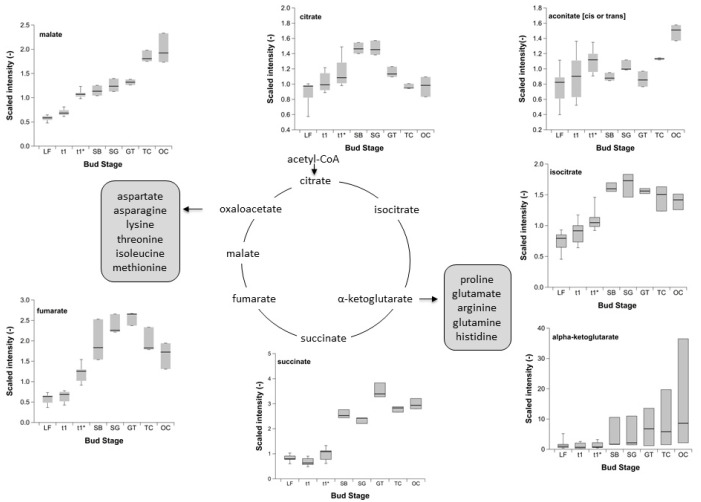
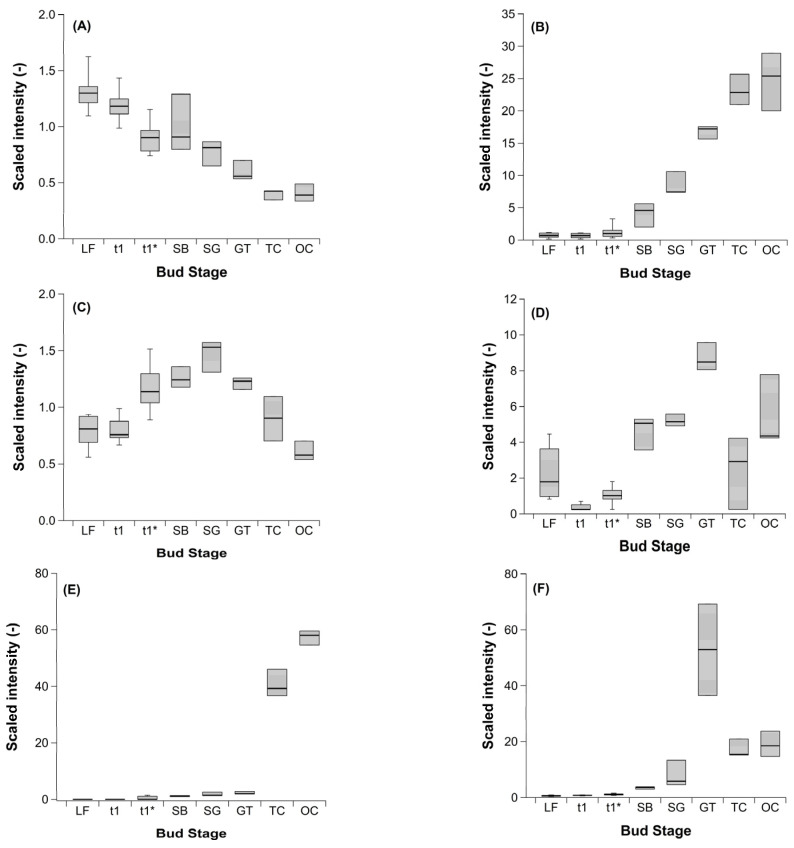
Winter dormancy is still a "black box" in phenological models, because it evades simple observation. This study presents the first step in the identification of suitable metabolites which could indicate the timing and length of dormancy phases for the sweet cherry cultivar 'Summit'. Global metabolite profiling detected 445 named metabolites in flower buds, which can be assigned to different substance groups such as amino acids, carbohydrates, phytohormones, lipids, nucleotides, peptides and some secondary metabolites. During the phases of endo- and ecodormancy, the energy metabolism in the form of glycolysis and the tricarboxylic acid (TCA) cycle was shut down to a minimum. However, the beginning of ontogenetic development was closely related to the up-regulation of the carbohydrate metabolism and thus to the generation of energy for the growth and development of the sweet cherry buds. From the 445 metabolites found in cherry buds, seven were selected which could be suitable markers for the ecodormancy phase, whose duration is limited by the date of endodormancy release (t) and the beginning of ontogenetic development (t*). With the exception of abscisic acid (ABA), which has been proven to control bud dormancy, all of these metabolites show nearly constant intensity during this phase.
在物候模型中,冬季休眠仍是一个“黑匣子”,因为它难以直接观测。本研究迈出了第一步,旨在鉴定出合适的代谢物,这些代谢物能够指示甜樱桃品种‘Summit’休眠阶段的时间和时长。全球代谢物谱分析在花芽中检测到445种已命名的代谢物,它们可被归为不同的物质类别,如氨基酸、碳水化合物、植物激素、脂质、核苷酸、肽以及一些次生代谢物。在内休眠和生态休眠阶段,以糖酵解和三羧酸(TCA)循环形式存在的能量代谢降至最低水平。然而,个体发育的开始与碳水化合物代谢的上调密切相关,进而与甜樱桃芽生长发育所需能量的产生相关。从樱桃芽中发现的445种代谢物中,挑选出了7种,它们可能是生态休眠阶段的合适标志物,生态休眠阶段的时长受内休眠解除日期(t)和个体发育开始时间(t*)的限制。除了已被证明可控制芽休眠的脱落酸(ABA)外,所有这些代谢物在此阶段的强度几乎保持恒定。