Suhre Karsten, Stephan Nisha, Zaghlool Shaza, Triggle Chris R, Robinson Richard J, Evans Anne M, Halama Anna
Bioinformatics Core, Weill Cornell Medicine-Qatar, Education City, Doha 24144, Qatar.
Department of Physiology and Biophysics, Weill Cornell Medicine, New York, NY 10065, USA.
Metabolites. 2022 Mar 16;12(3):249. doi: 10.3390/metabo12030249.
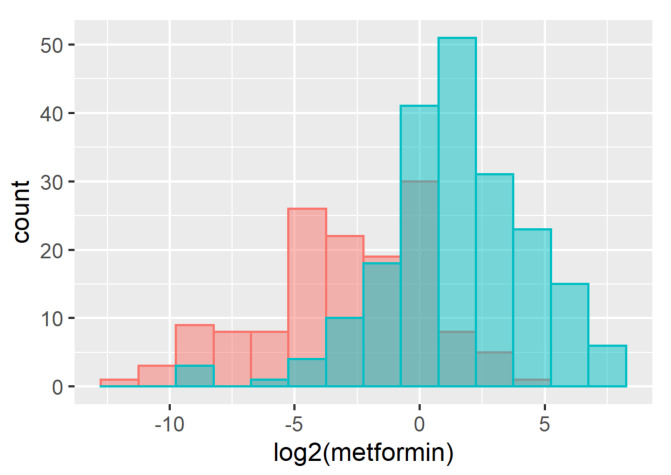
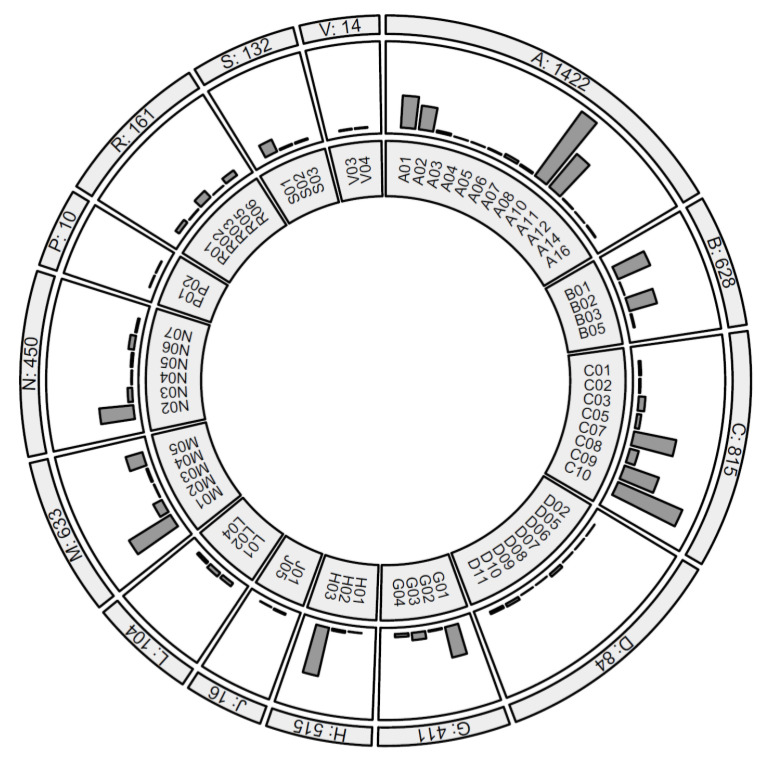
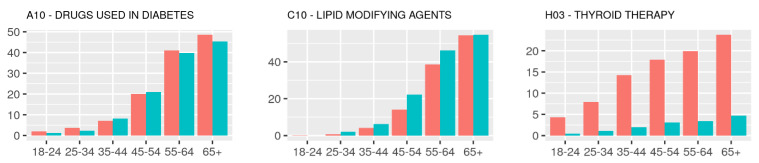
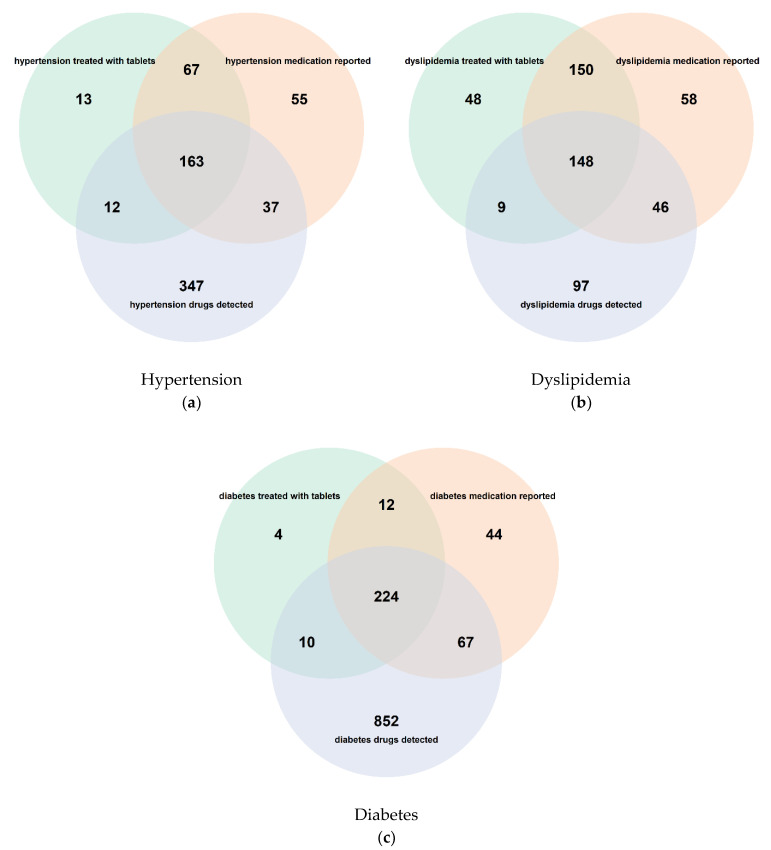
Modern metabolomics platforms are able to identify many drug-related metabolites in blood samples. Applied to population-based biobank studies, the detection of drug metabolites can then be used as a proxy for medication use or serve as a validation tool for questionnaire-based health assessments. However, it is not clear how well detection of drug metabolites in blood samples matches information on self-reported medication provided by study participants. Here, we curate free-text responses to a drug-usage questionnaire from 6000 participants of the Qatar Biobank (QBB) using standardized WHO Anatomical Therapeutic Chemical (ATC) Classification System codes and compare the occurrence of these ATC terms to the detection of drug-related metabolites in matching blood plasma samples from 2807 QBB participants for which we collected non-targeted metabolomics data. We found that the detection of 22 drug-related metabolites significantly associated with the self-reported use of the corresponding medication. Good agreement of self-reported medication with non-targeted metabolomics was observed, with self-reported drugs and their metabolites being detected in a same blood sample in 79.4% of the cases. On the other hand, only 29.5% of detected drug metabolites matched to self-reported medication. Possible explanations for differences include under-reporting of over-the-counter medications from the study participants, such as paracetamol, misannotation of low abundance metabolites, such as metformin, and inability of the current methods to detect them. Taken together, our study provides a broad real-world view of what to expect from large non-targeted metabolomics measurements in population-based biobank studies and indicates areas where further improvements can be made.
现代代谢组学平台能够识别血液样本中许多与药物相关的代谢物。应用于基于人群的生物样本库研究时,药物代谢物的检测可作为药物使用的替代指标,或作为基于问卷的健康评估的验证工具。然而,尚不清楚血液样本中药物代谢物的检测与研究参与者提供的自我报告用药信息的匹配程度如何。在此,我们使用标准化的世界卫生组织解剖治疗化学(ATC)分类系统代码,整理了卡塔尔生物样本库(QBB)6000名参与者对药物使用问卷的自由文本回复,并将这些ATC术语的出现情况与来自2807名QBB参与者匹配血浆样本中药物相关代谢物的检测情况进行比较,我们为这些参与者收集了非靶向代谢组学数据。我们发现,22种与药物相关的代谢物的检测与相应药物的自我报告使用显著相关。观察到自我报告用药与非靶向代谢组学之间具有良好的一致性,在79.4%的病例中,自我报告的药物及其代谢物在同一血液样本中被检测到。另一方面,仅29.5%的检测到的药物代谢物与自我报告的用药相匹配。差异的可能解释包括研究参与者对非处方药物(如对乙酰氨基酚)的报告不足、对低丰度代谢物(如二甲双胍)的错误注释,以及当前方法无法检测到它们。综上所述,我们的研究提供了一个关于在基于人群的生物样本库研究中大规模非靶向代谢组学测量预期结果的广泛现实视角,并指出了可以进一步改进的领域。