School of Public Health and Preventive Medicine, Faculty of Medicine, Nursing and Health Sciences, Monash University, Melbourne, VIC, Australia.
Hawaii Department of Health, Tuberculosis Control Branch, Honolulu, HI, USA.
Int J Epidemiol. 2022 Oct 13;51(5):1433-1445. doi: 10.1093/ije/dyac045.
Ambitious population-based screening programmes for latent and active tuberculosis (TB) were implemented in the Republic of the Marshall Islands in 2017 and 2018.
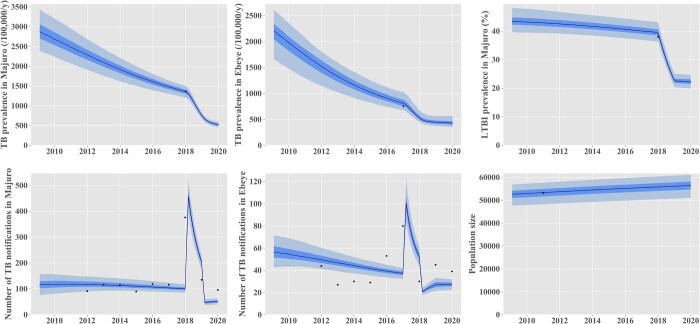
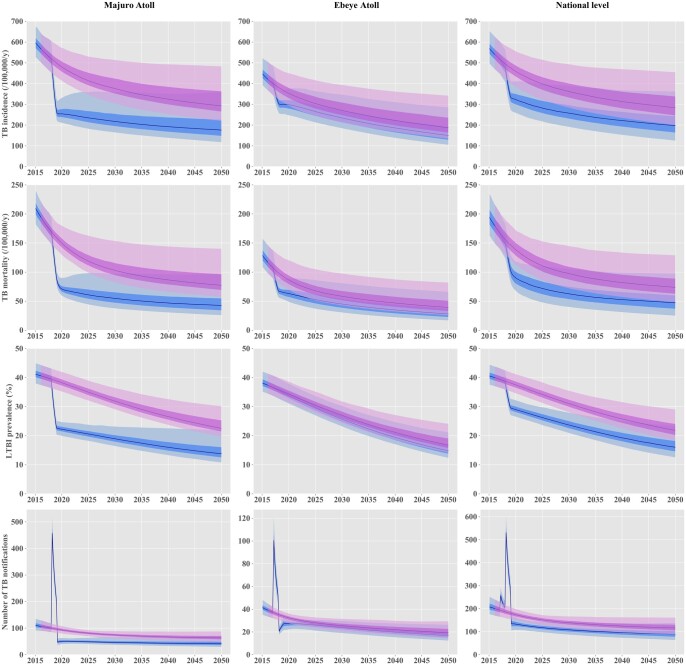
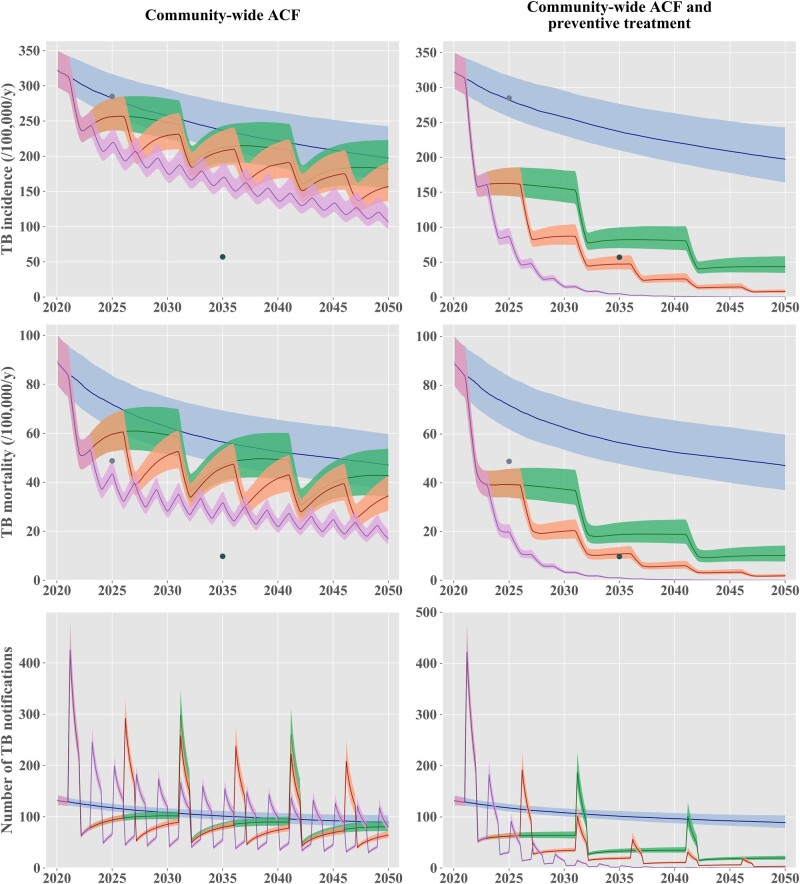
We used a transmission dynamic model of TB informed by local data to capture the Marshall Islands epidemic's historical dynamics. We then used the model to project the future epidemic trajectory following the active screening interventions, as well as considering a counterfactual scenario with no intervention. We also simulated future scenarios including periodic interventions similar to those previously implemented, to assess their ability to reach the End TB Strategy targets and TB pre-elimination in the Marshall Islands.
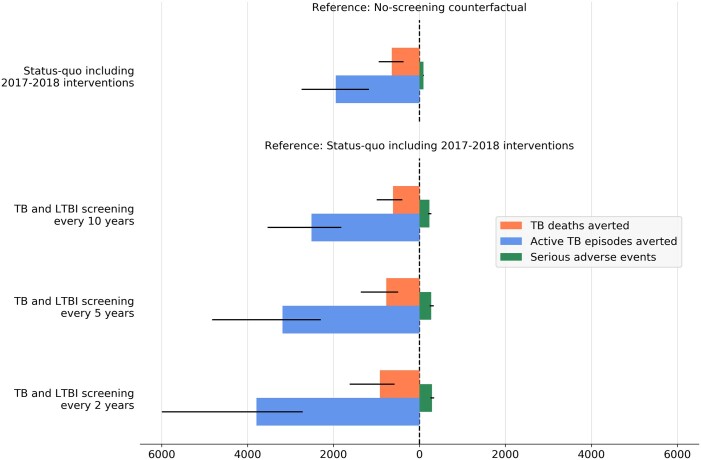
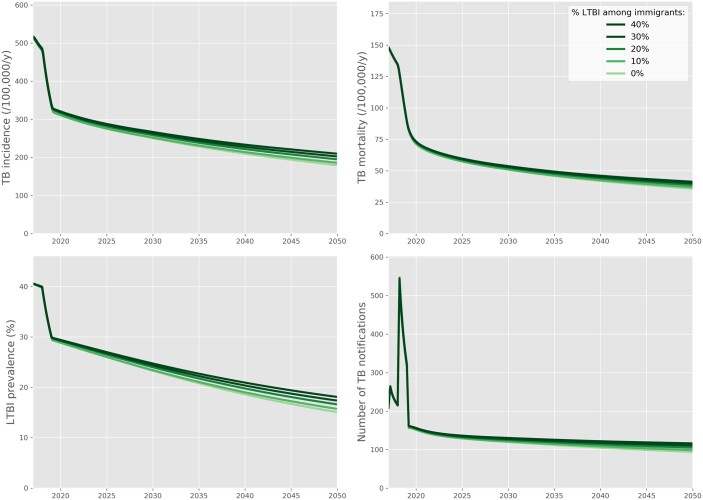
The screening activities conducted in 2017 and 2018 were estimated to have reduced TB incidence and mortality by around one-third in 2020, and are predicted to achieve the End TB Strategy milestone of 50% incidence reduction by 2025 compared with 2015. Screening interventions had a considerably greater impact when latent TB screening and treatment were included, compared with active case finding alone. Such combined programmes implemented at the national level could achieve TB pre-elimination around 2040 if repeated every 2 years.
Our model suggests that it would be possible to achieve TB pre-elimination by 2040 in the Marshall Islands through frequent repetition of the same interventions as those already implemented in the country. It also highlights the importance of including latent infection testing in active screening activities.
2017 年和 2018 年,马绍尔群岛共和国实施了雄心勃勃的针对潜伏性和活动性结核病(TB)的基于人群的筛查计划。
我们使用了一种基于当地数据的结核病传播动力学模型来捕捉马绍尔群岛的历史流行动态。然后,我们使用该模型来预测在实施主动筛查干预后的未来流行轨迹,同时考虑了没有干预的反事实情景。我们还模拟了包括类似先前实施的定期干预的未来情景,以评估它们达到终结结核病战略目标和在马绍尔群岛实现结核病消除前状态的能力。
2017 年和 2018 年开展的筛查活动估计将使 2020 年的结核病发病率和死亡率降低约三分之一,并有望在 2025 年实现终结结核病战略的发病率降低 50%的里程碑,与 2015 年相比。与单纯的主动发现病例相比,当包括潜伏性结核病筛查和治疗时,筛查干预的影响要大得多。如果在全国范围内每两年重复实施此类综合方案,可能会在 2040 年左右实现结核病消除前状态。
我们的模型表明,通过频繁重复该国已经实施的相同干预措施,马绍尔群岛有可能在 2040 年之前实现结核病消除前状态。它还强调了在主动筛查活动中纳入潜伏性感染检测的重要性。