Bose Mainak, Lampe Marko, Mahamid Julia, Ephrussi Anne
Developmental Biology Unit, European Molecular Biology Laboratory, Heidelberg 69117, Germany.
Advanced Light Microscopy Facility, European Molecular Biology Laboratory, Heidelberg 69117, Germany.
Cell. 2022 Apr 14;185(8):1308-1324.e23. doi: 10.1016/j.cell.2022.02.022. Epub 2022 Mar 23.
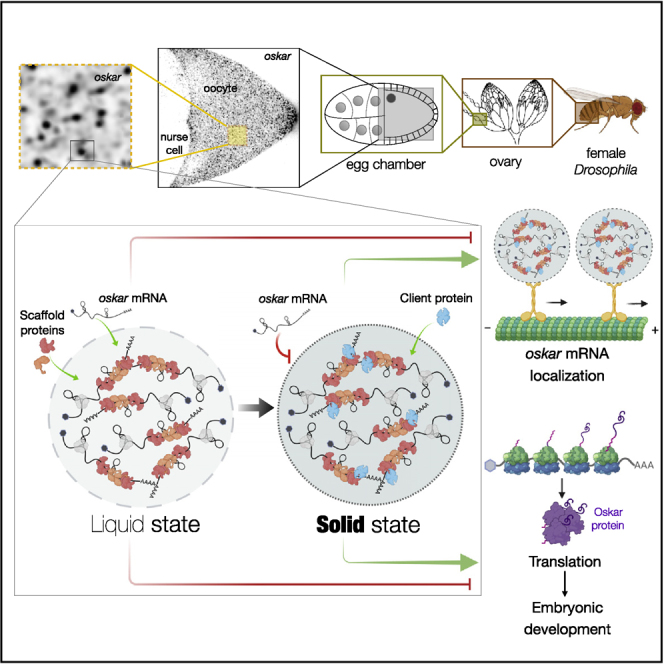
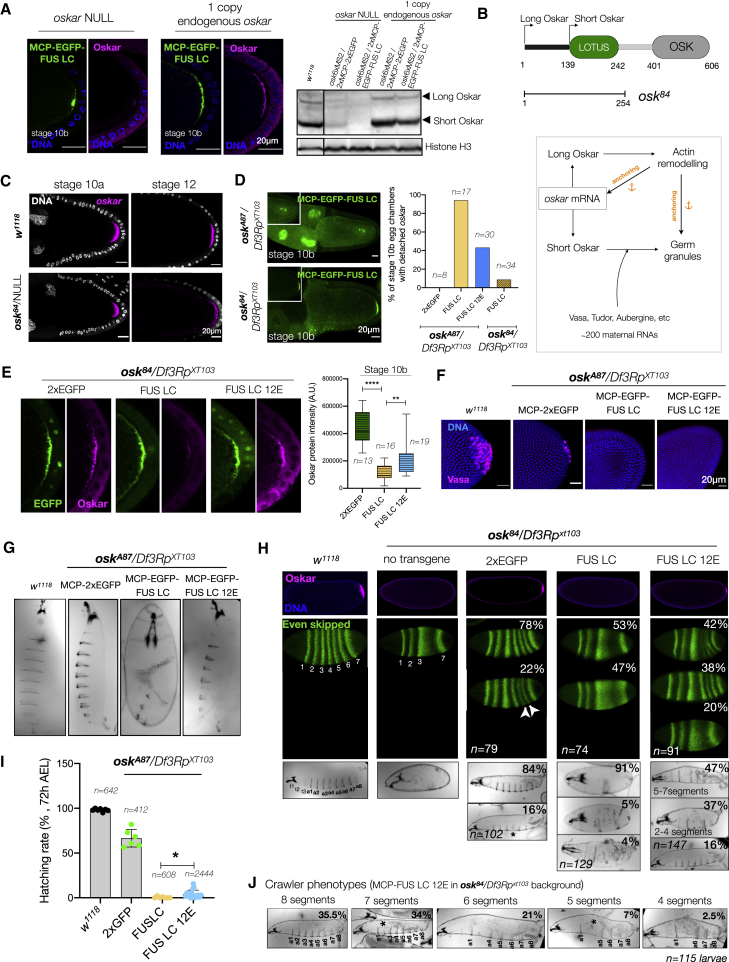
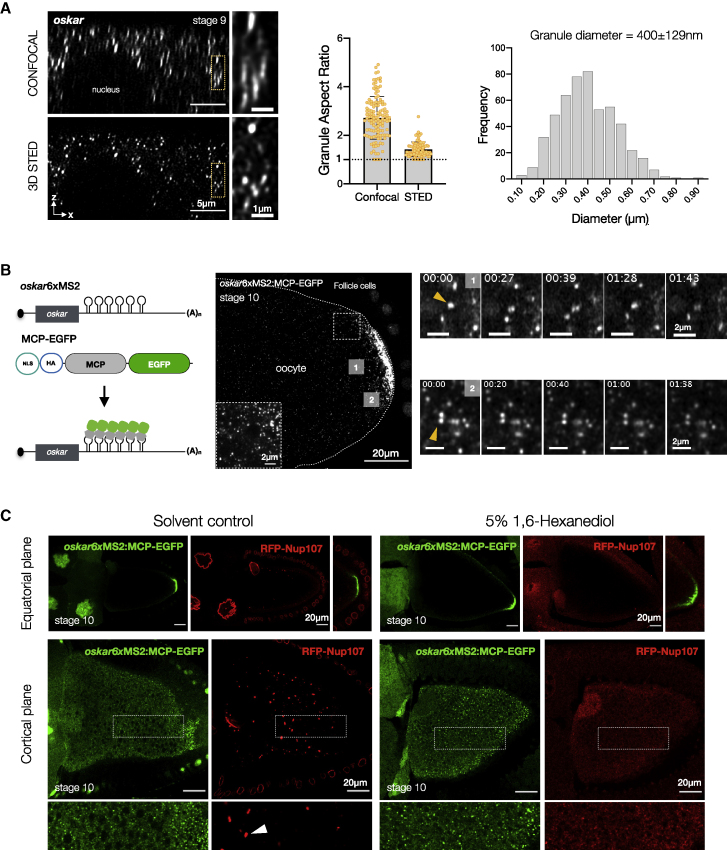
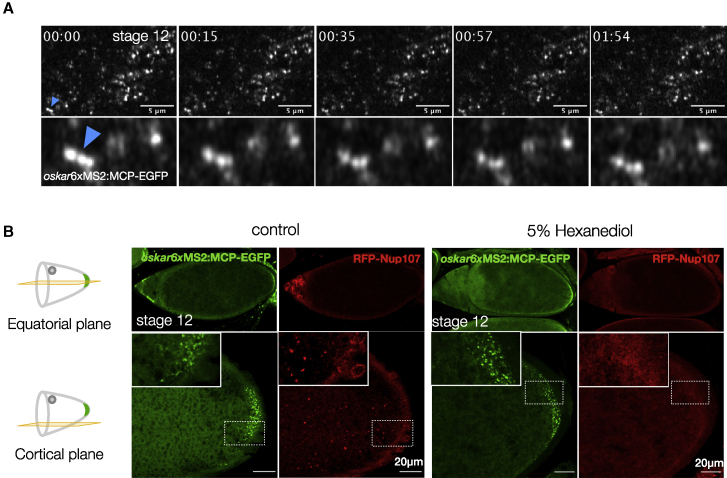
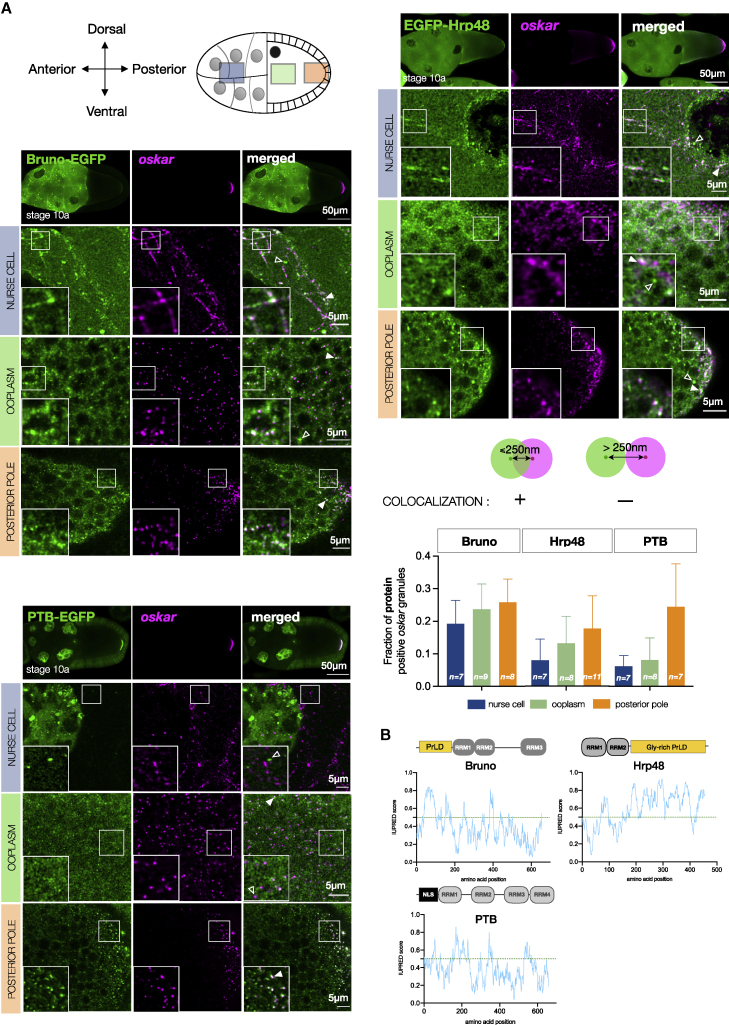
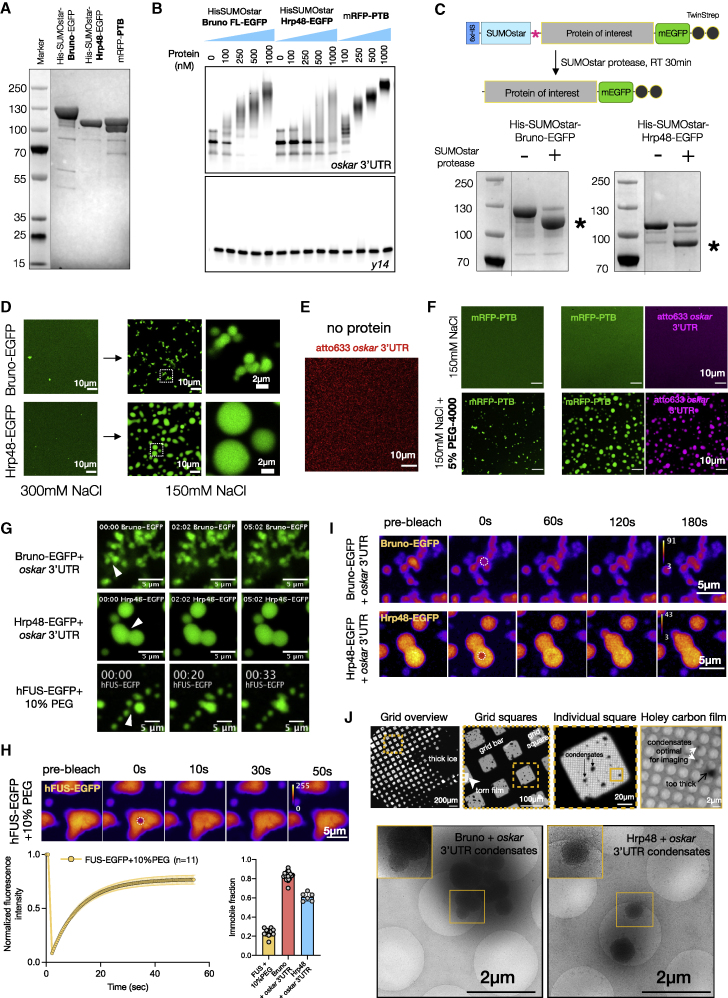
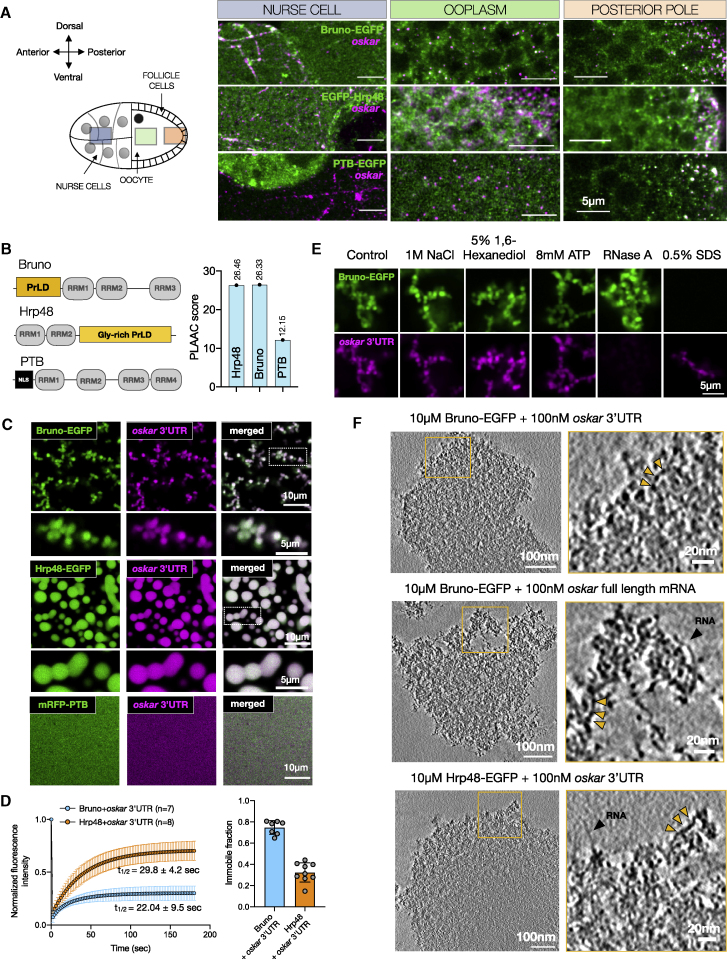
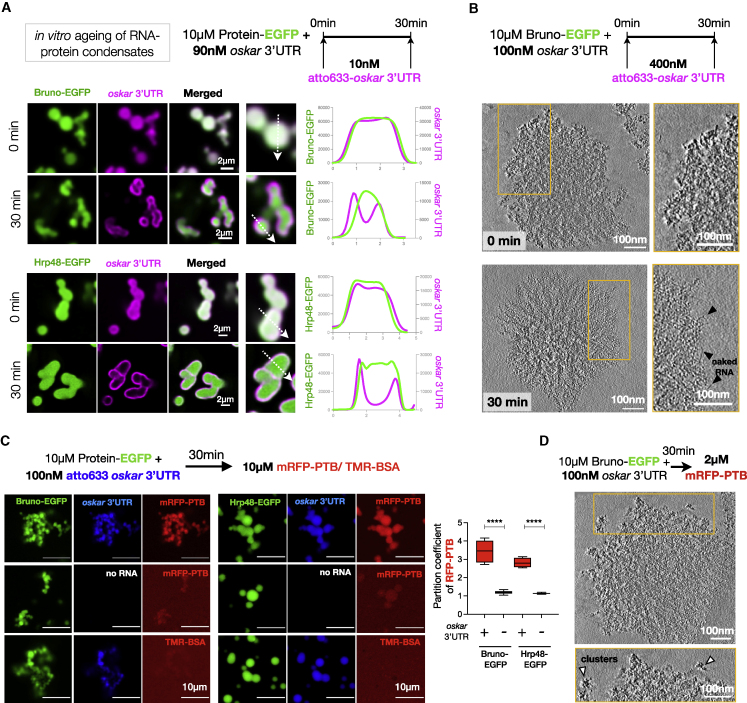
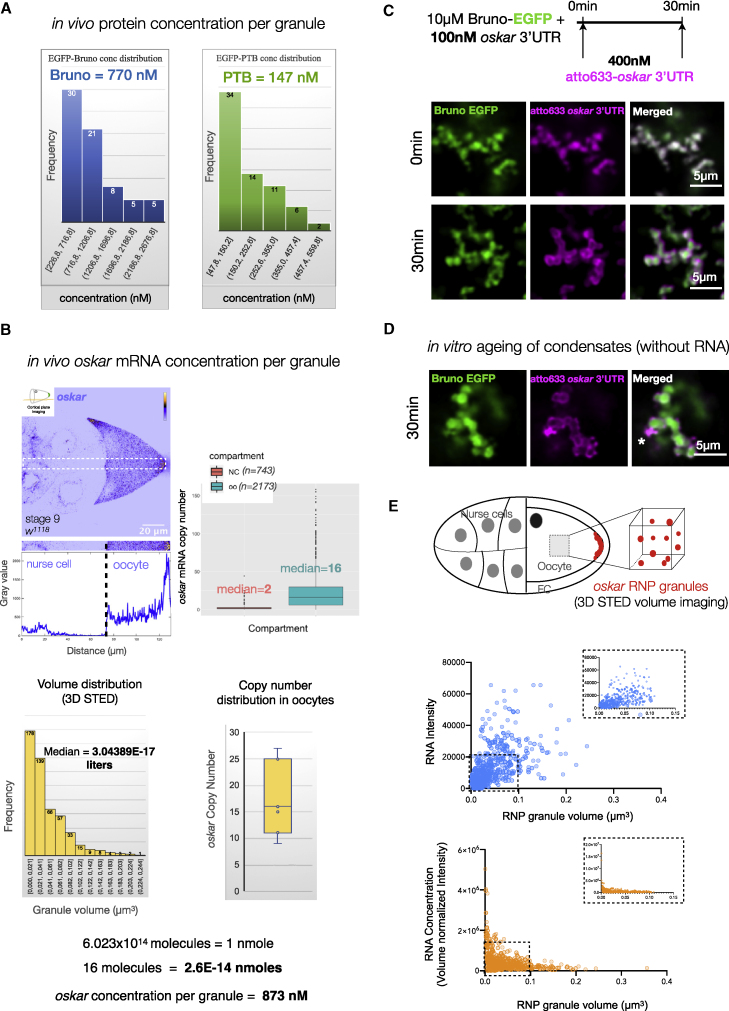
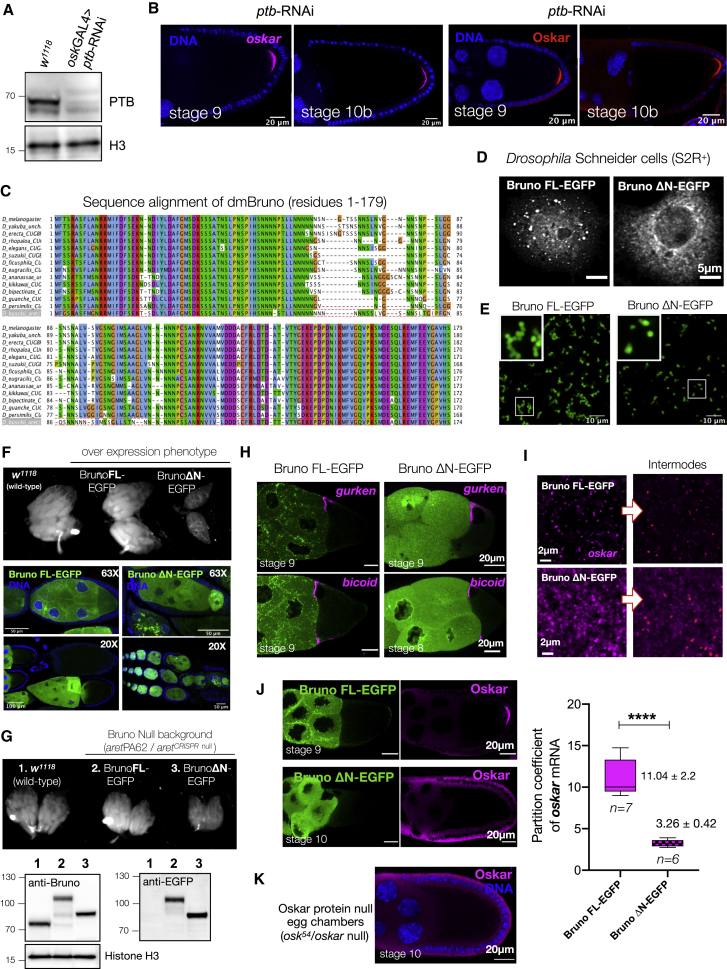
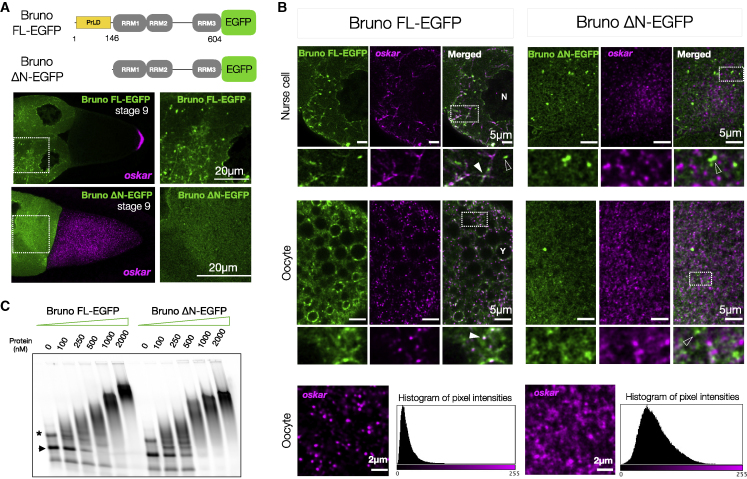
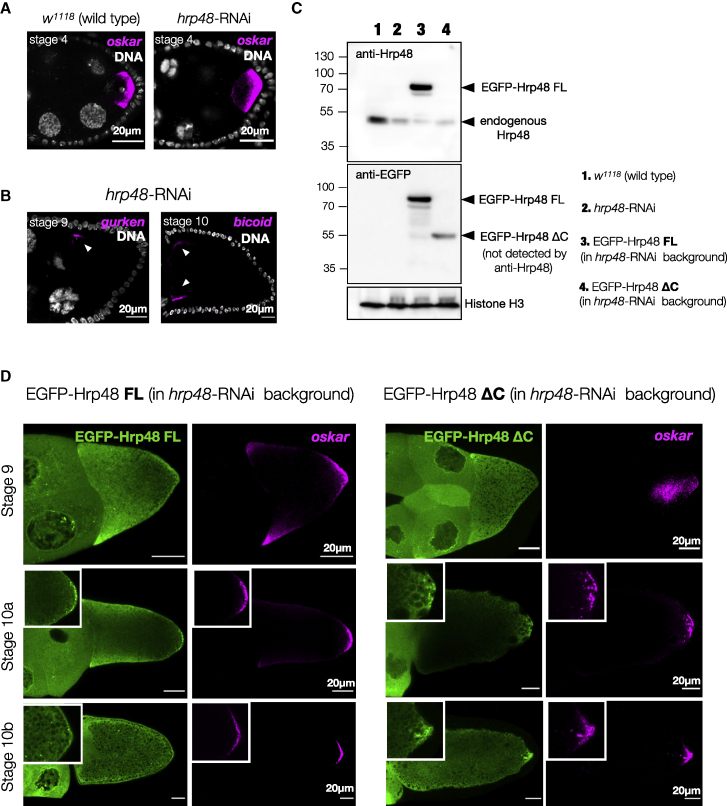
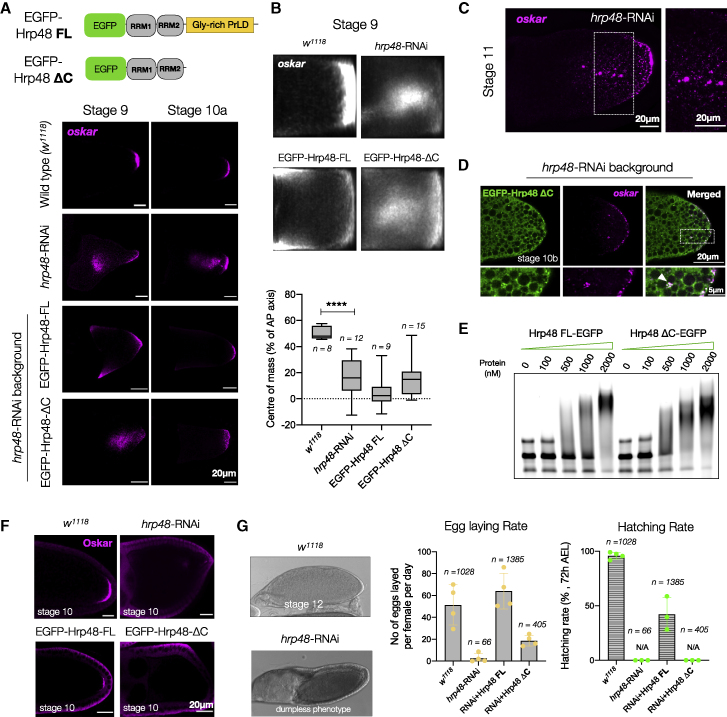
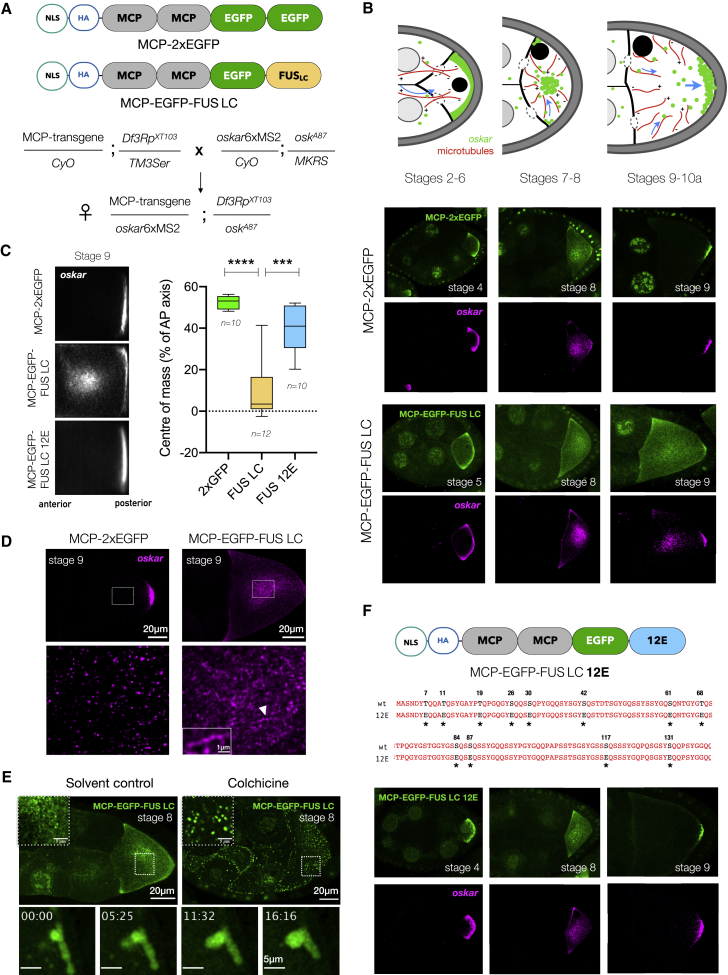
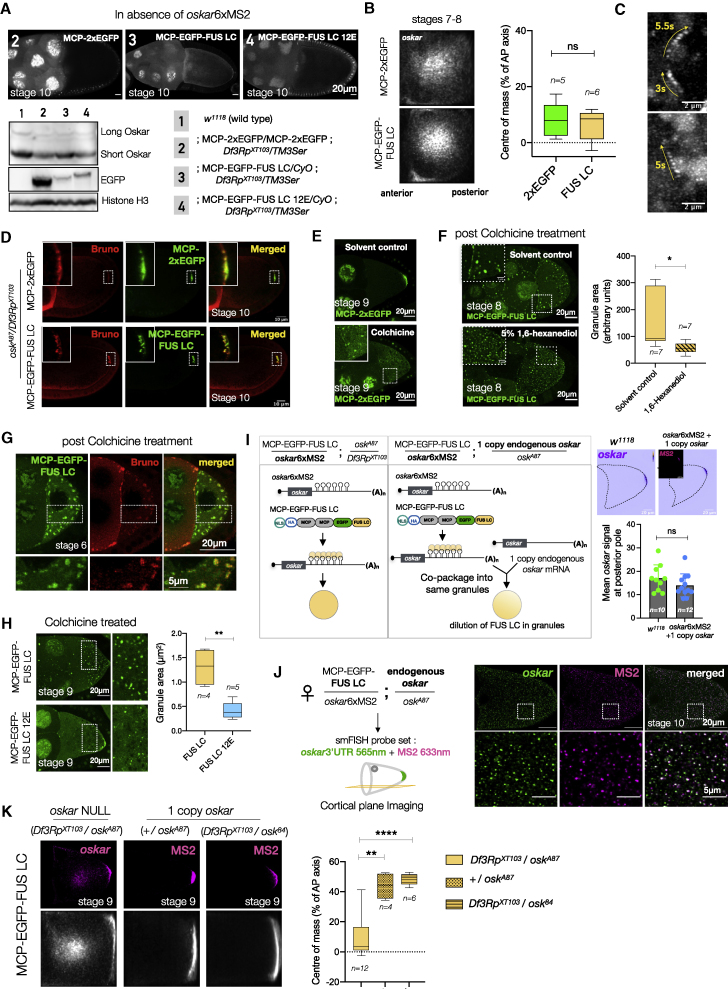
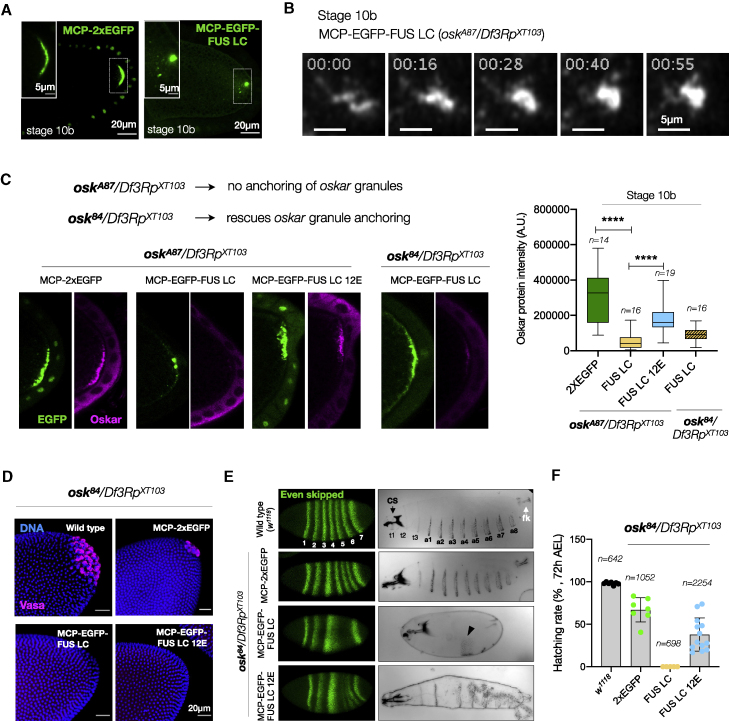
Asymmetric localization of oskar ribonucleoprotein (RNP) granules to the oocyte posterior is crucial for abdominal patterning and germline formation in the Drosophila embryo. We show that oskar RNP granules in the oocyte are condensates with solid-like physical properties. Using purified oskar RNA and scaffold proteins Bruno and Hrp48, we confirm in vitro that oskar granules undergo a liquid-to-solid phase transition. Whereas the liquid phase allows RNA incorporation, the solid phase precludes incorporation of additional RNA while allowing RNA-dependent partitioning of client proteins. Genetic modification of scaffold granule proteins or tethering the intrinsically disordered region of human fused in sarcoma (FUS) to oskar mRNA allowed modulation of granule material properties in vivo. The resulting liquid-like properties impaired oskar localization and translation with severe consequences on embryonic development. Our study reflects how physiological phase transitions shape RNA-protein condensates to regulate the localization and expression of a maternal RNA that instructs germline formation.
在果蝇胚胎中,osk基因核糖核蛋白(RNP)颗粒不对称定位于卵母细胞后部对于腹部模式形成和生殖系形成至关重要。我们发现,卵母细胞中的osk基因RNP颗粒是具有类固体物理性质的凝聚物。利用纯化的osk基因RNA以及支架蛋白Bruno和Hrp48,我们在体外证实了osk基因颗粒会经历从液相到固相的转变。液相允许RNA掺入,而固相则阻止额外RNA的掺入,同时允许依赖RNA的客户蛋白分配。对支架颗粒蛋白进行基因改造或将人肉瘤融合蛋白(FUS)的内在无序区域连接到osk基因mRNA上,能够在体内调节颗粒的物质性质。由此产生的类液体性质损害了osk基因的定位和翻译,对胚胎发育造成严重后果。我们的研究揭示了生理相变如何塑造RNA - 蛋白质凝聚物,以调节指导生殖系形成的母体RNA的定位和表达。