de Gruil Nadia, Pijl Hanno, van der Burg Sjoerd H, Kroep Judith R
Department of Medical Oncology, Leiden University Medical Center, 2333 ZA Leiden, The Netherlands.
Division of Endocrinology, Leiden University Medical Center, 2333 ZA Leiden, The Netherlands.
Cancers (Basel). 2022 Mar 9;14(6):1390. doi: 10.3390/cancers14061390.
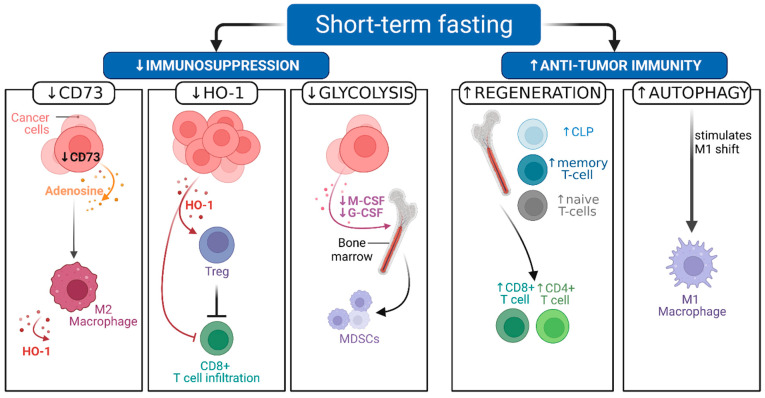
Short-term fasting (STF), using a low caloric, low protein fasting mimicking diet (FMD), appears to be a promising strategy to enhance chemotherapy-based cancer efficacy, while potentially alleviating toxicity. Preclinical results suggest that enhanced tumor immunity and decreased growth signaling, via lowering of circulating insulin and insulin growth factor 1 (IGF-1) levels form the potential underlying mechanisms. STF may boost anti-tumor responses by promoting tumor immunogenicity and decreasing local immunosuppression. These findings warrant further studies focused on the combination of STF, not only with chemotherapy, but also with immunotherapy to evaluate the full range of benefits of STF in cancer treatment. Here, we delineate the underlying anticancer mechanisms of fasting. We summarize preclinical evidence of STF boosting antitumor immunity and alleviating immunosuppression, as well as the clinical findings reporting the immunomodulatory effects of STF during various cancer treatments, including immunotherapy.
短期禁食(STF),采用低热量、低蛋白的模拟禁食饮食(FMD),似乎是一种很有前景的策略,可提高基于化疗的癌症疗效,同时可能减轻毒性。临床前结果表明,通过降低循环胰岛素和胰岛素生长因子1(IGF-1)水平增强肿瘤免疫和减少生长信号是潜在的潜在机制。短期禁食可能通过促进肿瘤免疫原性和减少局部免疫抑制来增强抗肿瘤反应。这些发现值得进一步研究,不仅关注短期禁食与化疗的联合,还关注其与免疫疗法的联合,以评估短期禁食在癌症治疗中的全面益处。在此,我们阐述禁食的潜在抗癌机制。我们总结了短期禁食增强抗肿瘤免疫和减轻免疫抑制的临床前证据,以及报告短期禁食在包括免疫疗法在内的各种癌症治疗期间的免疫调节作用的临床研究结果。