Department of Biomedical Engineering, City University of Hong Kong, 83 Tat Chee Avenue, Kowloon Tong, Hong Kong.
J Biomed Sci. 2020 May 5;27(1):58. doi: 10.1186/s12929-020-00651-0.
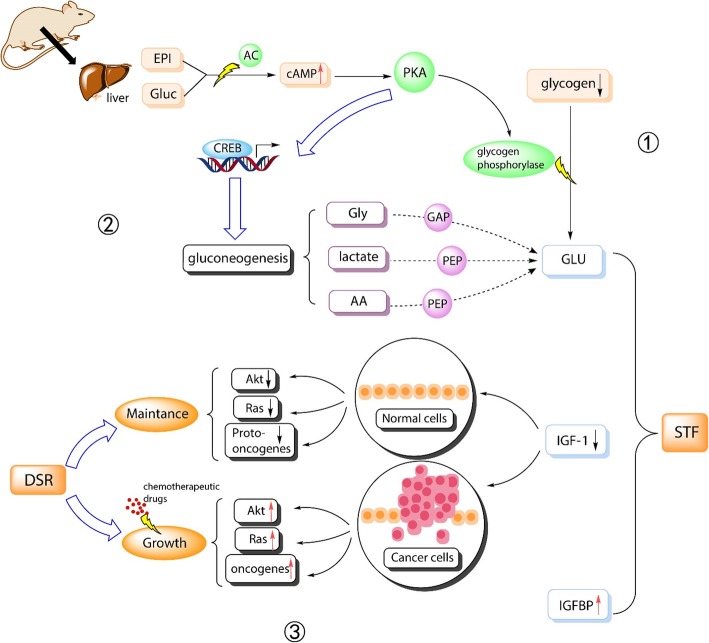
Short-term fasting (STF) is a technique to reduce nutrient intake for a specific period. Since metabolism plays a pivotal role in tumor progression, it can be hypothesized that STF can improve the efficacy of chemotherapy. Recent studies have demonstrated the efficacy of STF in cell and animal tumor models. However, large-scale clinical trials must be conducted to verify the safety and effectiveness of these diets. In this review, we re-examine the concept of how metabolism affects pathophysiological pathways. Next, we provided a comprehensive discussion of the specific mechanisms of STF on tumor progression, derived through studies carried out with tumor models. There are currently at least four active clinical trials on fasting and cancer treatment. Based on these studies, we highlight the potential caveats of fasting in clinical applications, including the onset of metabolic syndrome and other metabolic complications during chemotherapy, with a particular focus on the regulation of the epithelial to mesenchymal pathway and cancer heterogeneity. We further discuss the advantages and disadvantages of the current state-of-art tumor models for assessing the impact of STF on cancer treatment. Finally, we explored upcoming fasting strategies that could complement existing chemotherapy and immunotherapy strategies to enable personalized medicine. Overall, these studies have the potential for breakthroughs in cancer management.
短期禁食(STF)是一种在特定时间段内减少营养摄入的技术。由于代谢在肿瘤进展中起着关键作用,因此可以假设 STF 可以提高化疗的疗效。最近的研究已经证明了 STF 在细胞和动物肿瘤模型中的疗效。然而,必须进行大规模的临床试验来验证这些饮食的安全性和有效性。在这篇综述中,我们重新审视了代谢如何影响病理生理途径的概念。接下来,我们通过对肿瘤模型进行的研究,全面讨论了 STF 对肿瘤进展的具体作用机制。目前至少有四项关于禁食和癌症治疗的活跃临床试验。基于这些研究,我们强调了禁食在临床应用中的潜在注意事项,包括在化疗期间代谢综合征和其他代谢并发症的发生,特别关注上皮到间充质途径和癌症异质性的调节。我们进一步讨论了当前评估 STF 对癌症治疗影响的最先进肿瘤模型的优缺点。最后,我们探讨了即将出现的禁食策略,这些策略可以补充现有的化疗和免疫治疗策略,以实现个性化医疗。总的来说,这些研究有可能在癌症管理方面取得突破。