Yerra Veera Ganesh, Advani Andrew
Keenan Research Centre for Biomedical Science, Li Ka Shing Knowledge Institute, St. Michael's Hospital, Toronto, ON M5B 1T8, Canada.
Biomedicines. 2022 Mar 12;10(3):661. doi: 10.3390/biomedicines10030661.
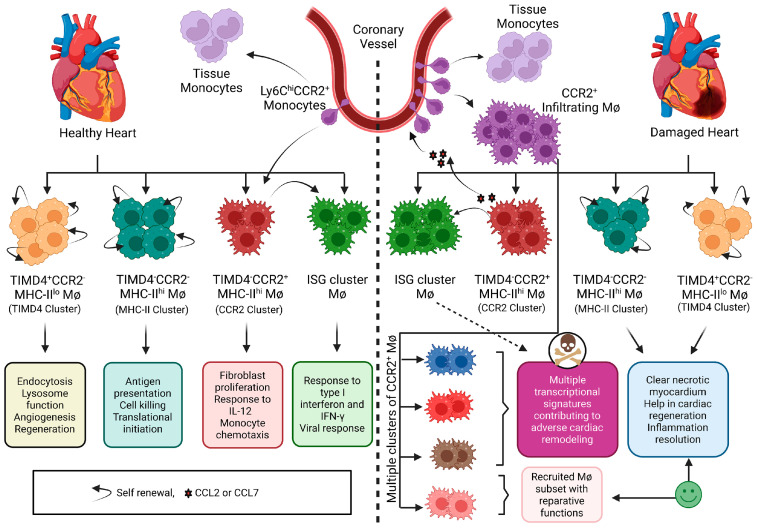
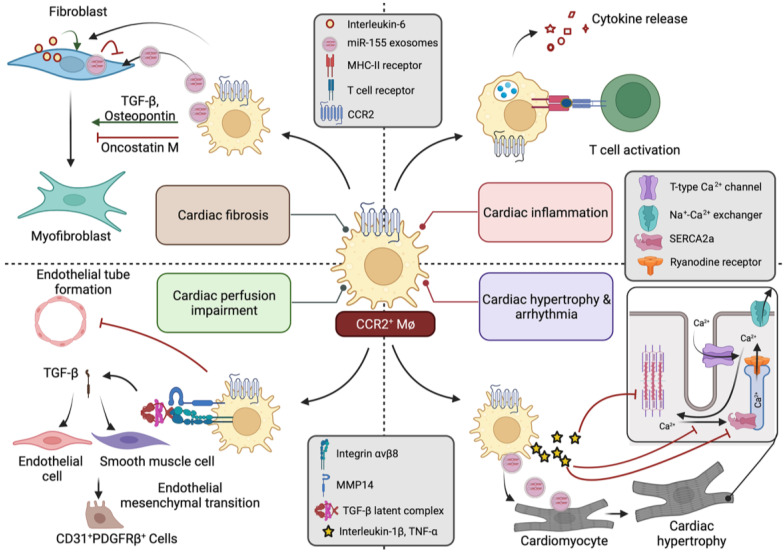
Even with recent advances in care, heart failure remains a major cause of morbidity and mortality, which urgently needs new treatments. One of the major antecedents of heart failure is pathological ventricular remodelling, the abnormal change in the size, shape, function or composition of the cardiac ventricles in response to load or injury. Accumulating immune cell subpopulations contribute to the change in cardiac cellular composition that occurs during ventricular remodelling, and these immune cells can facilitate heart failure development. Among cardiac immune cell subpopulations, macrophages that are recognized by their transcriptional or cell-surface expression of the chemokine receptor C-C chemokine receptor type 2 (CCR2), have emerged as playing an especially important role in adverse remodelling. Here, we assimilate the literature that has been generated over the past two decades describing the pathological roles that CCR2 macrophages play in ventricular remodelling. The goal is to facilitate research and innovation efforts in heart failure therapeutics by drawing attention to the importance of studying the manner by which CCR2 macrophages mediate their deleterious effects.
尽管近年来在治疗方面取得了进展,但心力衰竭仍然是发病和死亡的主要原因,迫切需要新的治疗方法。心力衰竭的主要先决条件之一是病理性心室重塑,即心室的大小、形状、功能或组成因负荷或损伤而发生的异常变化。不断积累的免疫细胞亚群促成了心室重塑过程中心肌细胞组成的变化,并且这些免疫细胞会促进心力衰竭的发展。在心脏免疫细胞亚群中,通过趋化因子受体C-C趋化因子受体2型(CCR2)的转录或细胞表面表达而被识别的巨噬细胞,在不良重塑中发挥着尤为重要的作用。在此,我们整理了过去二十年中产生的文献,描述了CCR2巨噬细胞在心室重塑中所起的病理作用。目的是通过提请人们注意研究CCR2巨噬细胞介导其有害作用的方式的重要性,来促进心力衰竭治疗方面的研究和创新工作。