Department of Human Genetics, Section Ophthalmogenetics, Amsterdam University Medical Centers (AUMC), University of Amsterdam (UvA), Location AMC, Meibergdreef, 1105 AZ Amsterdam, The Netherlands.
Georgia Institute of Technology, G.W. Woodruff School of Mechanical Engineering, Atlanta, GA 30332, USA.
Int J Mol Sci. 2022 Mar 8;23(6):2918. doi: 10.3390/ijms23062918.
The lack of suitable animal models for (dry) age-related macular degeneration (AMD) has hampered therapeutic research into the disease, so far. In this study, pigmented rats and mice were systematically injected with various doses of sodium iodate (SI). After injection, the retinal structure and visual function were non-invasively characterized over time to obtain in-depth data on the suitability of these models for studying experimental therapies for retinal degenerative diseases, such as dry AMD.
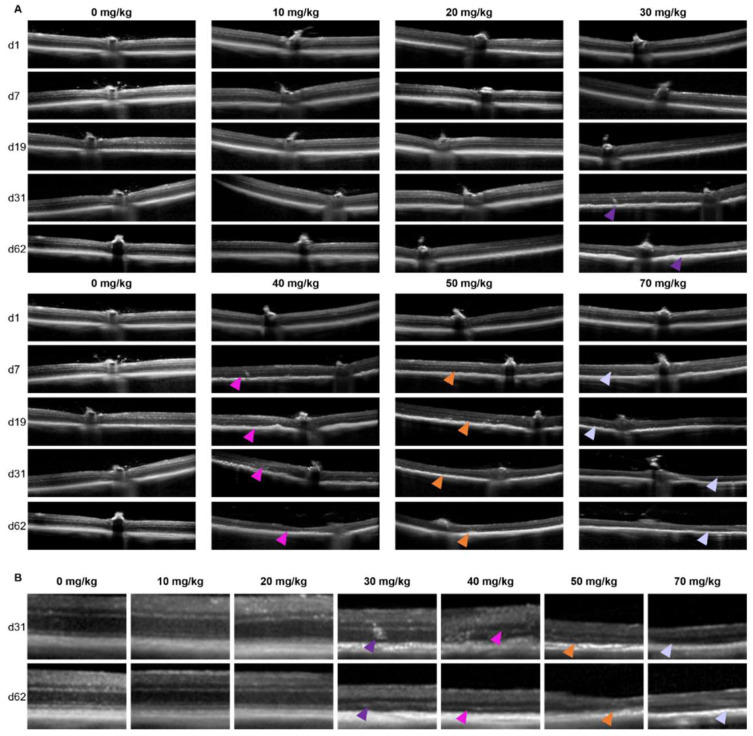
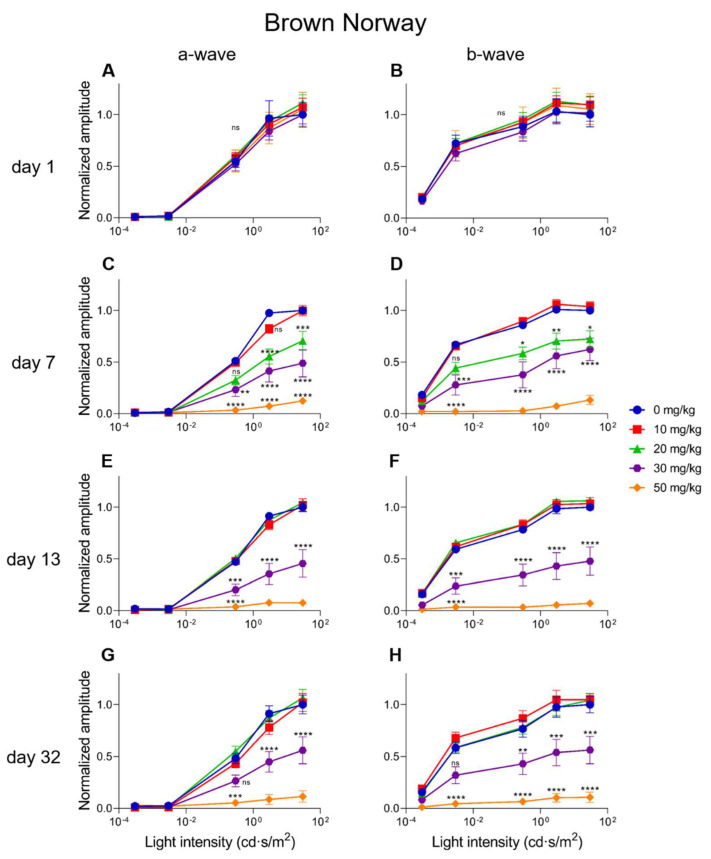
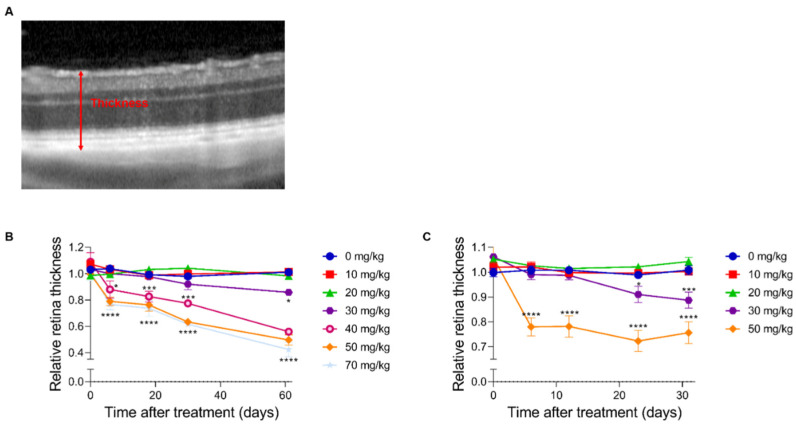
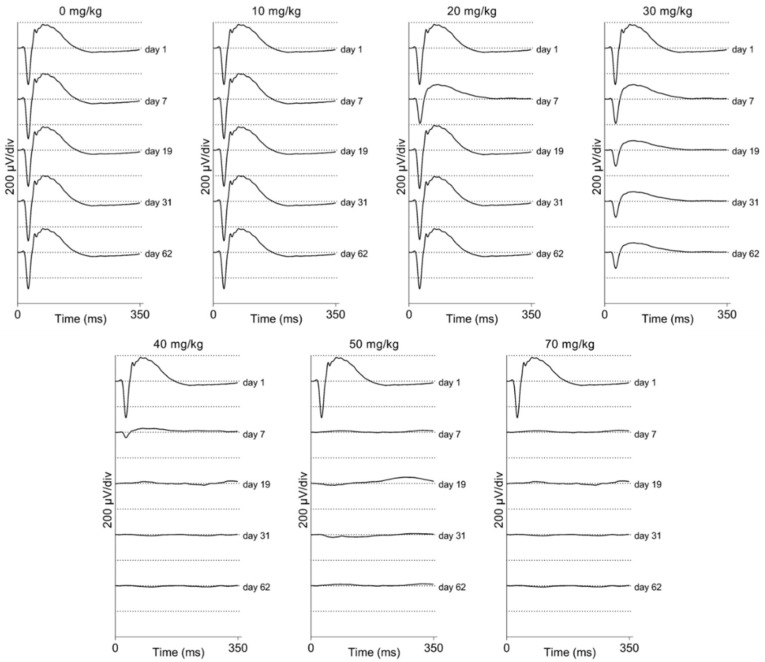
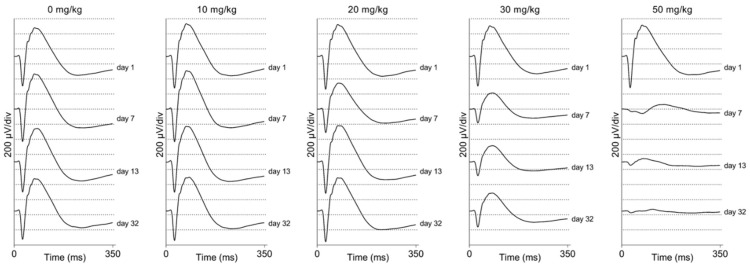
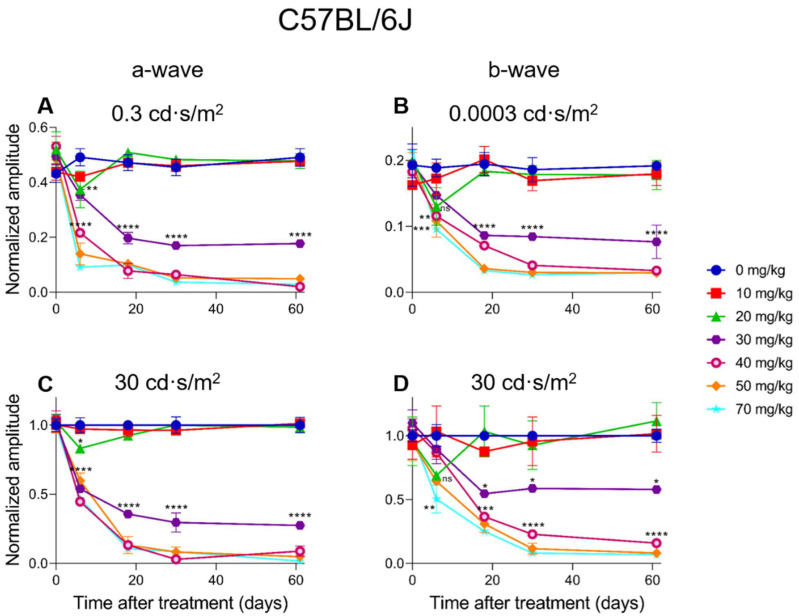
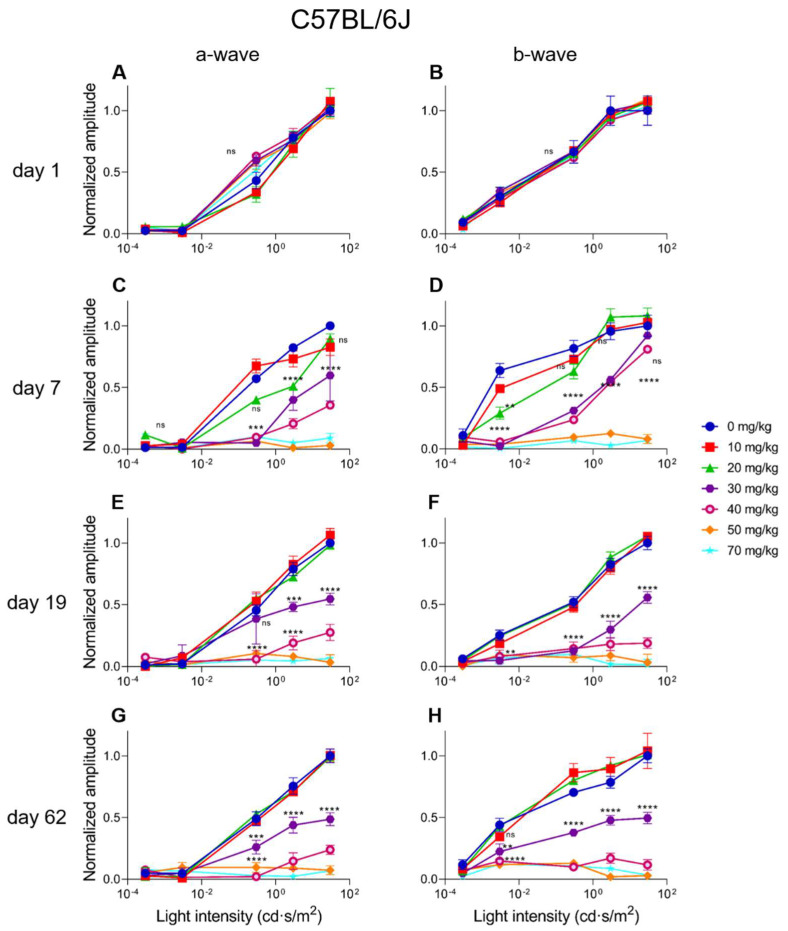
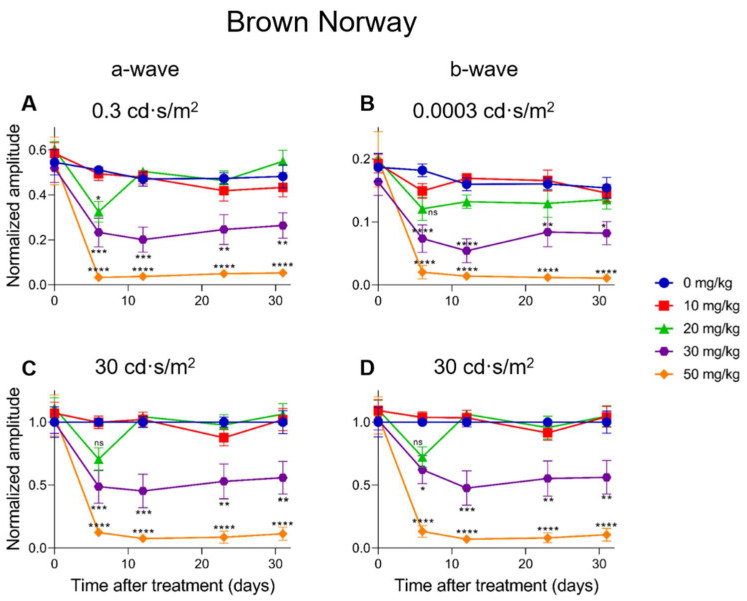
SI was injected into the tail vein (i.v.) using a series of doses (0-70 mg/kg) in adolescent C57BL/6J mice and Brown Norway rats. The retinal structure and function were assessed non-invasively at baseline (day 1) and at several time points (1-3, 5, and 10-weeks) post-injection by scanning laser ophthalmoscopy (SLO), optical coherence tomography (OCT), and electroretinography (ERG).
After the SI injection, retinal degeneration in mice and rats yielded similar results. The lowest dose (10 mg/kg) resulted in non-detectable structural or functional effects. An injection with 20 mg/kg SI did not result in an evident retinal degeneration as judged from the OCT data. In contrast, the ERG responses were temporarily decreased but returned to baseline within two-weeks. Higher doses (30, 40, 50, and 70 mg/kg) resulted in moderate to severe structural RPE and retinal injury and decreased the ERG amplitudes, indicating visual impairment in both mice and rat strains.
After the SI injections, we observed dose-dependent structural and functional pathological effects on the retinal pigment epithelium (RPE) and retina in the pigmented mouse and rat strains that were used in this study. Similar effects were observed in both species. In particular, a dose of 30 mg/kg seems to be suitable for future studies on developing experimental therapies. These relatively easily induced non-inherited models may serve as useful tools for evaluating novel therapies for RPE-related retinal degenerations, such as AMD.
缺乏合适的动物模型一直阻碍着与年龄相关的干性黄斑变性(AMD)相关的治疗研究。在这项研究中,我们系统性地给色素沉着的大鼠和小鼠尾静脉注射不同剂量的碘酸钠(SI)。注射后,我们通过扫频激光检眼镜(SLO)、光学相干断层扫描(OCT)和视网膜电图(ERG)等非侵入性方法,随时间对视网膜结构和视觉功能进行了特征描述,以深入了解这些模型是否适合研究干性 AMD 等视网膜退行性疾病的实验性治疗方法。
我们用一系列剂量(0-70mg/kg)在青春期 C57BL/6J 小鼠和棕色挪威鼠的尾静脉(i.v.)中注射 SI。在基线(第 1 天)和注射后 1-3、5 和 10 周的多个时间点,我们通过 SLO、OCT 和 ERG 等非侵入性方法评估视网膜结构和功能。
SI 注射后,小鼠和大鼠的视网膜变性产生了相似的结果。最低剂量(10mg/kg)导致结构或功能无明显变化。从 OCT 数据来看,20mg/kg SI 注射不会导致明显的视网膜变性。相反,ERG 反应暂时降低,但在两周内恢复到基线。更高剂量(30、40、50 和 70mg/kg)导致中重度 RPE 和视网膜损伤,以及 ERG 幅度降低,表明两种品系的小鼠和大鼠都出现了视力障碍。
在 SI 注射后,我们观察到在用于本研究的色素沉着的小鼠和大鼠品系的视网膜色素上皮(RPE)和视网膜上出现了剂量依赖性的结构和功能病理变化。两种物种都观察到了相似的效果。特别是,30mg/kg 的剂量似乎适合用于开发实验性治疗方法的未来研究。这些相对容易诱导的非遗传性模型可能成为评估 RPE 相关视网膜变性(如 AMD)新型治疗方法的有用工具。