Department of Oral Science and Translational Research, College of Dental Medicine, Nova Southeastern University, 3200 South University Drive, Fort Lauderdale, FL 33328, USA.
Periodontic Department, Faculty of Dental Medicine, Universitas Airlangga, Surabaya 60132, Indonesia.
Int J Mol Sci. 2022 Mar 9;23(6):2938. doi: 10.3390/ijms23062938.
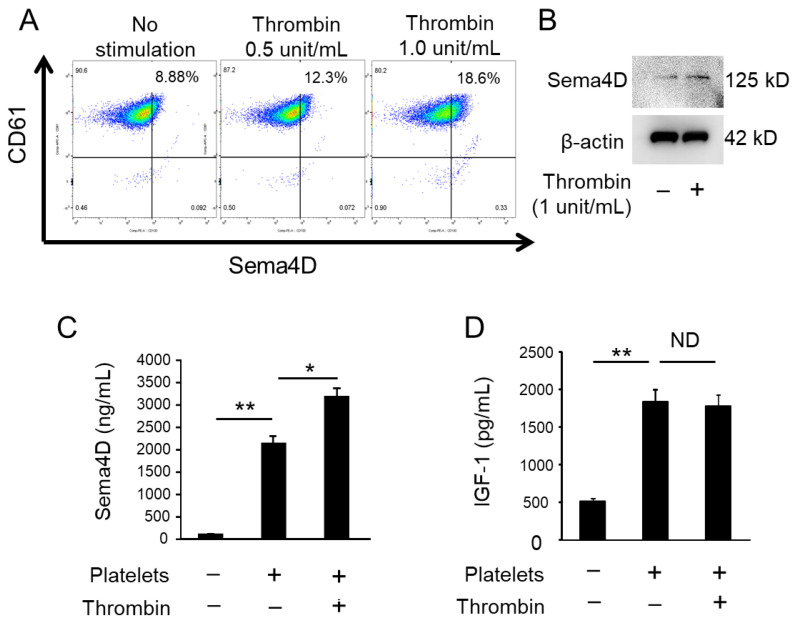
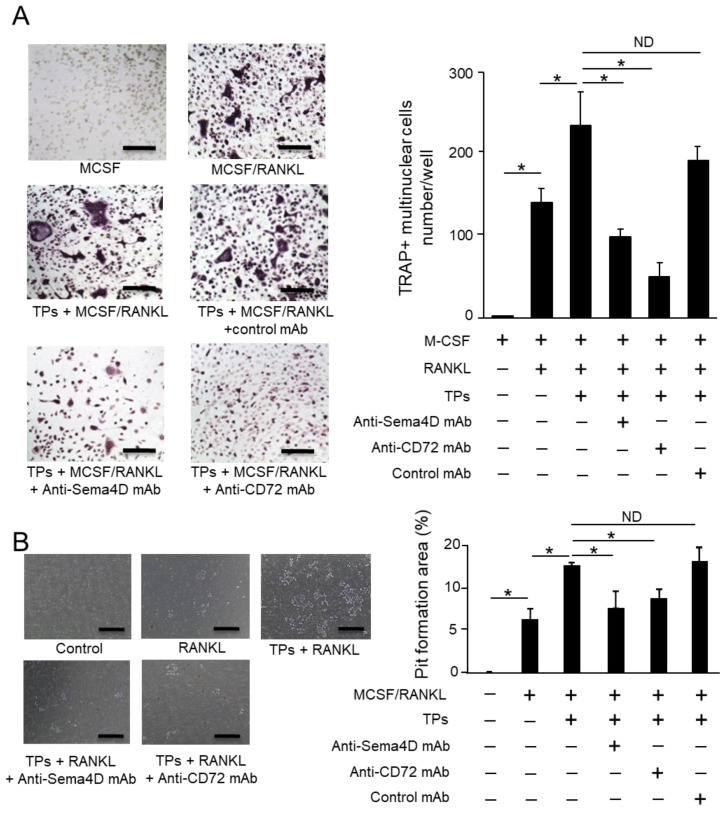
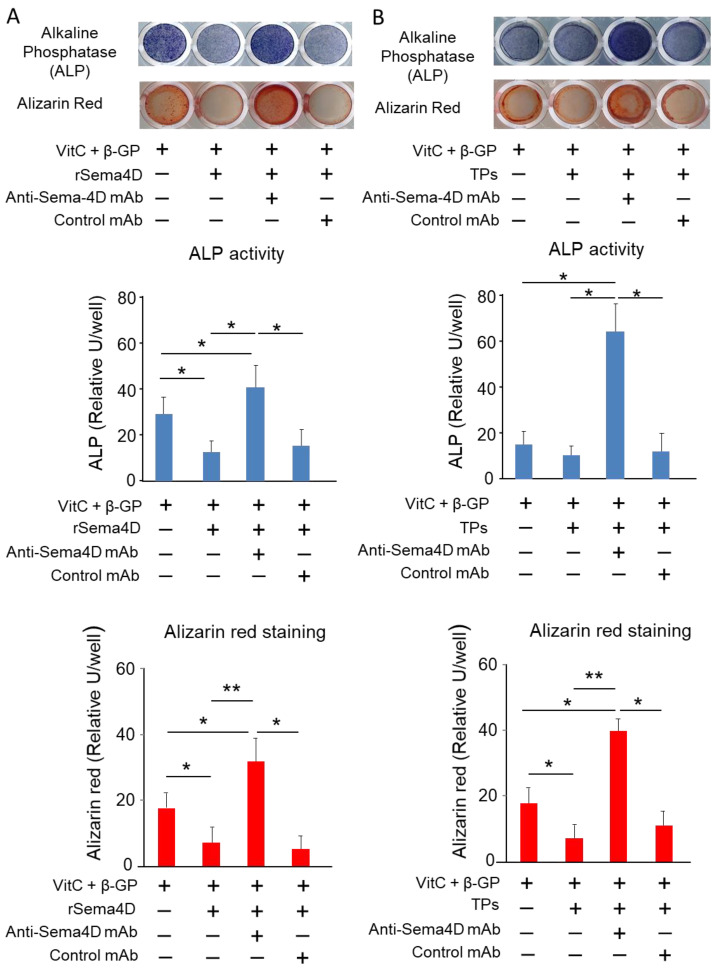
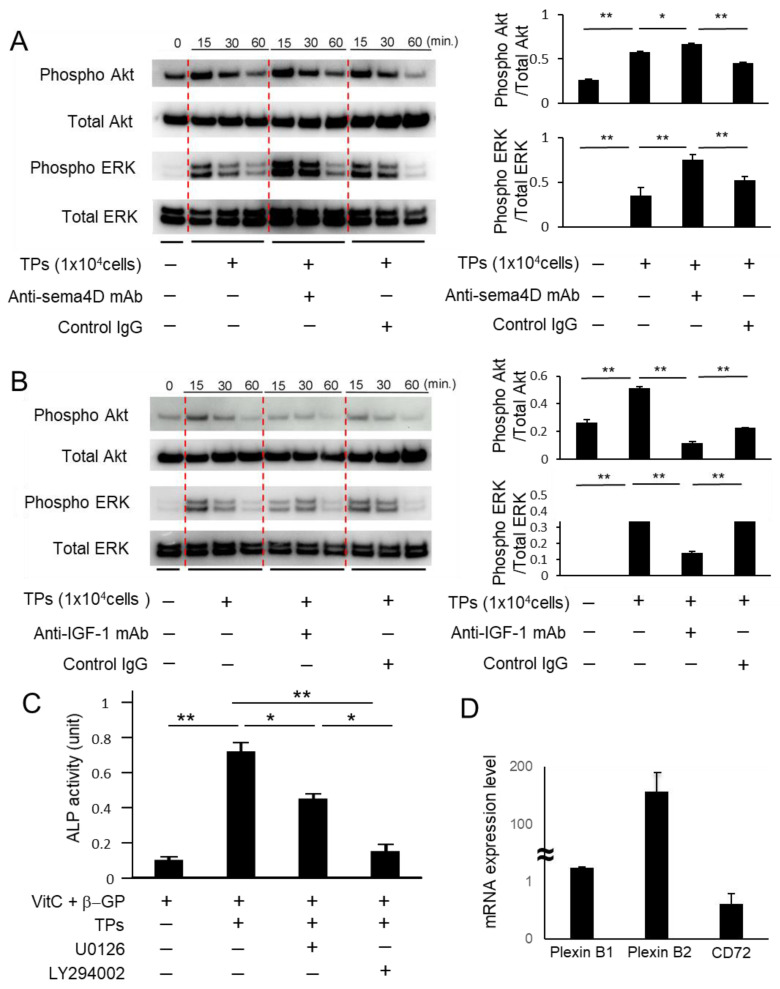
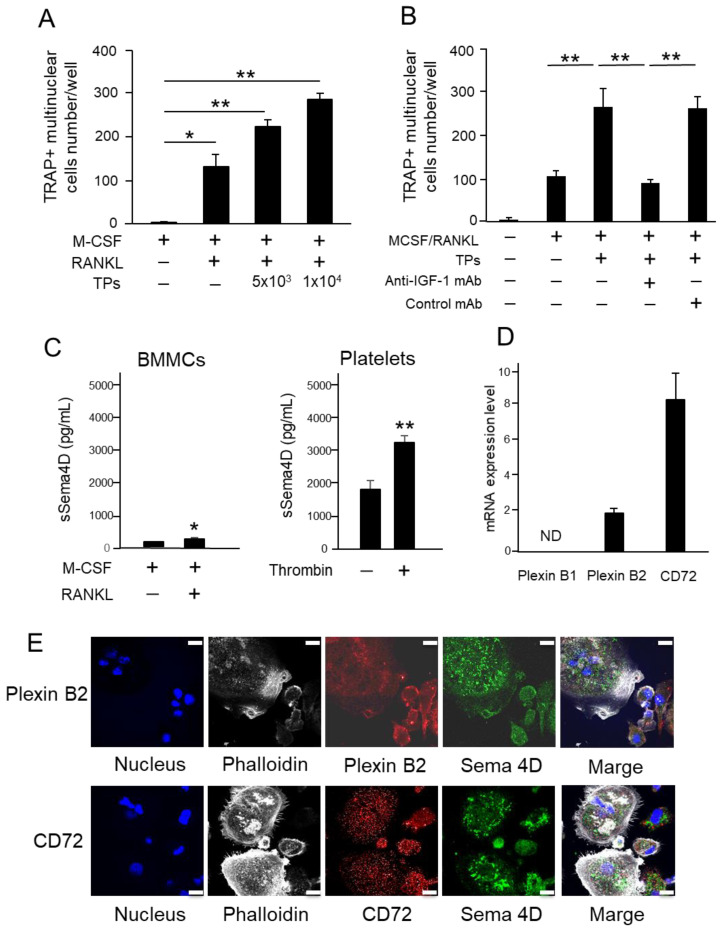
Effects of the antiosteoblastogenesis factor Semaphorin 4D (Sema4D), expressed by thrombin-activated platelets (TPs), on osteoblastogenesis, as well as osteoclastogenesis, were investigated in vitro. Intact platelets released both Sema4D and IGF-1. However, in response to stimulation with thrombin, platelets upregulated the release of Sema4D, but not IGF-1. Anti-Sema4D-neutralizing monoclonal antibody (mAb) upregulated TP-mediated osteoblastogenesis in MC3T3-E1 osteoblast precursors. MC3T3-E1 cells exposed to TPs induced phosphorylation of Akt and ERK further upregulated by the addition of anti-sema4D-mAb, suggesting the suppressive effects of TP-expressing Sema4D on osteoblastogenesis. On the other hand, TPs promoted RANKL-mediated osteoclastogenesis in the primary culture of bone-marrow-derived mononuclear cells (BMMCs). Among the known three receptors of Sema4D, including Plexin B1, Plexin B2 and CD72, little Plexin B2 was detected, and no Plexin B1 was detected, but a high level of CD72 mRNA was detected in RANKL-stimulated BMMCs by qPCR. Both anti-Sema4D-mAb and anti-CD72-mAb suppressed RANKL-induced osteoclast formation and bone resorptive activity, suggesting that Sema4D released by TPs promotes osteoclastogenesis via ligation to a CD72 receptor. This study demonstrated that Sema4D released by TPs suppresses osteogenic activity and promotes osteoclastogenesis, suggesting the novel property of platelets in bone-remodeling processes.
血小板衍生的抗成骨细胞形成因子 Sema4D 通过与其受体结合促进破骨细胞形成和骨吸收