Department of Integrated Biomedical Science, Graduate School, Soonchunhyang University, 25 Bongjeong-ro, Dongnam-gu, Cheonan 31151, Korea.
Soonchunhyang Institute of Medi-Bio Science, Soonchunhyang University, 25 Bongjeong-ro, Dongnam-gu, Cheonan 31151, Korea.
Int J Mol Sci. 2022 Mar 13;23(6):3089. doi: 10.3390/ijms23063089.
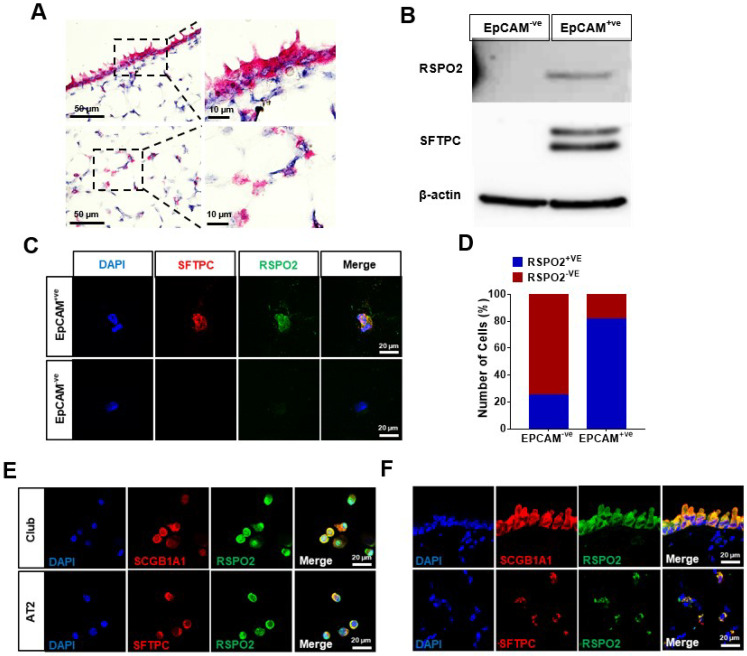
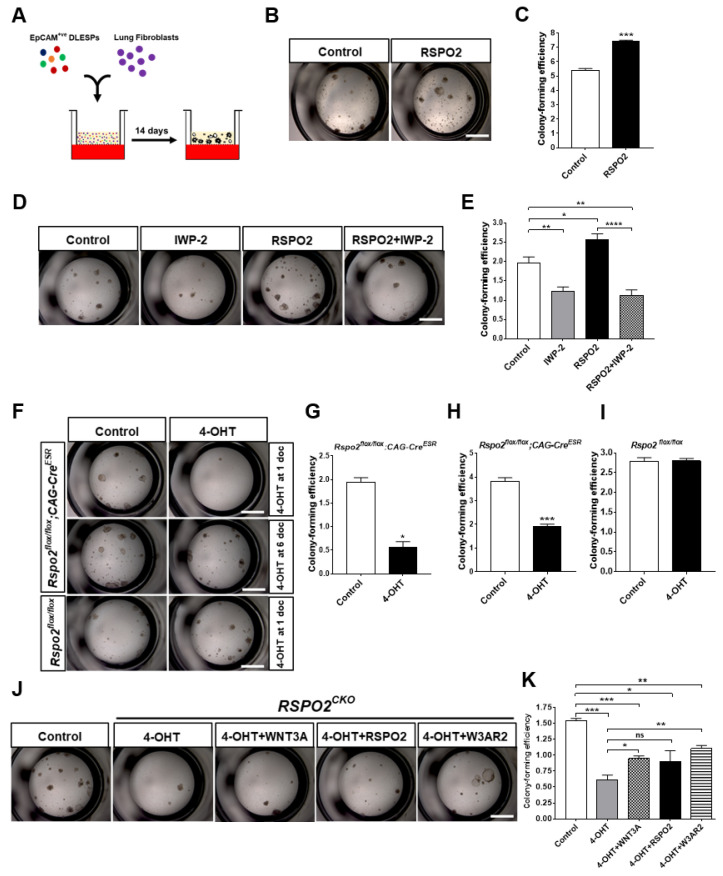
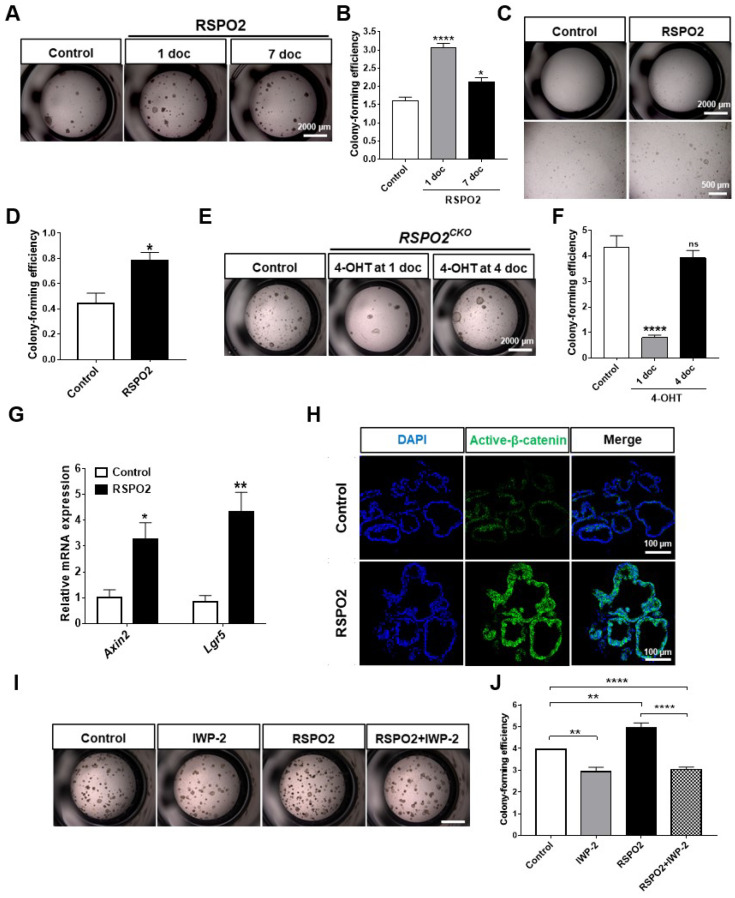
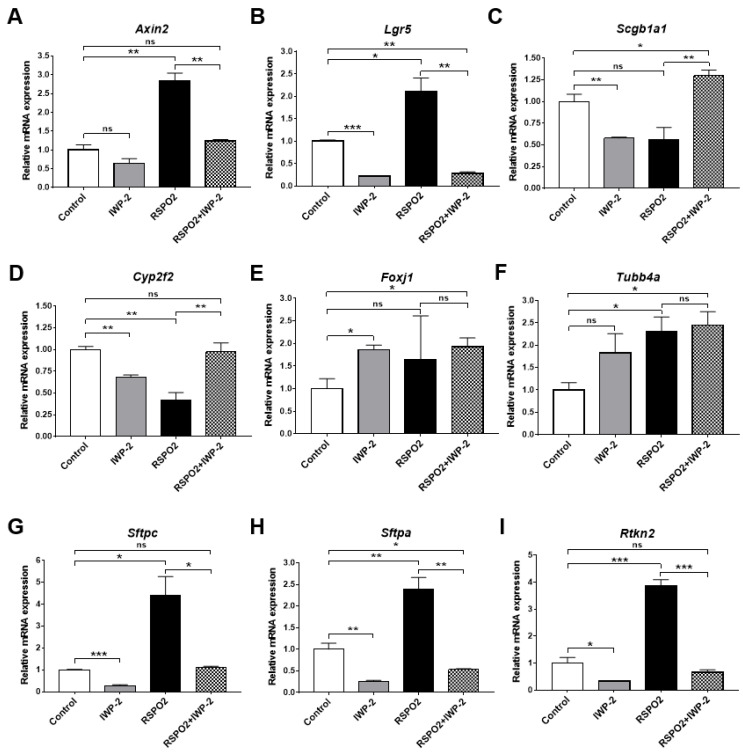
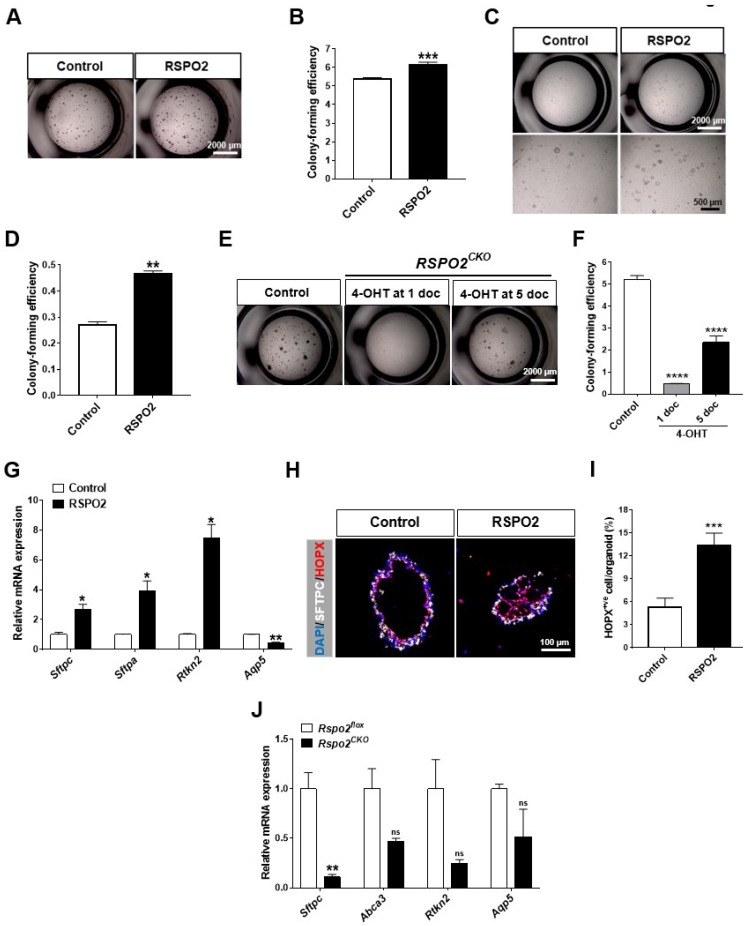
The lungs have a remarkable ability to regenerate damaged tissues caused by acute injury. Many lung diseases, especially chronic lung diseases, are associated with a reduced or disrupted regeneration potential of the lungs. Therefore, understanding the underlying mechanisms of the regenerative capacity of the lungs offers the potential to identify novel therapeutic targets for these diseases. R-spondin2, a co-activator of WNT/β-catenin signaling, plays an important role in embryonic murine lung development. However, the role of in adult lung homeostasis and regeneration remains unknown. The aim of this study is to determine function in distal lung stem/progenitor cells and adult lung regeneration. In this study, we found that robust expression was detected in different epithelial cells, including airway club cells and alveolar type 2 (AT2) cells in the adult lungs. However, expression significantly decreased during the first week after naphthalene-induced airway injury and was restored by day 14 post-injury. In ex vivo 3D organoid culture, recombinant RSPO2 promoted the colony formation and differentiation of both club and AT2 cells through the activation of canonical WNT signaling. In contrast, ablation in club and AT2 cells significantly disrupted their expansion capacity in the ex vivo 3D organoid culture. Furthermore, mice lacking showed significant defects in airway regeneration after naphthalene-induced injury. Our results strongly suggest that RSPO2 plays a key role in the adult lung epithelial stem/progenitor cells during homeostasis and regeneration, and therefore, it may be a potential therapeutic target for chronic lung diseases with reduced regenerative capability.
肺具有很强的再生能力,可以修复急性损伤导致的组织损伤。许多肺部疾病,尤其是慢性肺部疾病,与肺的再生潜力降低或受损有关。因此,了解肺的再生能力的潜在机制为这些疾病提供了确定新的治疗靶点的可能性。R-spondin2 是 WNT/β-catenin 信号的共激活因子,在胚胎期小鼠肺发育中起着重要作用。然而,在成人肺稳态和再生中 的作用尚不清楚。本研究旨在确定 在远端肺干细胞/祖细胞和成人肺再生中的功能。在这项研究中,我们发现 在成年肺中的不同上皮细胞中都有强烈的表达,包括气道 club 细胞和肺泡 2 型(AT2)细胞。然而,在萘诱导的气道损伤后第一周内 的表达显著降低,并在损伤后第 14 天恢复。在体外 3D 类器官培养中,重组 RSPO2 通过激活经典 WNT 信号促进了 club 和 AT2 细胞的集落形成和分化。相比之下, 在 club 和 AT2 细胞中的缺失显著破坏了它们在体外 3D 类器官培养中的扩增能力。此外,缺乏 的小鼠在萘诱导的损伤后气道再生存在明显缺陷。我们的研究结果强烈表明,RSPO2 在维持肺上皮干细胞/祖细胞的稳态和再生中起着关键作用,因此,它可能是慢性肺部疾病中具有降低再生能力的潜在治疗靶点。