Division of Glycoscience, Department of Chemistry, School of Engineering Sciences in Chemistry, Biotechnology and Health, KTH Royal Institute of Technology, AlbaNova University Center, 106 91 Stockholm, Sweden.
Department of Computer Science, School of Electrical Engineering and Computer Science, KTH Royal Institute of Technology, 100 44 Stockholm, Sweden.
Int J Mol Sci. 2022 Mar 21;23(6):3409. doi: 10.3390/ijms23063409.
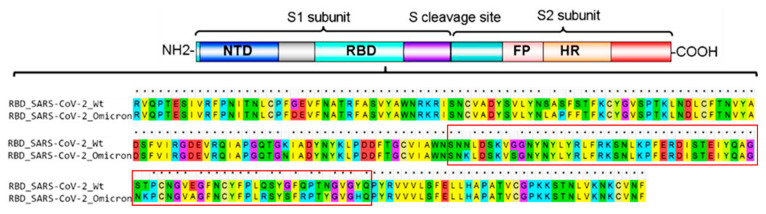
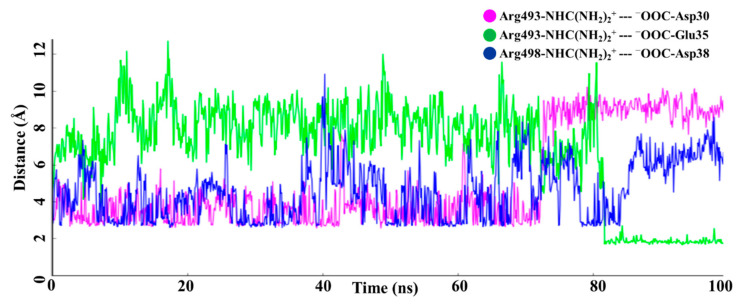
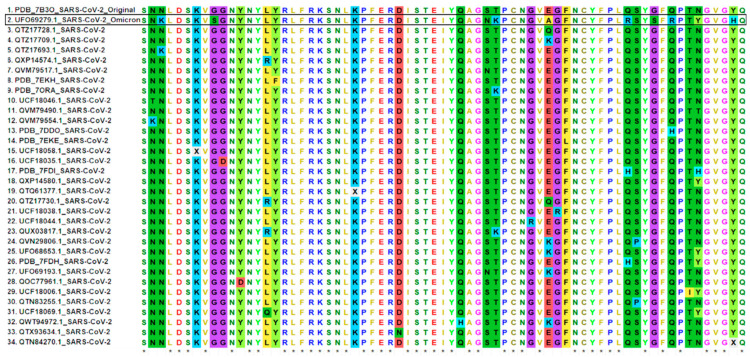
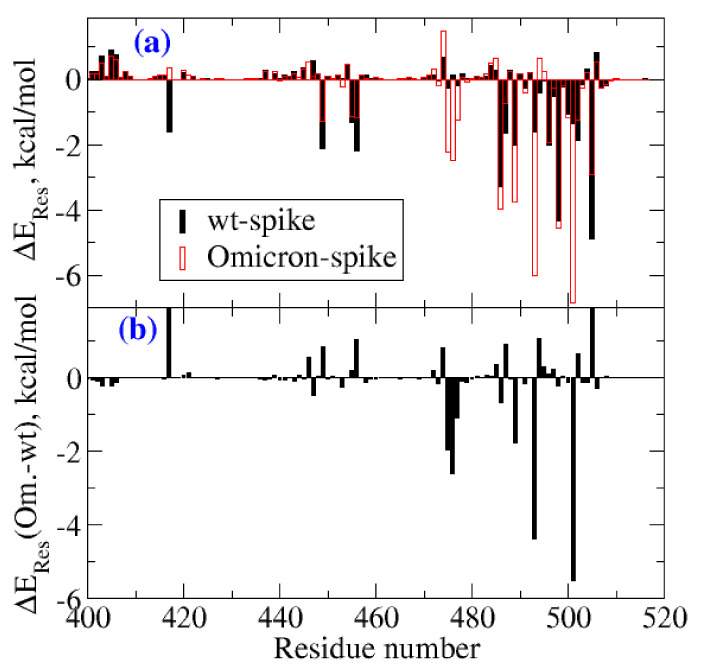
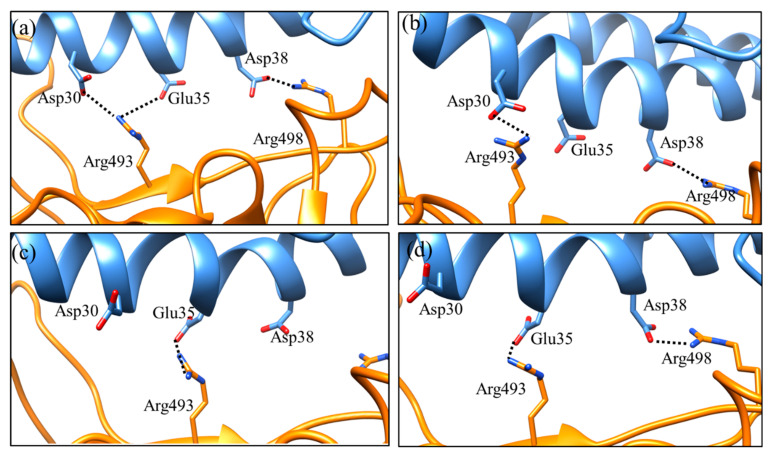
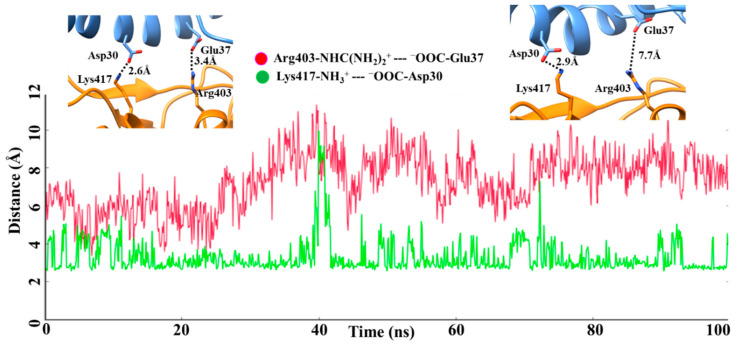
The new variant of severe acute respiratory syndrome coronavirus type 2 (SARS-CoV-2), Omicron, has been quickly spreading in many countries worldwide. Compared to the original virus, Omicron is characterized by several mutations in its genomic region, including the spike protein's receptor-binding domain (RBD). We have computationally investigated the interaction between the RBD of both the wild type and Omicron variant of SARS-CoV-2 with the human angiotensin-converting enzyme 2 (hACE2) receptor using molecular dynamics and molecular mechanics-generalized Born surface area (MM-GBSA)-based binding free energy calculations. The mode of the interaction between Omicron's RBD with the hACE2 receptor is similar to the original SARS-CoV-2 RBD except for a few key differences. The binding free energy difference shows that the spike protein of Omicron has an increased affinity for the hACE2 receptor. The mutated residues in the RBD showed strong interactions with a few amino acid residues of hACE2. More specifically, strong electrostatic interactions (salt bridges) and hydrogen bonding were observed between R493 and R498 residues of the Omicron RBD with D30/E35 and D38 residues of the hACE2, respectively. Other mutated amino acids in the Omicron RBD, e.g., S496 and H505, also exhibited hydrogen bonding with the hACE2 receptor. A pi-stacking interaction was also observed between tyrosine residues (RBD-Tyr501: hACE2-Tyr41) in the complex, which contributes majorly to the binding free energies and suggests that this is one of the key interactions stabilizing the formation of the complex. The resulting structural insights into the RBD:hACE2 complex, the binding mode information within it, and residue-wise contributions to the free energy provide insight into the increased transmissibility of Omicron and pave the way to design and optimize novel antiviral agents.
新型严重急性呼吸系统综合症冠状病毒 2 型(SARS-CoV-2)的变种,奥密克戎,已在世界多国迅速传播。相较于原始病毒,奥密克戎在其基因组区域具有数个突变,包括刺突蛋白的受体结合域(RBD)。我们已通过分子动力学和基于分子力学-广义 Born 表面面积(MM-GBSA)的结合自由能计算,计算了 SARS-CoV-2 的野生型和奥密克戎变种的 RBD 与人类血管紧张素转化酶 2(hACE2)受体之间的相互作用。奥密克戎 RBD 与 hACE2 受体之间的相互作用模式与原始 SARS-CoV-2 RBD 相似,除了几个关键区别。结合自由能差异表明,奥密克戎的刺突蛋白与 hACE2 受体的亲和力增加。RBD 中的突变残基与 hACE2 的几个氨基酸残基显示出强烈的相互作用。更具体地说,在奥密克戎 RBD 中,R493 和 R498 残基与 hACE2 的 D30/E35 和 D38 残基之间观察到强烈的静电相互作用(盐桥)和氢键。奥密克戎 RBD 中的其他突变氨基酸,例如 S496 和 H505,也与 hACE2 受体形成氢键。在复合物中还观察到酪氨酸残基(RBD-Tyr501:hACE2-Tyr41)之间的π堆积相互作用,这主要有助于结合自由能,并表明这是稳定复合物形成的关键相互作用之一。对 RBD:hACE2 复合物的结构洞察、其内部的结合模式信息以及残基对自由能的贡献,为奥密克戎的高传染性提供了深入了解,并为设计和优化新型抗病毒药物铺平了道路。