Department of Public Health and Nursing, Norwegian University of Science and Technology (NTNU), 7491 Trondheim, Norway.
Center for International Health, Department of Global Public Health and Primary Care, University of Bergen, 5009 Bergen, Norway.
Int J Environ Res Public Health. 2022 Mar 18;19(6):3643. doi: 10.3390/ijerph19063643.
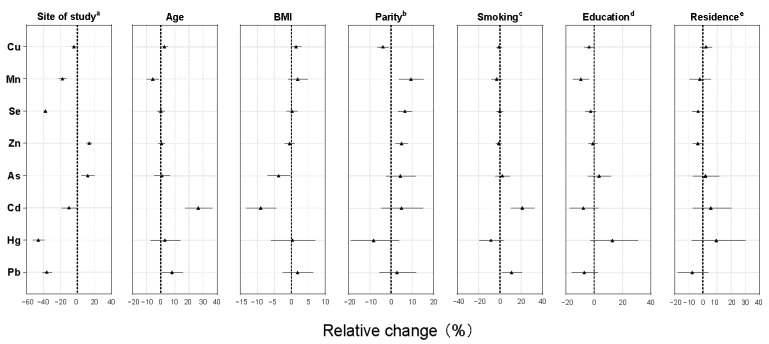
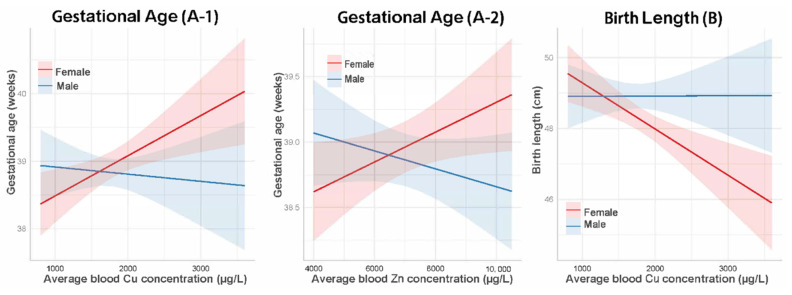
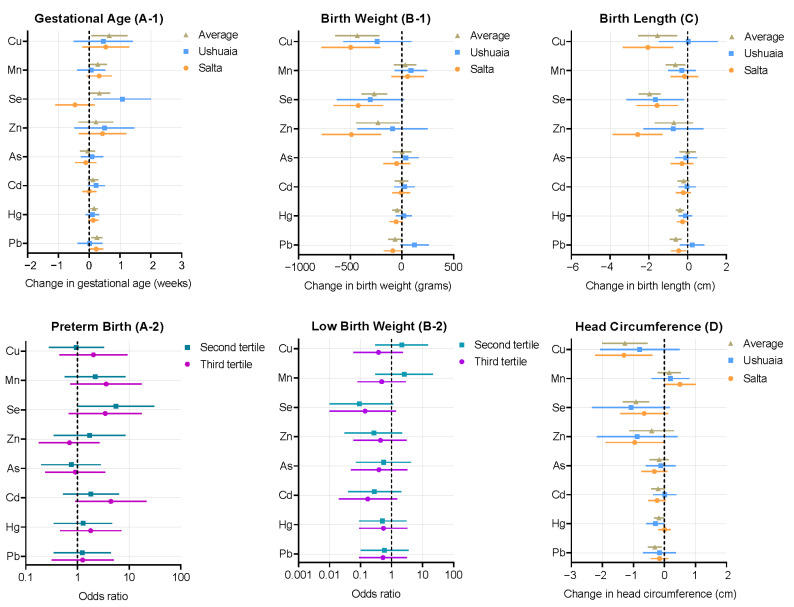
Pregnant women's levels of toxic and essential minerals have been linked to birth outcomes yet have not been adequately investigated in South America. In Argentina, = 696 maternal whole blood samples from Ushuaia ( = 198) and Salta ( = 498) were collected in 2011-2012 among singleton women at 36 ± 12 h postpartum and analyzed for blood concentrations of arsenic (As), cadmium (Cd), mercury (Hg), lead (Pb), copper (Cu), manganese (Mn), selenium (Se) and zinc (Zn). This study examined the associations between maternal elements levels and birth outcomes, and sociodemographic factors contributing to elements levels. Maternal age, parity, body mass index, smoking, and education were linked to concentrations of some but not all elements. In adjusted models, one ln-unit increase in Pb levels was associated with increased gestational age (0.2 weeks, 95% CI = 0.01-0.48) and decreased birth weight (-88.90 g, 95% CI = -173.69 to -4.11) and birth length (-0.46 cm, 95% CI = -0.85 to -0.08) in the Salta sample. Toxic elements concentrations were not associated with birth outcomes in Ushuaia participants. Birth outcomes are multifactorial problems, and these findings provide a foundation for understanding how the body burden of toxic and essential elements, within the socioeconomic context, may influence birth outcomes.
孕妇体内有毒和必需矿物质的水平与出生结果有关,但在南美洲尚未得到充分研究。在阿根廷,2011 年至 2012 年期间,在乌斯怀亚(n = 198)和萨尔塔(n = 498)采集了 696 名单胎孕妇产后 36 ± 12 小时的全血样本,用于分析血液中砷(As)、镉(Cd)、汞(Hg)、铅(Pb)、铜(Cu)、锰(Mn)、硒(Se)和锌(Zn)的浓度。本研究探讨了母体元素水平与出生结果之间的关系,以及导致元素水平的社会人口因素。母亲的年龄、产次、体重指数、吸烟和教育与一些但不是所有元素的浓度有关。在调整模型中,Pb 水平每增加一个自然对数值与萨尔塔样本的胎龄增加(0.2 周,95%CI = 0.01-0.48)和出生体重降低(-88.90g,95%CI = -173.69 至 -4.11)和出生长度降低(-0.46cm,95%CI = -0.85 至 -0.08)相关。在乌斯怀亚参与者中,有毒元素浓度与出生结果无关。出生结果是多因素问题,这些发现为了解在社会经济背景下,有毒和必需元素的体内负荷如何影响出生结果提供了基础。