Li Jiajie, Zhao Shaowei, Song Xiaoqian, Ni Wen, Mao Shilong, Du Huihui, Zhu Sitao, Jiang Fuxing, Zeng Hui, Deng Xuejie, Hitch Michael
Key Laboratory of Ministry of Education for Efficient Mining and Safety of Metal Mines, School of Civil and Resource Engineering, University of Science and Technology Beijing, No. 30 Xueyuan Road, Haidian District, Beijing 100083, China.
State Key Laboratory of Coal Resources and Safe Mining, China University of Mining and Technology, No. 1 University Road, Xuzhou 221116, China.
Materials (Basel). 2022 Mar 10;15(6):2055. doi: 10.3390/ma15062055.
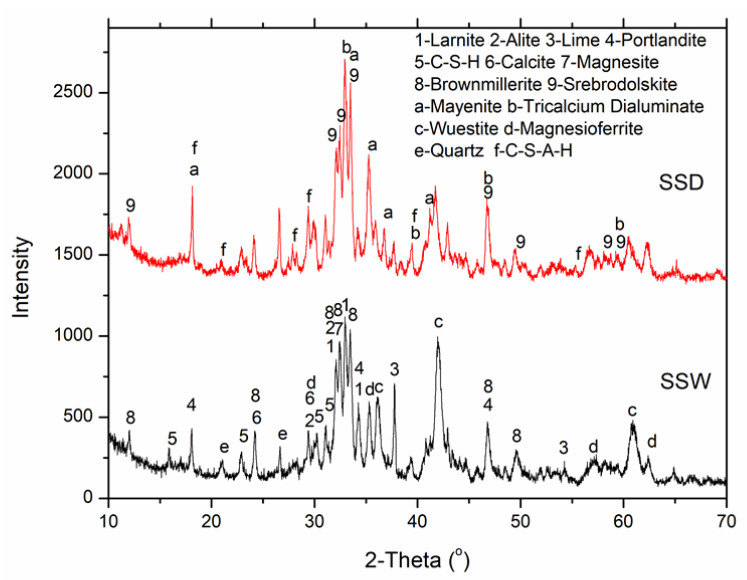
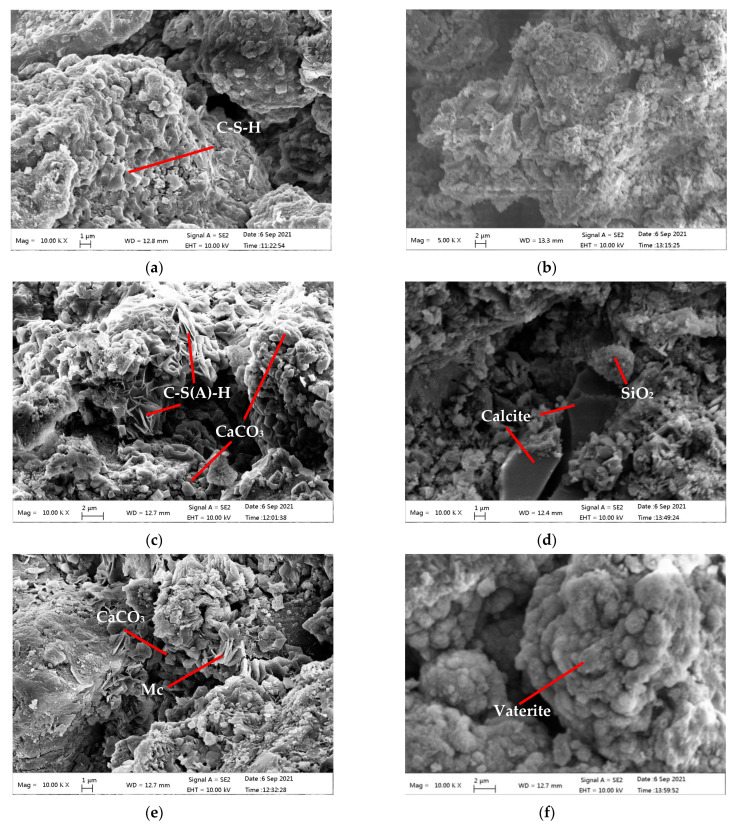
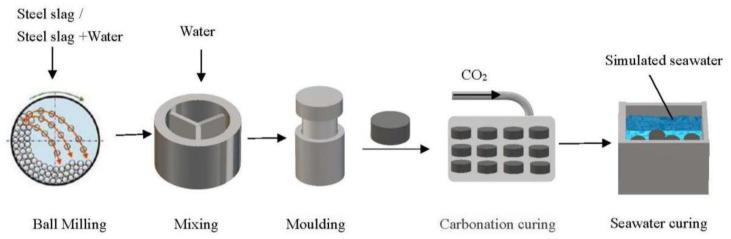
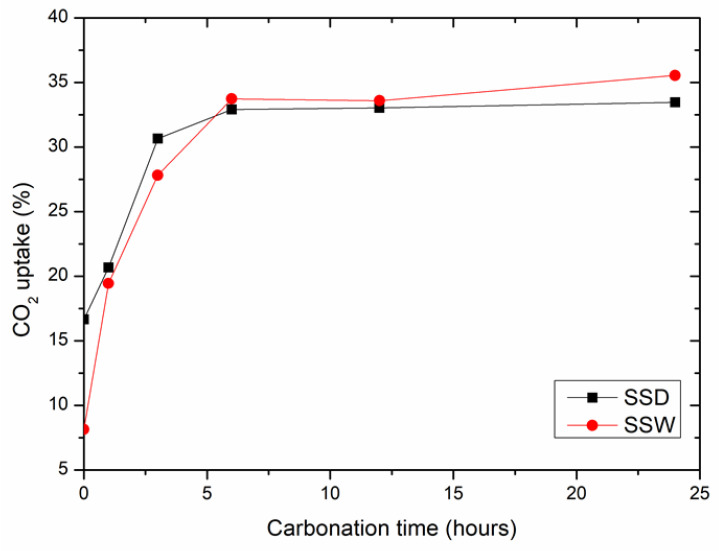
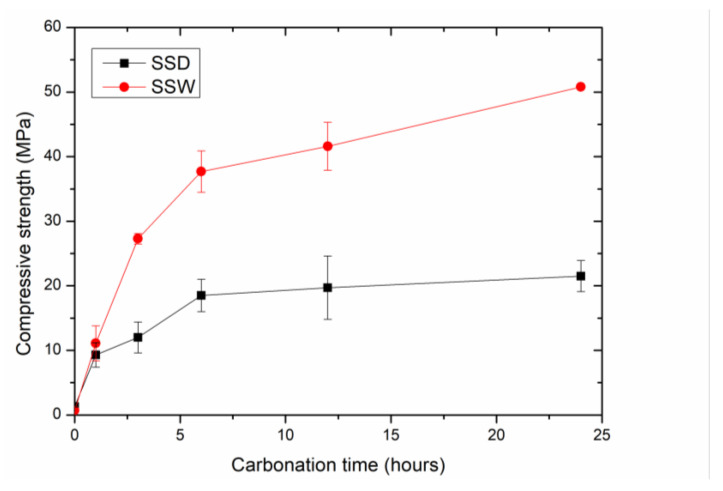
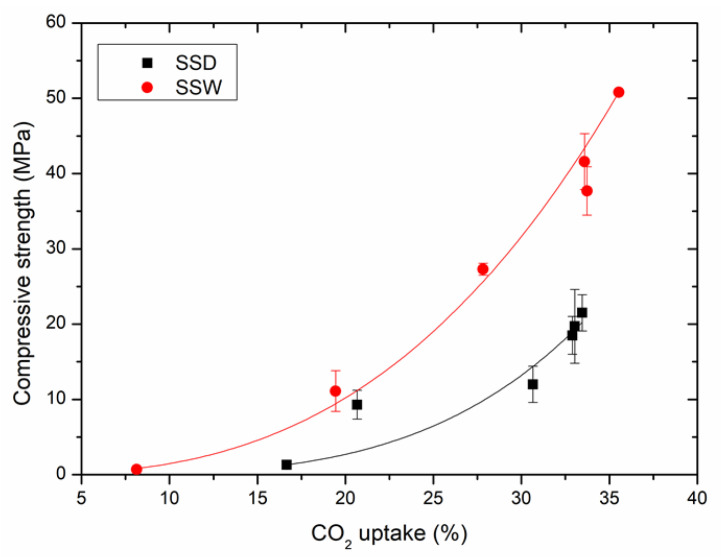
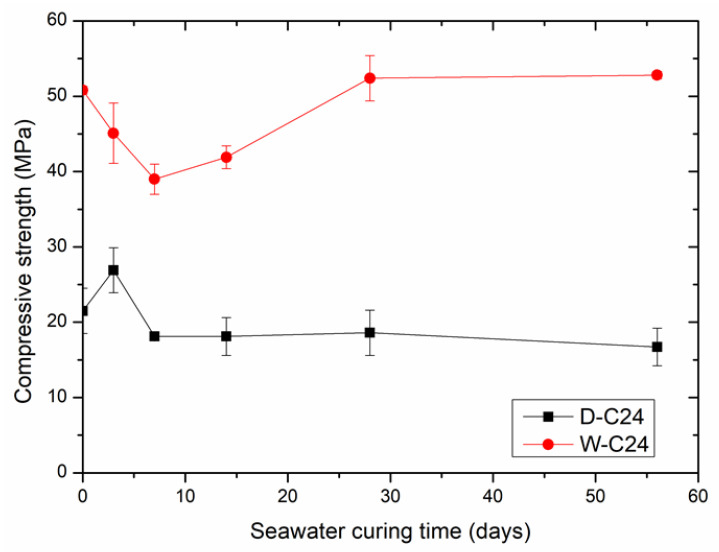
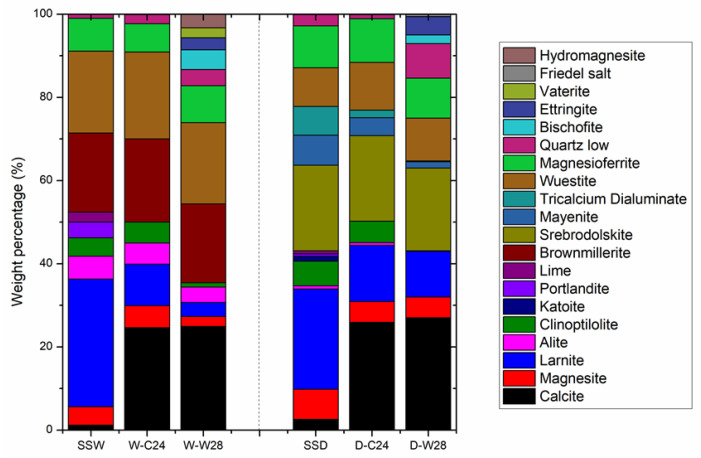
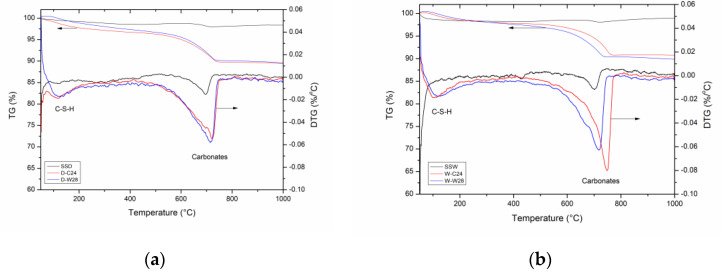
Magnetic separation is an effective method to recover iron from steel slag. However, the ultra-fine tailings generated from steel slag become a new issue for utilization. The dry separation processes generates steel slag powder, which has hydration activity and can be used as cement filler. However, wet separation processes produce steel slag mud, which has lost its hydration activity and is no longer suitable to be used as a cement filler. This study investigates the potential of magnetically separated steel slag for carbonation curing and the potential use of the carbonated products as an artificial reef. Steel slag powder and steel slag mud were moulded, carbonation-cured and seawater-cured. Various testing methods were used to characterize the macro and micro properties of the materials. The results obtained show that carbonation and hydration collaborated during the carbonation curing process of steel slag powder, while only carbonation happened during the carbonation curing process of steel slag mud. The seawater-curing process of carbonated steel slag powder compact had three stages: C-S-H gel formation, C-S-H gel decomposition and equilibrium, which were in correspondence to the compressive strength of compact increasing, decreasing and unchanged. However, the seawater-curing process of carbonated steel slag mud compact suffered three stages: C-S-H gel decomposition, calcite transfer to vaterite and equilibrium, which made the compressive strength of compact decreased, increased and unchanged. Carbonated steel slags tailings after magnetic separation underwent their lowest compressive strength when seawater-cured for 7 days. The amount of CaO in the carbonation active minerals in the steel slag determined the carbonation consolidation ability of steel slag and durability of the carbonated steel slag compacts. This paper provides a reference for preparation of artificial reefs and marine coagulation materials by the carbonation curing of steel slag.
磁选是从钢渣中回收铁的有效方法。然而,钢渣产生的超细尾矿成为利用的新问题。干法分选工艺产生具有水化活性且可作为水泥填料的钢渣粉。然而,湿法分选工艺产生已失去水化活性且不再适合用作水泥填料的钢渣泥。本研究调查了磁选钢渣用于碳酸化养护的潜力以及碳酸化产物作为人工鱼礁的潜在用途。对钢渣粉和钢渣泥进行成型、碳酸化养护和海水养护。采用各种测试方法来表征材料的宏观和微观性能。所得结果表明,在钢渣粉的碳酸化养护过程中碳酸化与水化协同作用,而在钢渣泥的碳酸化养护过程中仅发生碳酸化。碳酸化钢渣粉坯体的海水养护过程有三个阶段:C-S-H凝胶形成、C-S-H凝胶分解与平衡,这与坯体抗压强度的增加、降低和不变相对应。然而,碳酸化钢渣泥坯体的海水养护过程经历三个阶段:C-S-H凝胶分解、方解石向球霰石转变与平衡,这使得坯体抗压强度降低、增加和不变。磁选后的碳酸化钢渣尾矿在海水养护7天时抗压强度最低。钢渣中碳酸化活性矿物中的CaO含量决定了钢渣的碳酸化固结能力和碳酸化钢渣坯体的耐久性。本文为钢渣碳酸化养护制备人工鱼礁和海洋凝结材料提供了参考。