Zalewski Daniel P, Ruszel Karol P, Stępniewski Andrzej, Gałkowski Dariusz, Feldo Marcin, Kocki Janusz, Bogucka-Kocka Anna
Chair and Department of Biology and Genetics, Medical University of Lublin, 4a Chodźki St., 20-093 Lublin, Poland.
Department of Clinical Genetics, Chair of Medical Genetics, Medical University of Lublin, 11 Radziwiłłowska St., 20-080 Lublin, Poland.
J Clin Med. 2022 Mar 15;11(6):1619. doi: 10.3390/jcm11061619.
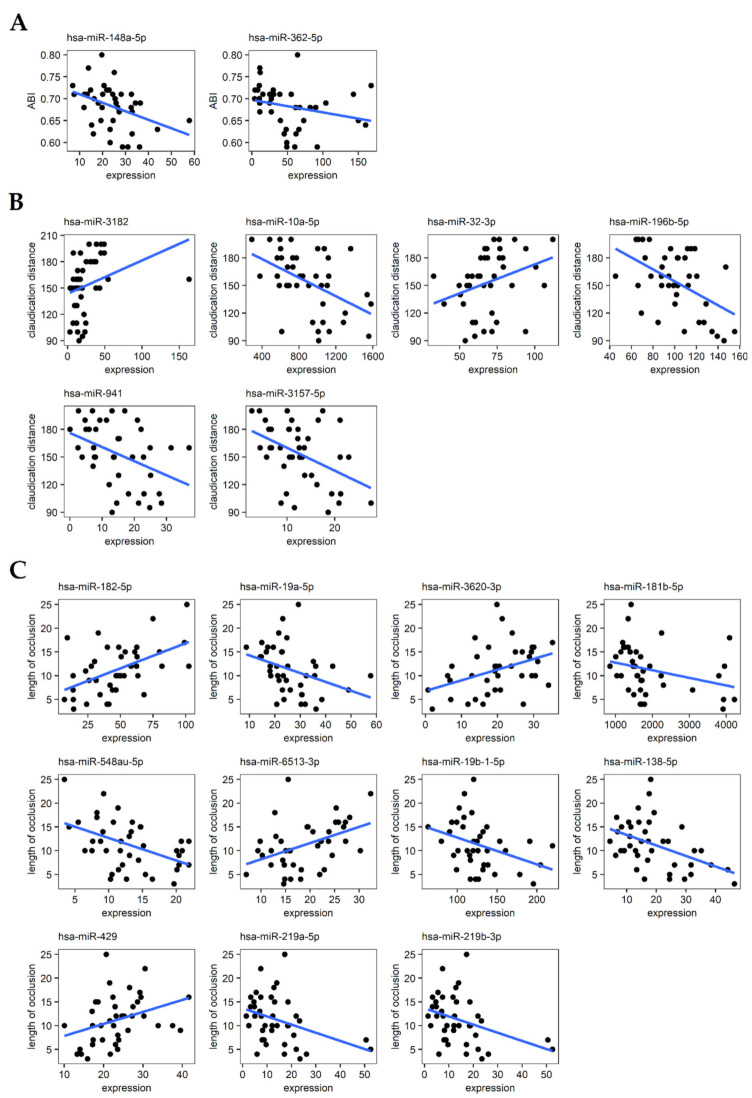
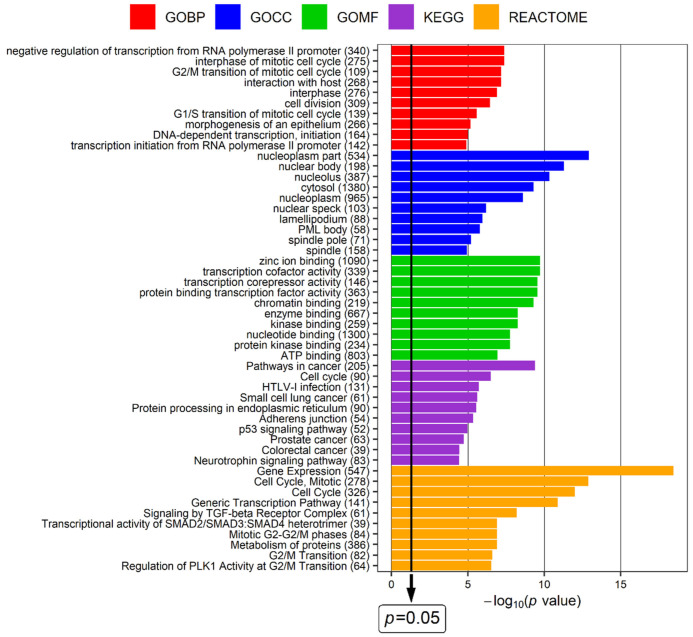
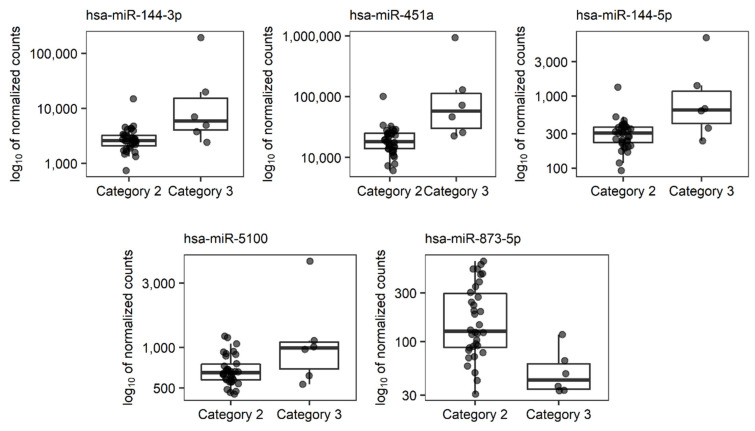
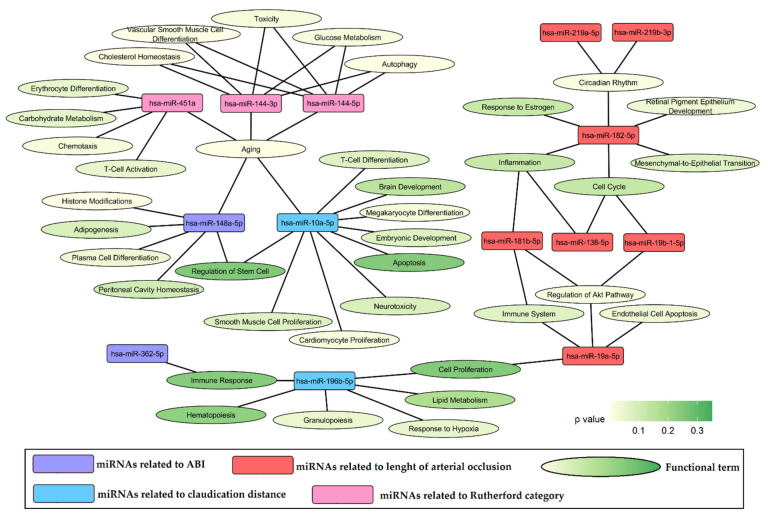
Lower extremity artery disease (LEAD) is an underdiagnosed and globally underestimated vascular disease caused by the progressive and chronic formation of atherosclerotic plaques in the arteries of the lower limbs. Much evidence indicates that the abnormal course of pathophysiological processes underlying LEAD development is associated with altered miRNA modulatory function. In the presented study, relationships between miRNA expression and clinical indicators of this disease (ABI, claudication distance, length of arterial occlusion, Rutherford category, and plaque localization) were identified. MiRNA expression profiles were obtained using next-generation sequencing in peripheral blood mononuclear cells (PBMCs) of 40 LEAD patients. Correlation analysis performed using the Spearman rank correlation test revealed miRNAs related to ABI, claudication distance, and length of arterial occlusion. In the DESeq2 analysis, five miRNAs were found to be dysregulated in patients with Rutherford category 3 compared to patients with Rutherford category 2. No miRNAs were found to be differentially expressed between patients with different plaque localizations. Functional analysis performed using the miRNet 2.0 website tool determined associations of selected miRNAs with processes underlying vascular pathology, such as vascular smooth muscle cell differentiation, endothelial cell apoptosis, response to hypoxia, inflammation, lipid metabolism, and circadian rhythm. The most enriched functional terms for genes targeted by associated miRNAs were linked to regulation of the cell cycle, regulation of the transcription process, and nuclear cellular compartment. In conclusion, dysregulations of miRNA expression in PBMCs of patients with LEAD are indicative of the disease and could potentially be used in the prediction of LEAD progression.
下肢动脉疾病(LEAD)是一种诊断不足且在全球范围内被低估的血管疾病,由下肢动脉中动脉粥样硬化斑块的进行性和慢性形成引起。许多证据表明,LEAD发生背后病理生理过程的异常进程与miRNA调节功能的改变有关。在本研究中,确定了miRNA表达与该疾病临床指标(踝臂指数、跛行距离、动脉闭塞长度、卢瑟福分级和斑块定位)之间的关系。使用下一代测序技术在40例LEAD患者的外周血单核细胞(PBMC)中获得了miRNA表达谱。使用Spearman等级相关检验进行的相关性分析揭示了与踝臂指数、跛行距离和动脉闭塞长度相关的miRNA。在DESeq2分析中,发现与卢瑟福分级2级患者相比,卢瑟福分级3级患者中有5种miRNA表达失调。在不同斑块定位的患者之间未发现miRNA有差异表达。使用miRNet 2.0网站工具进行的功能分析确定了所选miRNA与血管病理基础过程的关联,如血管平滑肌细胞分化、内皮细胞凋亡、对缺氧的反应、炎症、脂质代谢和昼夜节律。相关miRNA靶向的基因最丰富的功能术语与细胞周期调节、转录过程调节和细胞核细胞区室有关。总之,LEAD患者PBMC中miRNA表达的失调表明了该疾病,并且有可能用于预测LEAD的进展。