Hong Guo-Kai, Tew Kwee Siong
Graduate Institute of Marine Biology, National Dong Hwa University, Pingtung 944, Taiwan.
National Museum of Marine Biology & Aquarium, Pingtung 944, Taiwan.
Life (Basel). 2022 Mar 17;12(3):441. doi: 10.3390/life12030441.
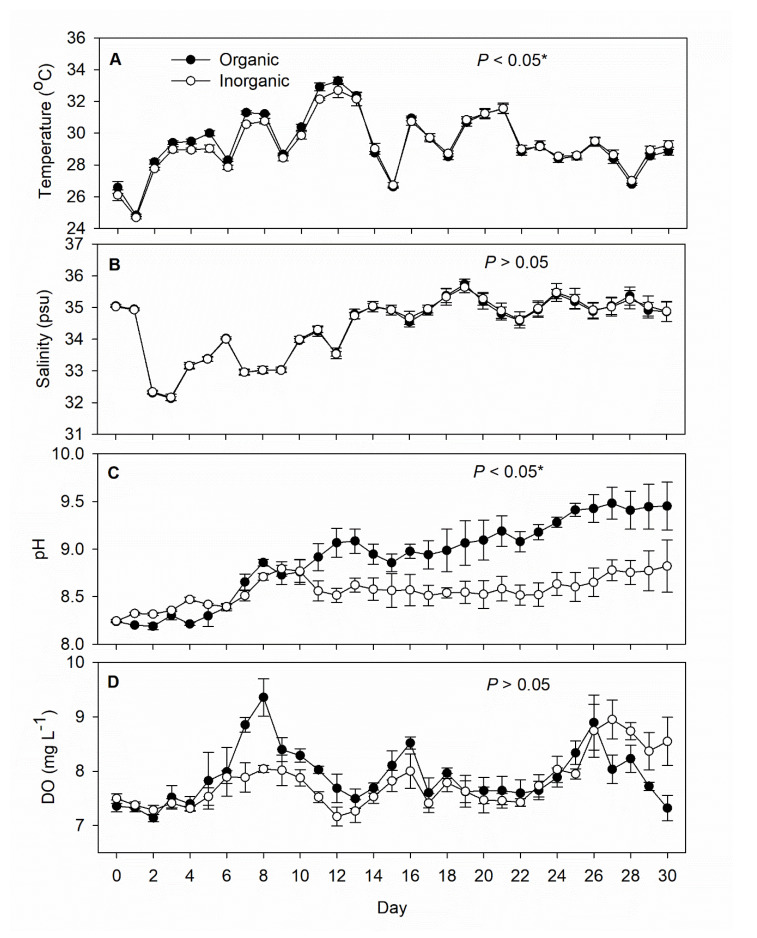
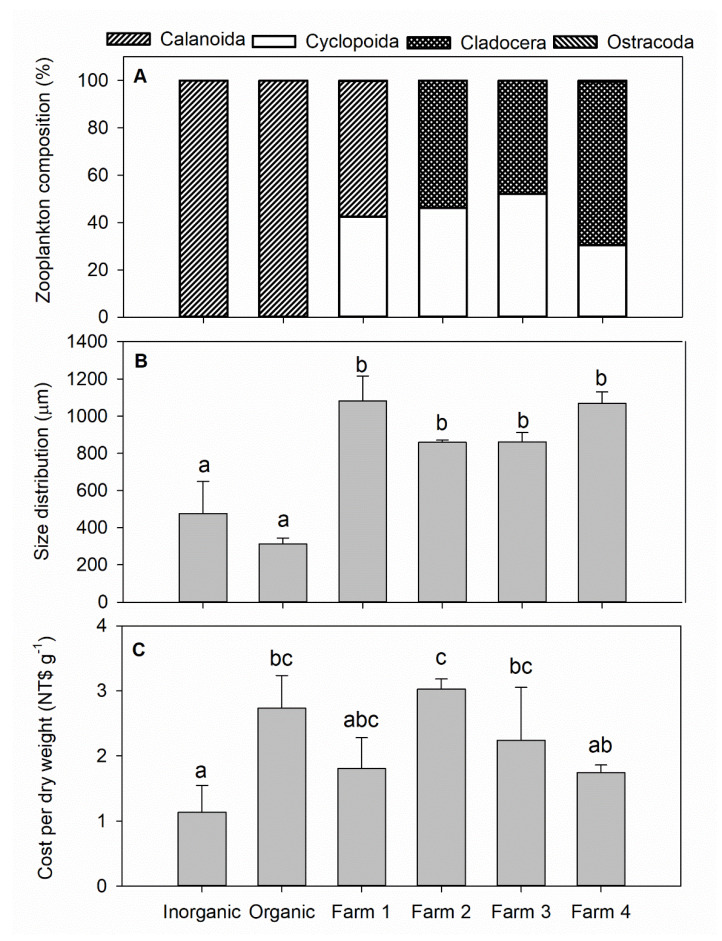
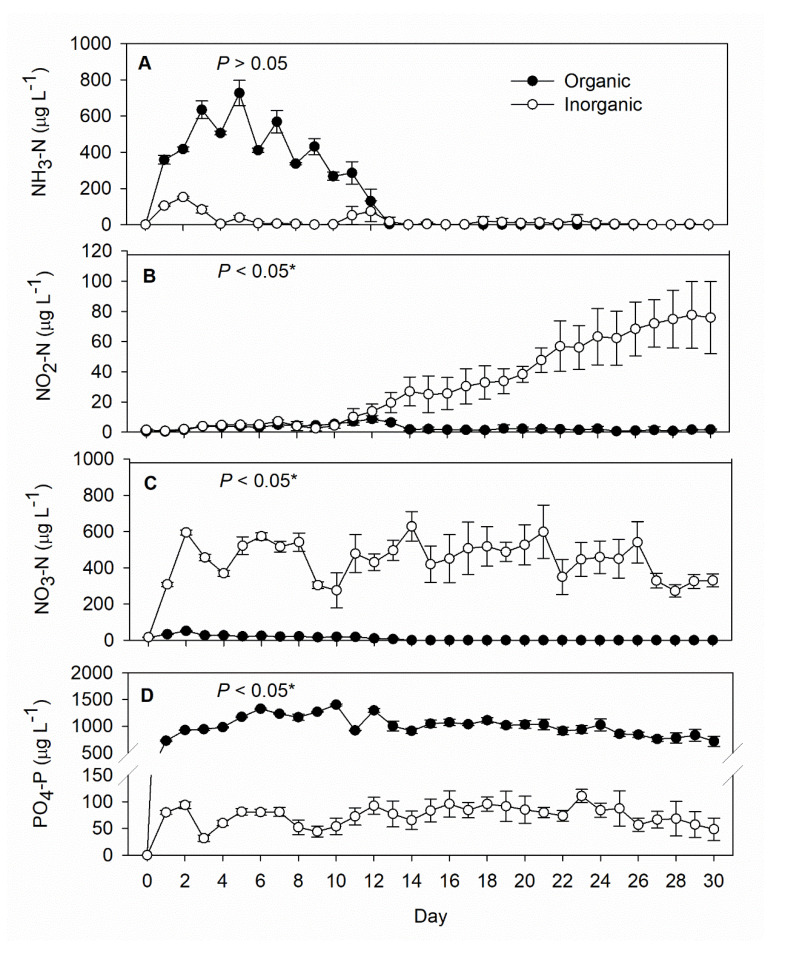
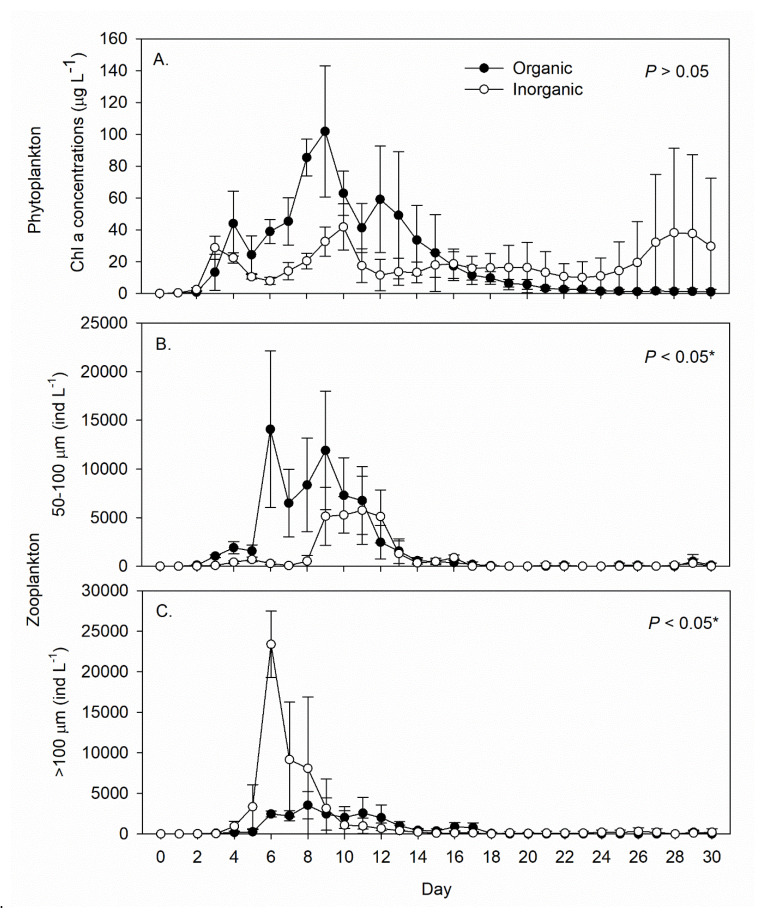
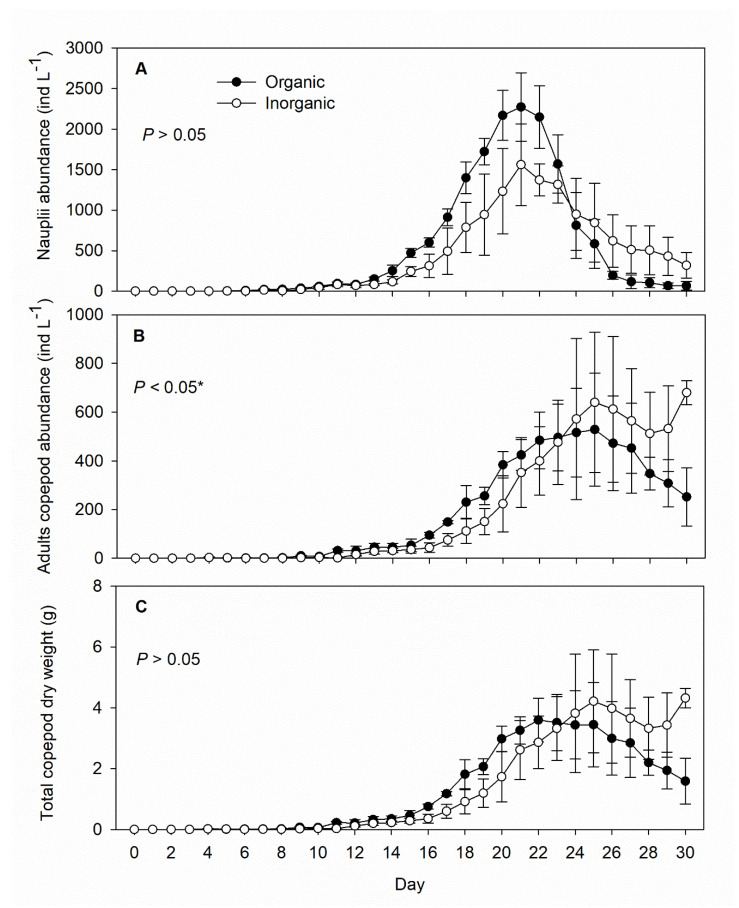
Copepods are commonly used as live feed for cultured fish larvae, but the current mass production method using organic fertilizers cannot meet the market demand for copepods. We evaluated the feasibility of applying an inorganic fertilization method, which is currently in use in freshwater and marine larviculture, to the mass production of copepods. For 30 days, and with five replicates of each treatment, we made comparative daily measurements of various parameters of (1) copepod cultures fertilized with commercially available condensed fish solubles (organic fertilization) and (2) other cultures in which the concentration of inorganic phosphorus was maintained at 100 μg P L and that of inorganic nitrogen at 700 μg N L (inorganic fertilization). With inorganic fertilization, pH fluctuated over a smaller range and much less filamentous algae grew in the tanks. The mean production of copepod nauplii over the course of the study was similar between the two treatments, but the combined density of copepodites and adult copepods was significantly higher with inorganic fertilization. Compared to commercial zooplankton products, copepods cultured with inorganic fertilization were smaller, were mixed with fewer (almost none) non-copepod contaminants, were also pathogen-free, and could be produced at the cheapest cost per unit output. Based on these results, we conclude that the inorganic fertilization method can profitably be adopted by commercial copepod producers to meet the demand from fish farmers, especially for small-sized copepods.
桡足类动物通常用作养殖鱼苗的活饲料,但目前使用有机肥料的大规模生产方法无法满足市场对桡足类动物的需求。我们评估了将目前在淡水和海水育苗中使用的无机施肥方法应用于桡足类动物大规模生产的可行性。在30天的时间里,每个处理设置五个重复,我们每天对以下两组进行各种参数的对比测量:(1)用市售浓缩鱼溶浆施肥的桡足类养殖池(有机施肥),以及(2)无机磷浓度维持在100μg P/L、无机氮浓度维持在700μg N/L的其他养殖池(无机施肥)。采用无机施肥时,pH值波动范围较小,养殖池中丝状藻类生长较少。在研究过程中,两种处理方式下桡足类无节幼体的平均产量相似,但无机施肥时桡足幼体和成体桡足类的总密度显著更高。与商业浮游动物产品相比,采用无机施肥养殖的桡足类动物体型较小,混入的非桡足类污染物较少(几乎没有),也无病原体,且单位产量的生产成本最低。基于这些结果,我们得出结论,商业桡足类动物生产者可有利可图地采用无机施肥方法,以满足养鱼户的需求,特别是对小型桡足类动物的需求。