Luning Prak Eline T, Brooks Thomas, Makhoul Walid, Beer Joanne C, Zhao Ling, Girelli Tommaso, Skarke Carsten, Sheline Yvette I
Department of Pathology and Laboratory Medicine, Perelman School of Medicine, University of Pennsylvania, Philadelphia, PA, USA.
Institute for Immunology, Perelman School of Medicine, University of Pennsylvania, Philadelphia, PA, USA.
Transl Psychiatry. 2022 Mar 24;12(1):118. doi: 10.1038/s41398-022-01883-4.
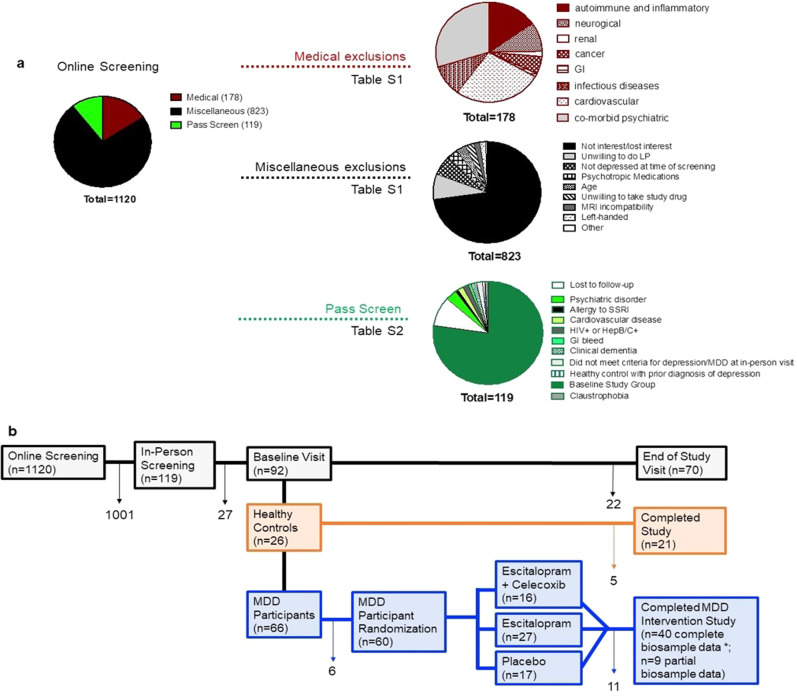
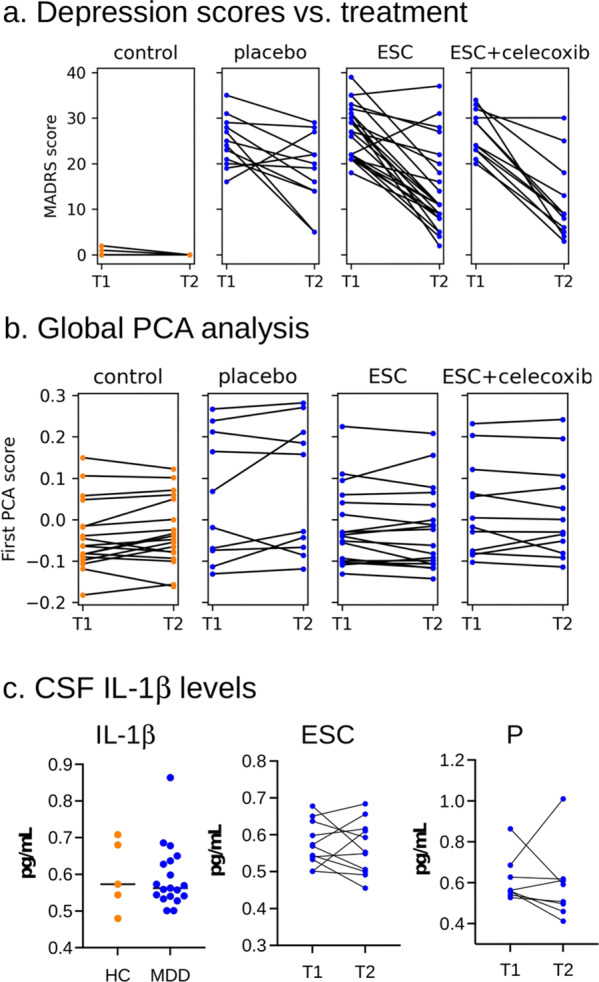
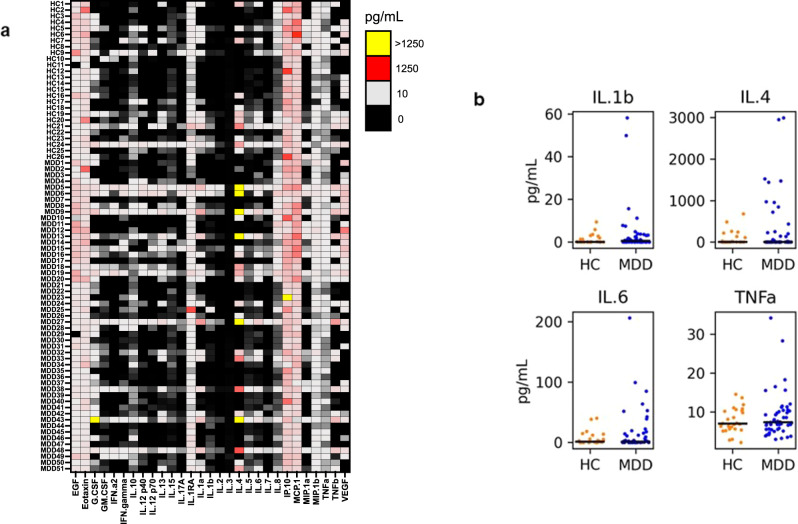
Depression is a common and debilitating disorder in the elderly. Late-life depression (LLD) has been associated with inflammation and elevated levels of proinflammatory cytokines including interleukin (IL)-1β, tumor necrosis factor-alpha, and IL-6, but often depressed individuals have comorbid medical conditions that are associated with immune dysregulation. To determine whether depression has an association with inflammation independent of medical illness, 1120 adults were screened to identify individuals who had clinically significant depression but not medical conditions associated with systemic inflammation. In total, 66 patients with LLD screened to exclude medical conditions associated with inflammation were studied in detail along with 26 age-matched controls (HC). At baseline, circulating cytokines were low and similar in LLD and HC individuals. Furthermore, cytokines did not change significantly after treatment with either an antidepressant (escitalopram 20 mg/day) or an antidepressant plus a COX-2 inhibitor or placebo, even though depression scores improved in the non-placebo treatment arms. An analysis of cerebrospinal fluid in a subset of individuals for IL-1β using an ultrasensitive digital enzyme-linked immunosorbent assay revealed low levels in both LLD and HC at baseline. Our results indicate that depression by itself does not result in systemic or intrathecal elevations in cytokines and that celecoxib does not appear to have an adjunctive antidepressant role in older patients who do not have medical reasons for having inflammation. The negative finding for increased inflammation and the lack of a treatment effect for celecoxib in this carefully screened depressed population taken together with multiple positive results for inflammation in previous studies that did not screen out physical illness support a precision medicine approach to the treatment of depression that takes the medical causes for inflammation into account.
抑郁症是老年人中常见且使人衰弱的疾病。晚年抑郁症(LLD)与炎症以及促炎细胞因子水平升高有关,这些促炎细胞因子包括白细胞介素(IL)-1β、肿瘤坏死因子-α和IL-6,但通常抑郁个体伴有与免疫失调相关的合并症。为了确定抑郁症是否独立于疾病与炎症有关联,对1120名成年人进行了筛查,以识别出有临床显著抑郁症但无与全身炎症相关疾病的个体。总共对66名经筛查排除与炎症相关疾病的LLD患者以及26名年龄匹配的对照(HC)进行了详细研究。在基线时,LLD患者和HC个体的循环细胞因子水平较低且相似。此外,使用抗抑郁药(艾司西酞普兰20毫克/天)、抗抑郁药加COX-2抑制剂或安慰剂治疗后,细胞因子没有显著变化,尽管非安慰剂治疗组的抑郁评分有所改善。使用超灵敏数字酶联免疫吸附测定法对一部分个体的脑脊液进行IL-1β分析,结果显示基线时LLD患者和HC个体的水平均较低。我们的结果表明,抑郁症本身不会导致细胞因子在全身或鞘内升高,并且塞来昔布在没有炎症医学原因的老年患者中似乎没有辅助抗抑郁作用。在这个经过仔细筛查的抑郁人群中,炎症增加的阴性结果以及塞来昔布缺乏治疗效果,与之前未排除身体疾病的研究中炎症的多个阳性结果一起,支持了一种考虑炎症医学原因的抑郁症精准治疗方法。