Department of Medical Physics, Memorial Sloan Kettering Cancer Center, New York, New York, USA.
Philips Healthcare MR Oncology, Cleveland, Ohio, USA.
J Appl Clin Med Phys. 2022 Jun;23(6):e13586. doi: 10.1002/acm2.13586. Epub 2022 Mar 25.
To describe and report longitudinal quality assurance (QA) measurements for the magnetic resonance imaging (MRI) component of the Elekta Unity MR-linac during the first year of clinical use in our institution.
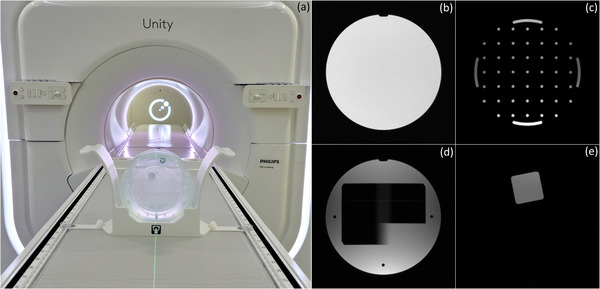
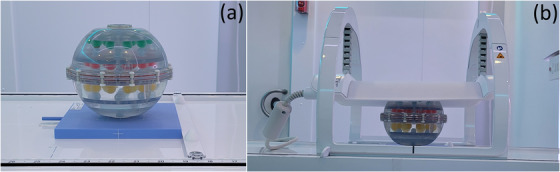
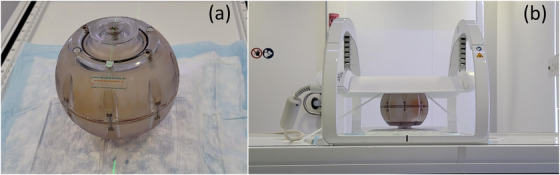
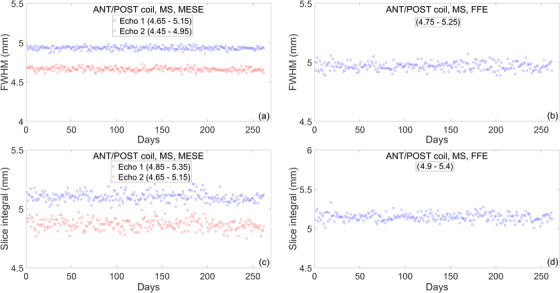
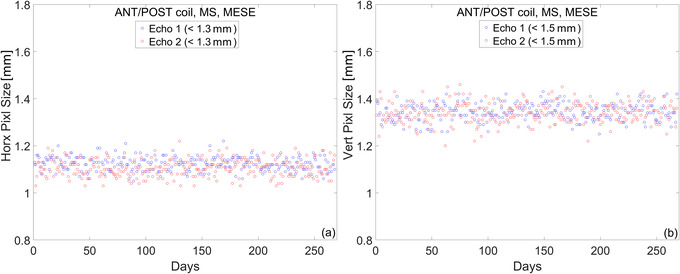
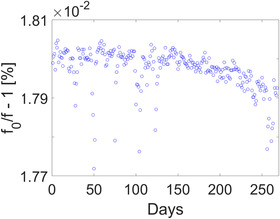
The performance of the MRI component of Unity was evaluated with daily, weekly, monthly, and annual QA testing. The measurements monitor image uniformity, signal-to-noise ratio (SNR), resolution/detectability, slice position/thickness, linearity, central frequency, and geometric accuracy. In anticipation of routine use of quantitative imaging (qMRI), we characterize B0/B1 uniformity and the bias/reproducibility of longitudinal/transverse relaxation times (T1/T2) and apparent diffusion coefficient (ADC). Tolerance levels for QA measurements of qMRI biomarkers are derived from weekly monitoring of T1, T2, and ADC.
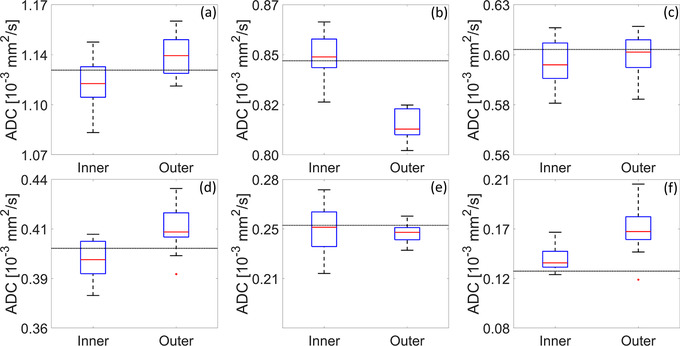
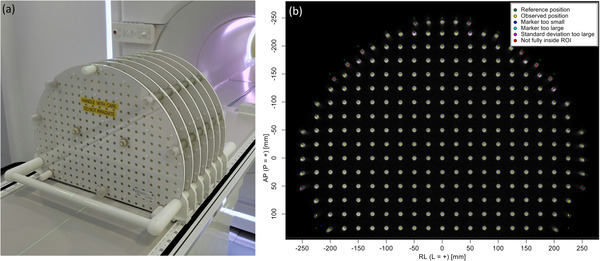
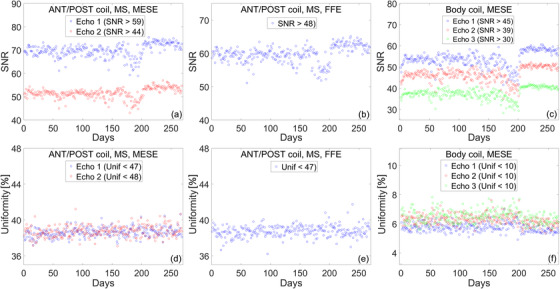
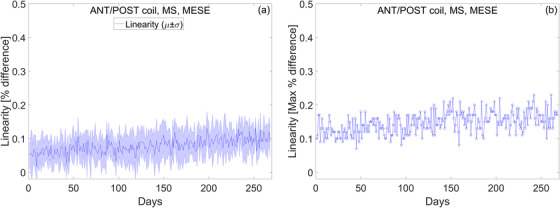
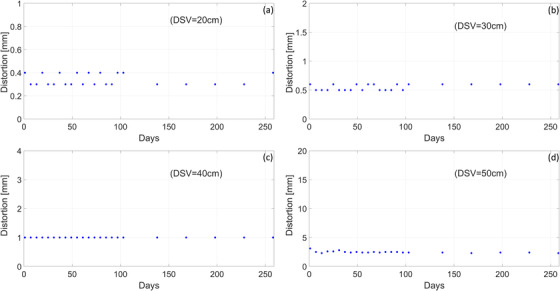
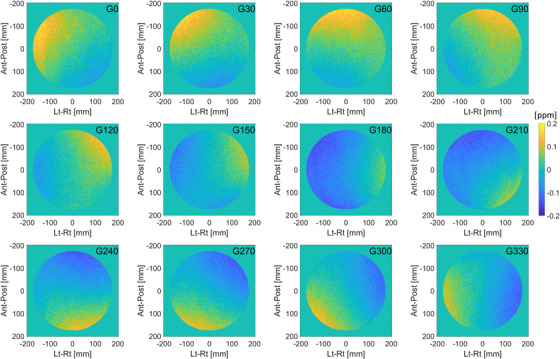
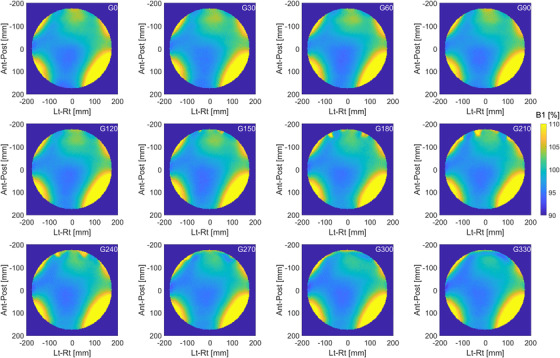
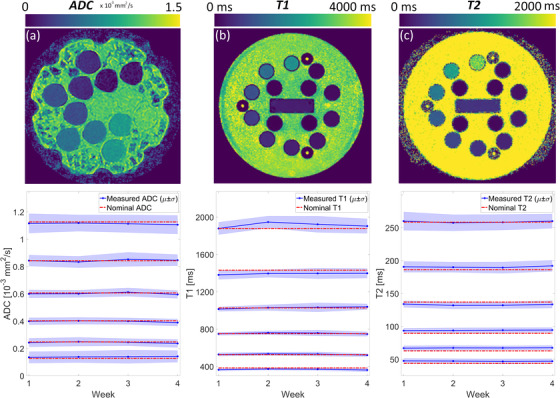
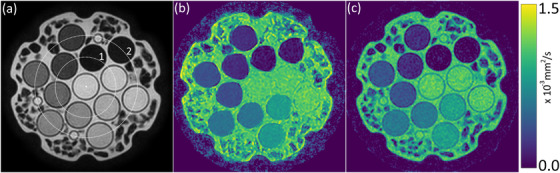
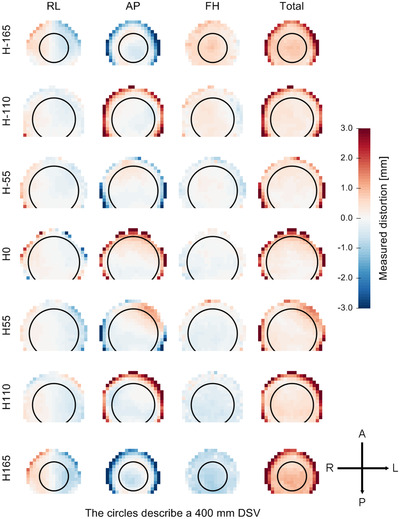
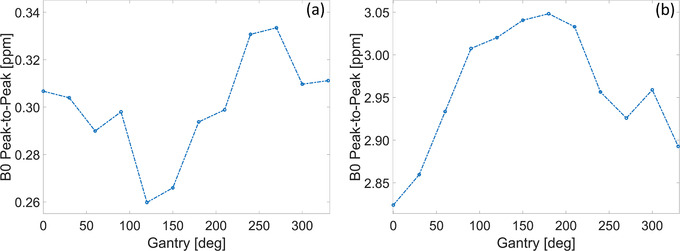
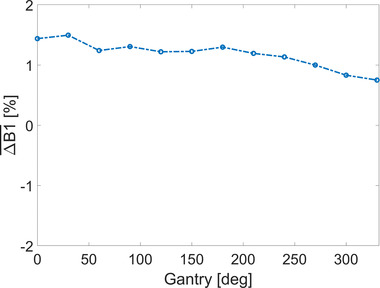
The 1-year assessment of QA measurements shows that daily variations in each MR quality metric are well below the threshold for failure. Routine testing procedures can reproducibly identify machine issues. The longitudinal three-dimensional (3D) geometric analysis reveals that the maximum distortion in a diameter of spherical volume (DSV) of 20, 30, 40, and 50 cm is 0.4, 0.6, 1.0, and 3.1 mm, respectively. The main source of distortion is gradient nonlinearity. Maximum peak-to-peak B0 inhomogeneity is 3.05 ppm, with gantry induced B0 inhomogeneities an order of magnitude smaller. The average deviation from the nominal B1 is within 2%, with minimal dependence on gantry angle. Mean ADC, T1, and T2 values are measured with high reproducibility. The median coefficient of variation for ADC, T1, and T2 is 1.3%, 1.1%, and 0.5%, respectively. The median bias for ADC, T1, and T2 is -0.8%, -0.1%, and 3.9%, respectively.
The MRI component of Unity operates within the guidelines and recommendations for scanner performance and stability. Our findings support the recently published guidance in establishing clinically acceptable tolerance levels for image quality. Highly reproducible qMRI measurements are feasible in Unity.
描述并报告在我们机构临床使用第一年期间,Elekta Unity MR 直线加速器的 MRI 组件的纵向质量保证 (QA) 测量结果。
通过日常、每周、每月和每年的 QA 测试来评估 Unity 的 MRI 组件的性能。这些测量结果可监测图像均匀性、信噪比 (SNR)、分辨率/可检测性、切片位置/厚度、线性、中心频率和几何精度。为了预期进行定量成像 (qMRI),我们对 B0/B1 均匀性以及纵向/横向弛豫时间 (T1/T2) 和表观扩散系数 (ADC) 的偏差/可重复性进行了特征描述。qMRI 生物标志物 QA 测量的容限水平源自每周对 T1、T2 和 ADC 的监测。
对 QA 测量结果进行的为期 1 年的评估表明,每个 MR 质量指标的日常变化都远低于失效阈值。常规测试程序可以可靠地识别机器问题。纵向三维 (3D) 几何分析显示,直径为 20、30、40 和 50 cm 的球形体积 (DSV) 的最大变形分别为 0.4、0.6、1.0 和 3.1mm。变形的主要来源是梯度非线性。最大峰峰值 B0 不均匀性为 3.05ppm,而龙门架引起的 B0 不均匀性要小一个数量级。名义 B1 的平均偏差在 2%以内,与龙门架角度的依赖性最小。ADC、T1 和 T2 的平均测量值具有很高的可重复性。ADC、T1 和 T2 的中位变异系数分别为 1.3%、1.1%和 0.5%。ADC、T1 和 T2 的中位偏差分别为-0.8%、-0.1%和 3.9%。
Unity 的 MRI 组件符合扫描仪性能和稳定性的指南和建议。我们的研究结果支持最近发布的关于为图像质量建立可接受的容限水平的指导意见。在 Unity 中,可重复性高的 qMRI 测量是可行的。