Pajčin Ivana, Knežić Teodora, Savic Azoulay Ivana, Vlajkov Vanja, Djisalov Mila, Janjušević Ljiljana, Grahovac Jovana, Gadjanski Ivana
Department of Biotechnology and Pharmaceutical Engineering, Faculty of Technology Novi Sad, University of Novi Sad, Bulevar cara Lazara 1, 21000 Novi Sad, Serbia.
Center for Biosystems, BioSense Institute, University of Novi Sad, Dr Zorana Djindjica 1, 21000 Novi Sad, Serbia.
Micromachines (Basel). 2022 Feb 28;13(3):402. doi: 10.3390/mi13030402.
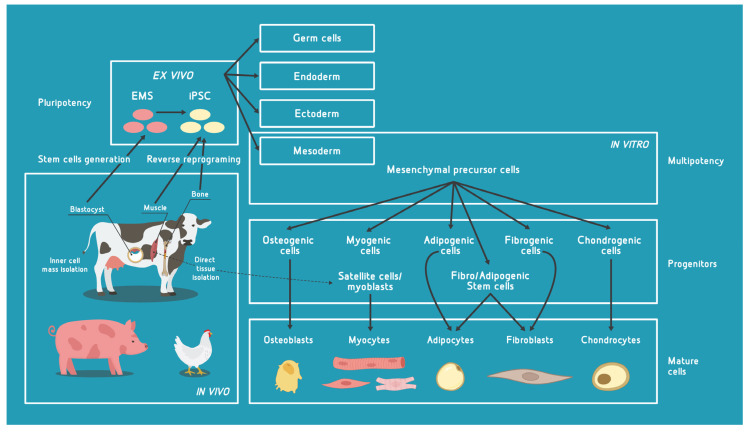
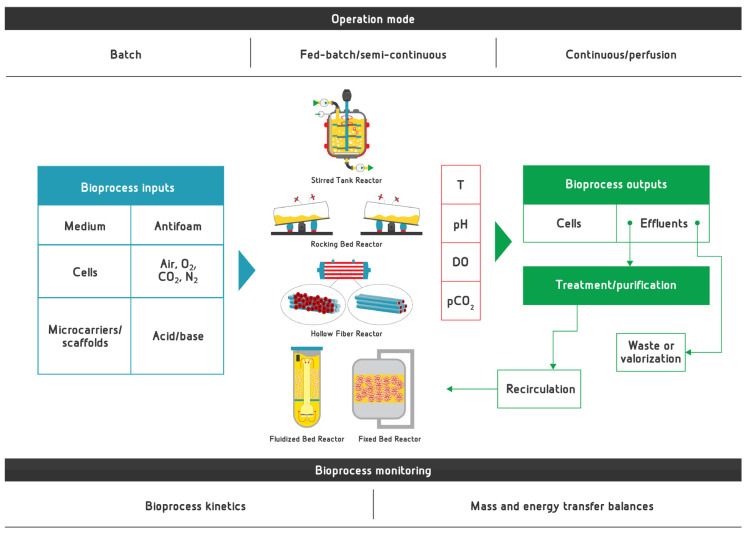
Cultured meat (also referred to as cultivated meat or cell-based meat)-CM-is fabricated through the process of cellular agriculture (CA), which entails application of bioengineering, i.e., tissue engineering (TE) principles to the production of food. The main TE principles include usage of cells, grown in a controlled environment provided by bioreactors and cultivation media supplemented with growth factors and other needed nutrients and signaling molecules, and seeded onto the immobilization elements-microcarriers and scaffolds that provide the adhesion surfaces necessary for anchor-dependent cells and offer 3D organization for multiple cell types. Theoretically, many solutions from regenerative medicine and biomedical engineering can be applied in CM-TE, i.e., CA. However, in practice, there are a number of specificities regarding fabrication of a CM product that needs to fulfill not only the majority of functional criteria of muscle and fat TE, but also has to possess the sensory and nutritional qualities of a traditional food component, i.e., the meat it aims to replace. This is the reason that bioengineering aimed at CM production needs to be regarded as a specific scientific discipline of a multidisciplinary nature, integrating principles from biomedical engineering as well as from food manufacturing, design and development, i.e., food engineering. An important requirement is also the need to use as little as possible of animal-derived components in the whole CM bioprocess. In this review, we aim to present the current knowledge on different bioengineering aspects, pertinent to different current scientific disciplines but all relevant for CM engineering, relevant for muscle TE, including different cell sources, bioreactor types, media requirements, bioprocess monitoring and kinetics and their modifications for use in CA, all in view of their potential for efficient CM bioprocess scale-up. We believe such a review will offer a good overview of different bioengineering strategies for CM production and will be useful to a range of interested stakeholders, from students just entering the CA field to experienced researchers looking for the latest innovations in the field.
cultured meat(也称为培育肉或细胞培养肉)是通过细胞农业(CA)过程制造的,这需要应用生物工程,即组织工程(TE)原理来生产食品。主要的TE原理包括使用细胞,这些细胞在生物反应器和添加了生长因子以及其他所需营养物质和信号分子的培养基所提供的受控环境中生长,并接种到固定化元件——微载体和支架上,这些元件为贴壁依赖性细胞提供必要的粘附表面,并为多种细胞类型提供三维组织结构。理论上,再生医学和生物医学工程中的许多解决方案都可以应用于CM-TE,即CA。然而,在实践中,CM产品的制造存在一些特殊性,它不仅需要满足肌肉和脂肪TE的大多数功能标准,还必须具备传统食品成分(即其旨在替代的肉类)的感官和营养品质。这就是为什么旨在生产CM的生物工程需要被视为一门具有多学科性质的特定科学学科,它整合了生物医学工程以及食品制造、设计和开发(即食品工程)的原理。一个重要的要求也是在整个CM生物过程中尽可能少地使用动物源性成分。在这篇综述中,我们旨在介绍当前关于不同生物工程方面的知识,这些知识与不同的当前科学学科相关,但都与CM工程相关,与肌肉TE相关,包括不同的细胞来源、生物反应器类型、培养基要求、生物过程监测和动力学以及它们在CA中的应用修改,所有这些都考虑到它们在高效CM生物过程放大方面的潜力。我们相信这样的综述将很好地概述CM生产的不同生物工程策略,并将对一系列感兴趣的利益相关者有用,从刚进入CA领域的学生到寻找该领域最新创新的经验丰富的研究人员。