Department of General Practice, Turku University and Turku University Hospital, Turku University, 20014 Turku, Finland.
Perusturvakuntayhtymä Akseli, 21250 Masku, Finland.
Nutrients. 2022 Mar 17;14(6):1267. doi: 10.3390/nu14061267.
Work engagement reflects work-related well-being. It is positively associated with health, life satisfaction, work efficiency, income level, and occupational prospects. However, little is known about the relationship between work engagement and diet.
A cross-sectional study was conducted among female Finnish municipal employees ( = 630) in 2015. Work engagement was assessed using the Utrecht Work Engagement Index. The consumption of healthy and unhealthy food items was determined using a food frequency questionnaire. Sociodemographic factors, health behaviors, depressive and anxiety symptoms were assessed with self-administrated questionnaires.
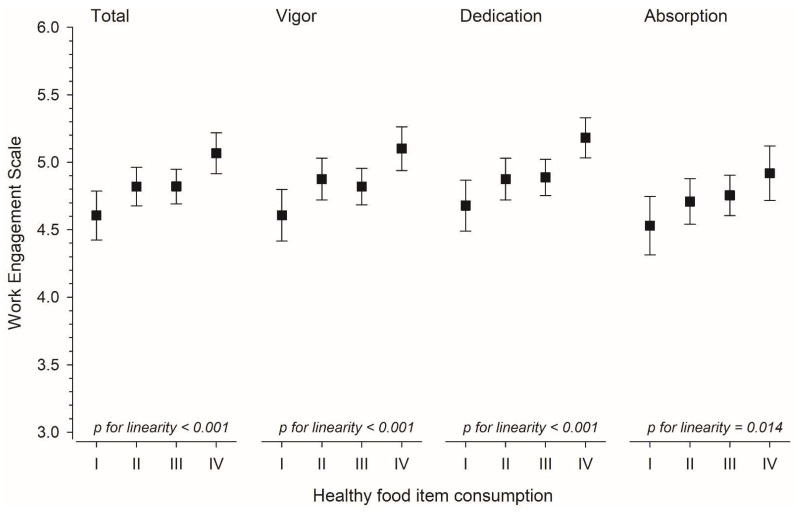
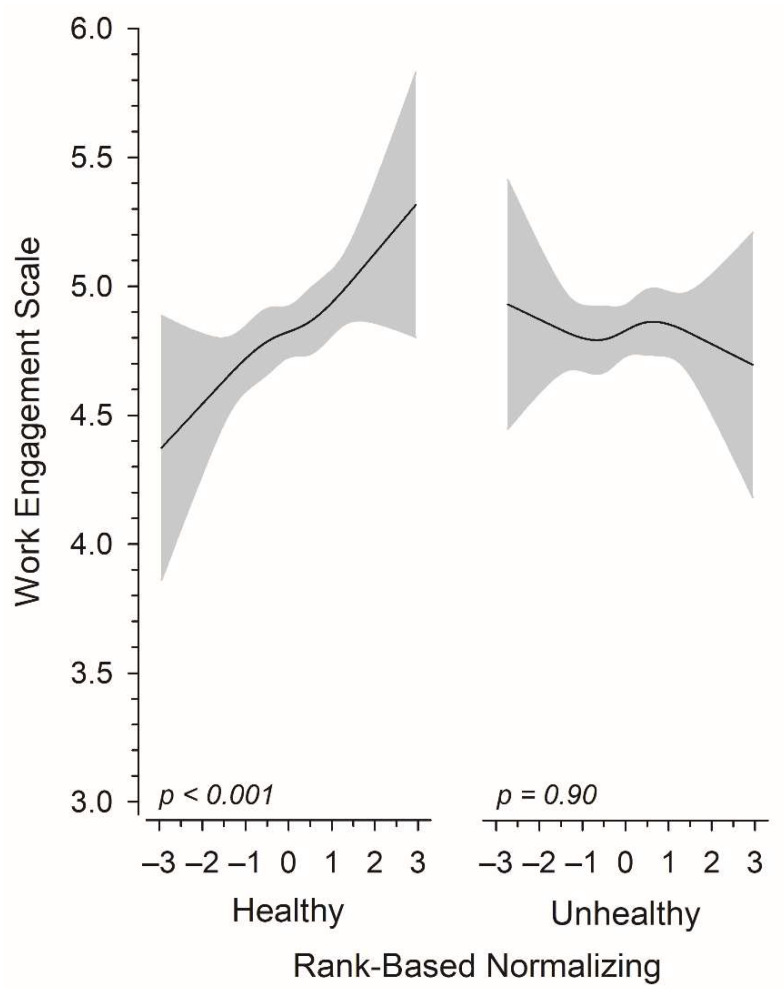
Work engagement had a positive relationship with the daily consumption of healthy food items. This association remained significant even after adjusting for age, education years, financial situation, and physical activity. The frequency of consuming unhealthy food items showed no relationship with work engagement. Anxiety and depressive symptoms decreased linearly with the greater consumption of healthy foods.
Frequent consumption of healthy food items is associated with higher work engagement, irrespectively of the consumption of unhealthy nutrients. These results encourage health care professionals to recommend healthy food items instead of forbidding unhealthy food, as well as employers to support healthy dietary habits among employees.
工作投入反映了与工作相关的幸福感。它与健康、生活满意度、工作效率、收入水平和职业前景呈正相关。然而,人们对工作投入与饮食之间的关系知之甚少。
2015 年,对芬兰市女员工(n=630)进行了一项横断面研究。使用乌得勒支工作投入量表评估工作投入。通过食物频率问卷确定健康和不健康食物的摄入量。采用自填式问卷评估社会人口因素、健康行为、抑郁和焦虑症状。
工作投入与健康食物的每日摄入量呈正相关。即使调整了年龄、教育年限、财务状况和体力活动,这种关联仍然显著。食用不健康食物的频率与工作投入无关。焦虑和抑郁症状随健康食品摄入量的增加而呈线性下降。
频繁食用健康食物与更高的工作投入有关,与不健康营养素的摄入无关。这些结果鼓励医疗保健专业人员建议健康的食物,而不是禁止不健康的食物,同时也鼓励雇主支持员工的健康饮食习惯。