Quinn Suzanne, Lenart Natasha, Dronzek Victoria, Scurti Gina M, Hossain Nasheed M, Nishimura Michael I
Department of Surgery, Stritch School of Medicine, Loyola University Chicago, Maywood, IL 60153, USA.
Division of Hematology and Oncology, Stritch School of Medicine, Loyola University Chicago, Maywood, IL 60153, USA.
Vaccines (Basel). 2022 Mar 16;10(3):457. doi: 10.3390/vaccines10030457.
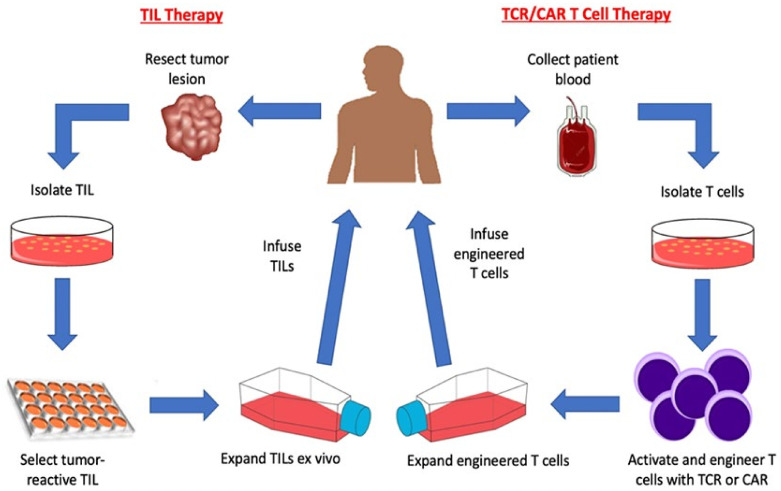
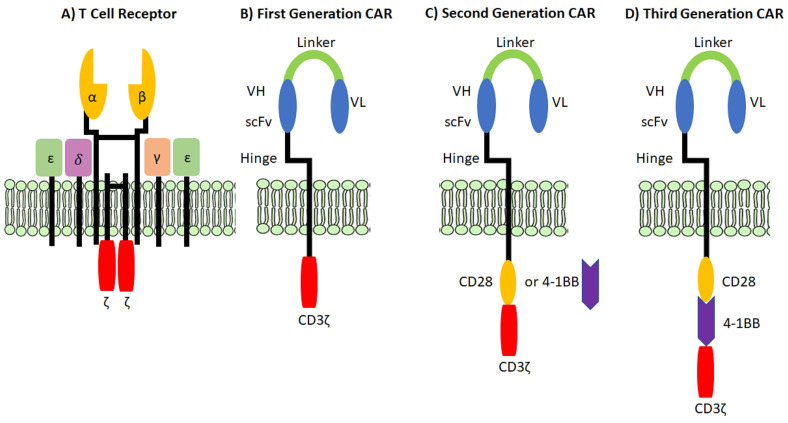
Immunotherapy is a beneficial treatment approach for multiple cancers, however, current therapies are effective only in a small subset of patients. Adoptive cell transfer (ACT) is a facet of immunotherapy where T cells targeting the tumor cells are transferred to the patient with several primary forms, utilizing unmodified or modified T cells: tumor-infiltrating lymphocytes (TIL), genetically modified T cell receptor transduced T cells, and chimeric antigen receptor (CAR) transduced T cells. Many clinical trials are underway investigating the efficacy and safety of these different subsets of ACT, as well as trials that combine one of these subsets with another type of immunotherapy. The main challenges existing with ACT are improving clinical responses and decreasing adverse events. Current research focuses on identifying novel tumor targeting T cell receptors, improving safety and efficacy, and investigating ACT in combination with other immunotherapies.
免疫疗法是一种对多种癌症有益的治疗方法,然而,目前的疗法仅对一小部分患者有效。过继性细胞转移(ACT)是免疫疗法的一个方面,即把靶向肿瘤细胞的T细胞以几种主要形式转移给患者,这些形式包括使用未修饰或经修饰的T细胞:肿瘤浸润淋巴细胞(TIL)、基因修饰的T细胞受体转导T细胞以及嵌合抗原受体(CAR)转导T细胞。目前正在进行许多临床试验,研究这些不同类型的ACT的疗效和安全性,以及将其中一种类型与另一种免疫疗法联合使用的试验。ACT存在的主要挑战是提高临床反应和减少不良事件。目前的研究重点是识别新的肿瘤靶向T细胞受体、提高安全性和疗效,以及研究ACT与其他免疫疗法的联合使用。