Center for Vaccine Development, Institute of Molecular Biosciences, Mahidol University, 25/25 Phuttamonthon 4 Road, Salaya, Nakhon Pathom 73170, Thailand.
Viruses. 2022 Feb 26;14(3):480. doi: 10.3390/v14030480.
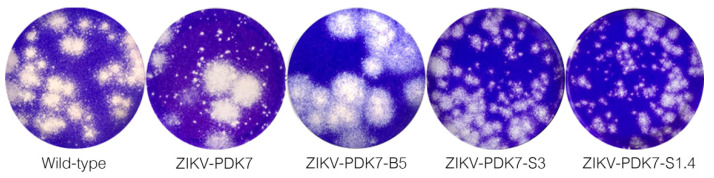
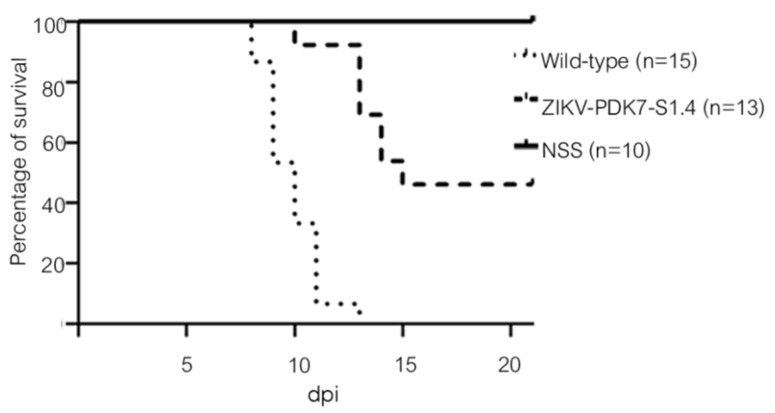
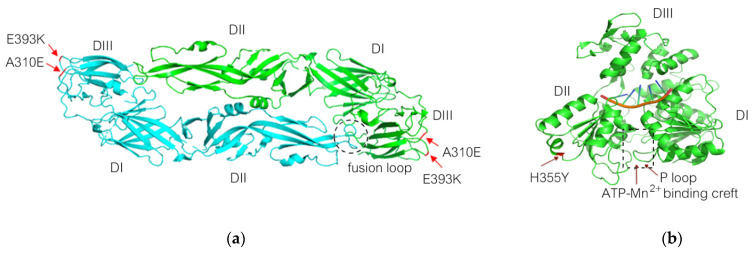
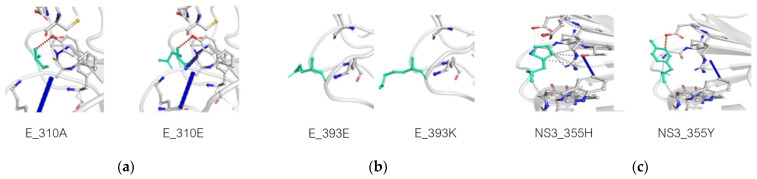
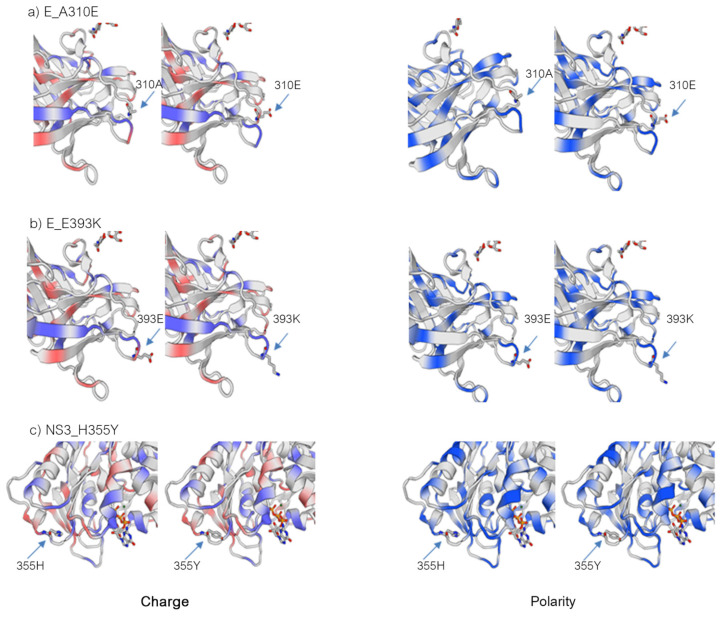
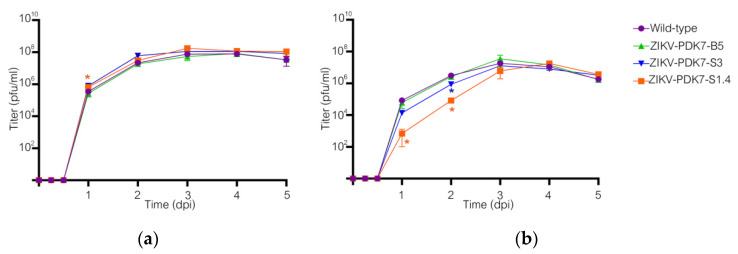
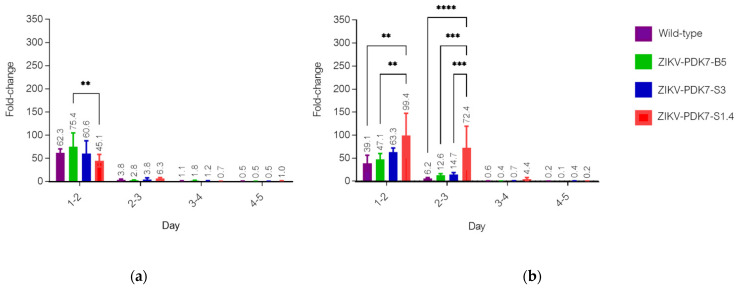
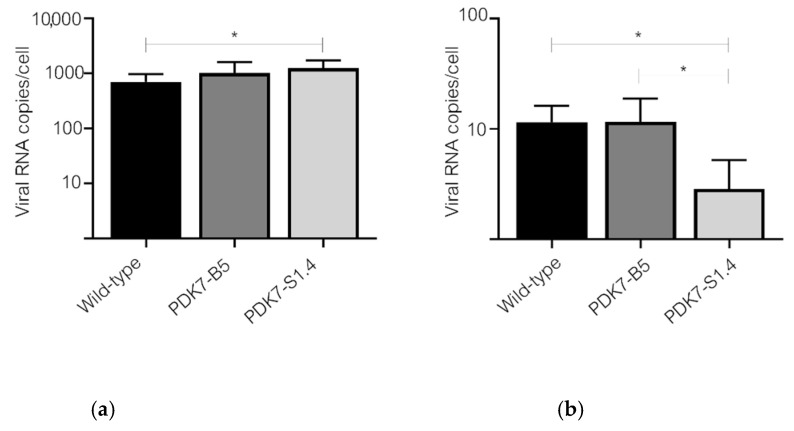
An Asian Zika virus (ZIKV) isolated from a Thai patient that was serially passaged in Primary Dog Kidney (PDK) cells for attenuation displayed both big and small plaque-forming viruses by the 7th passage. Two small-plaque isolates were selected and purified for characterization as attenuated ZIKV candidates. In vitro growth kinetics showed significantly reduced titers for small-plaque isolates in Vero cells early post-infection compared to the parental ZIKV and a big-plaque isolate, but no significant difference was observed in C6/36 cells. Viral entry experiments elucidate that titer reduction likely occurred due to the diminished entry capabilities of a small-plaque isolate. Additionally, a small-plaque isolate displayed lowered neurovirulence in newborn mice compared to 100% lethality from infection with the parental ZIKV. Genomic analysis revealed the same three unique non-synonymous mutations for both small-plaque isolates: two on the envelope (E) protein at residues 310, alanine to glutamic acid (A310E), and 393, glutamic acid to lysine (E393K), and one on residue 355 of NS3, histidine to tyrosine (H355Y). Three-dimensional (3D) mapping suggests that the E protein mutations located on the receptor-binding and fusion domain III likely affect cell entry, tropism, and virulence. These ZIKV isolates and genotypic markers will be beneficial for vaccine development.
从一名泰国患者中分离出的亚洲 Zika 病毒(ZIKV)在原代犬肾(PDK)细胞中连续传代以减弱毒力,在第 7 代时表现出大、小斑块形成病毒。选择并纯化了两个小斑块分离物,作为减毒 ZIKV 候选物进行表征。体外生长动力学显示,与亲本 ZIKV 和大斑块分离物相比,小斑块分离物在感染后早期在 Vero 细胞中的滴度显著降低,但在 C6/36 细胞中未观察到显著差异。病毒进入实验阐明,滴度降低可能是由于小斑块分离物的进入能力降低所致。此外,与亲本 ZIKV 感染导致 100%致死率相比,小斑块分离物在新生小鼠中的神经毒力降低。基因组分析显示,两个小斑块分离物都有相同的三个独特的非同义突变:包膜(E)蛋白上的 310 位的丙氨酸突变为谷氨酸(A310E)和 393 位的谷氨酸突变为赖氨酸(E393K),以及 NS3 上的 355 位组氨酸突变为酪氨酸(H355Y)。三维(3D)图谱表明,位于受体结合和融合结构域 III 上的 E 蛋白突变可能影响细胞进入、嗜性和毒力。这些 ZIKV 分离物和基因型标记将有益于疫苗开发。