Adam Awadalkareem, Fontes-Garfias Camila R, Sarathy Vanessa V, Liu Yang, Luo Huanle, Davis Emily, Li Wenqian, Muruato Antonio E, Wang Binbin, Ahatov Renat, Mahmoud Yoseph, Shan Chao, Osman Samantha R, Widen Steven G, Barrett Alan D T, Shi Pei-Yong, Wang Tian
Department of Microbiology & Immunology, University of Texas Medical Branch, Galveston, TX, USA.
Department of Biochemistry & Molecular Biology, University of Texas Medical Branch, Galveston, TX, USA.
NPJ Vaccines. 2021 Feb 17;6(1):27. doi: 10.1038/s41541-021-00288-6.
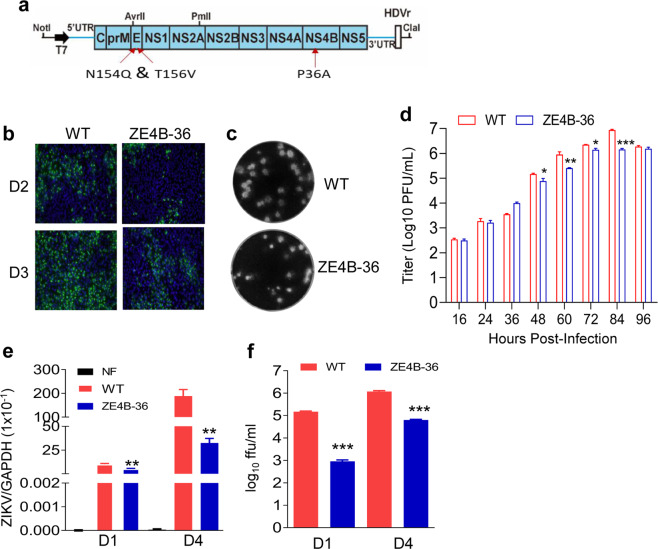
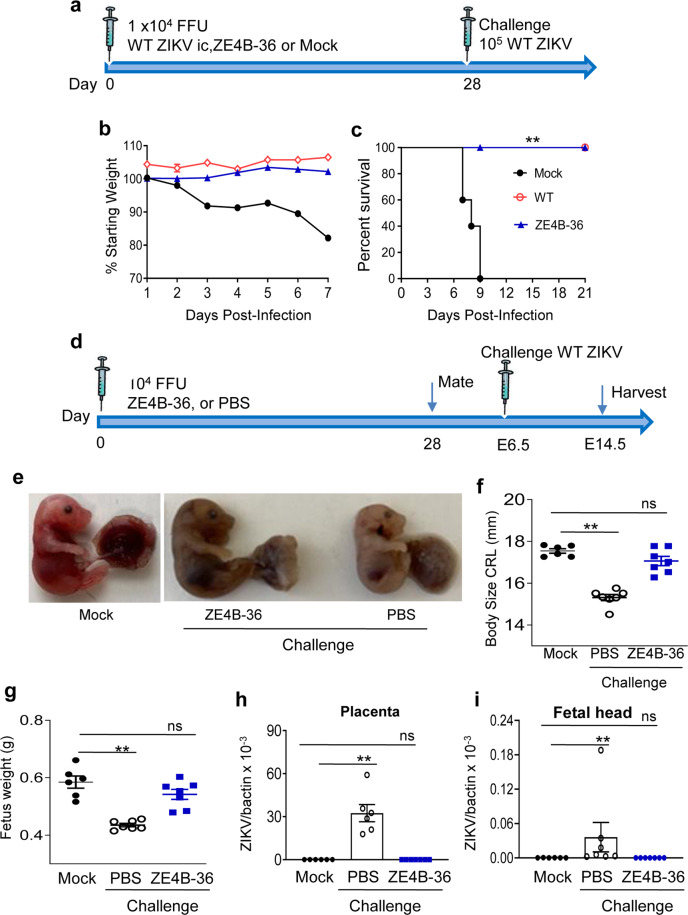
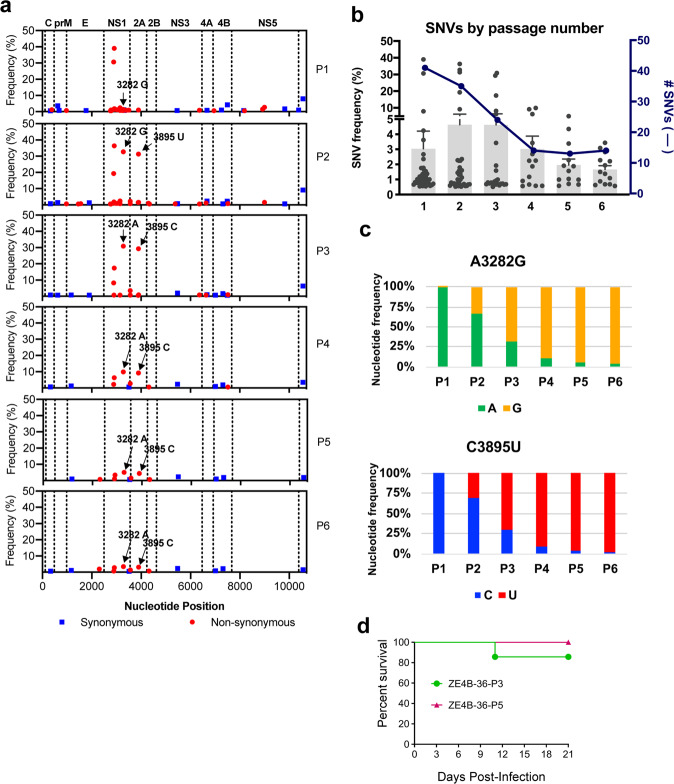
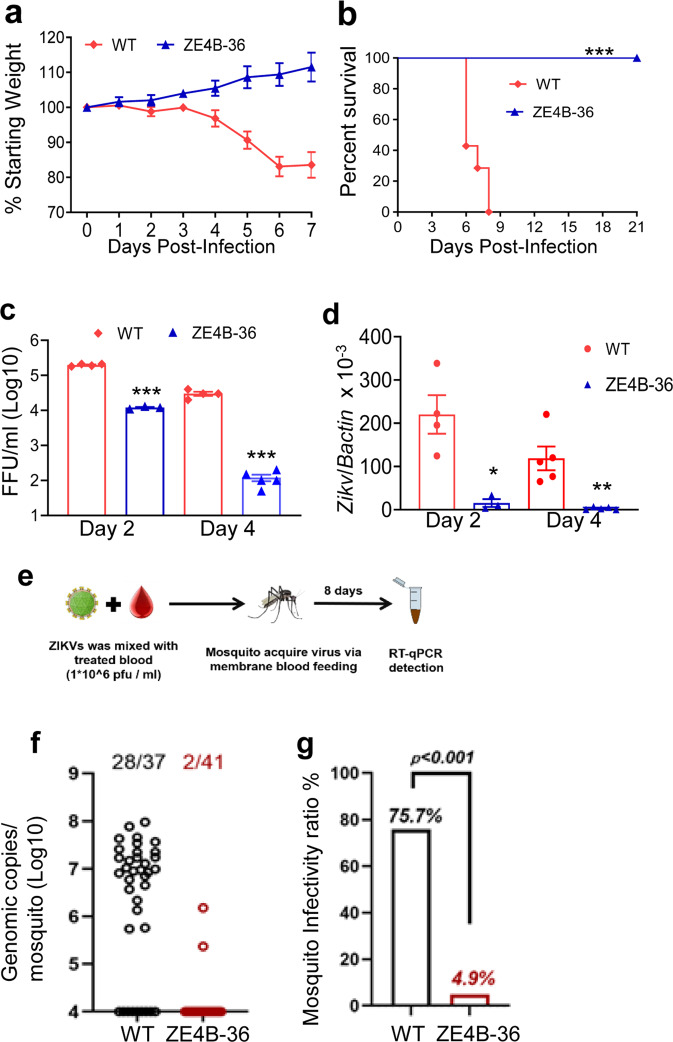
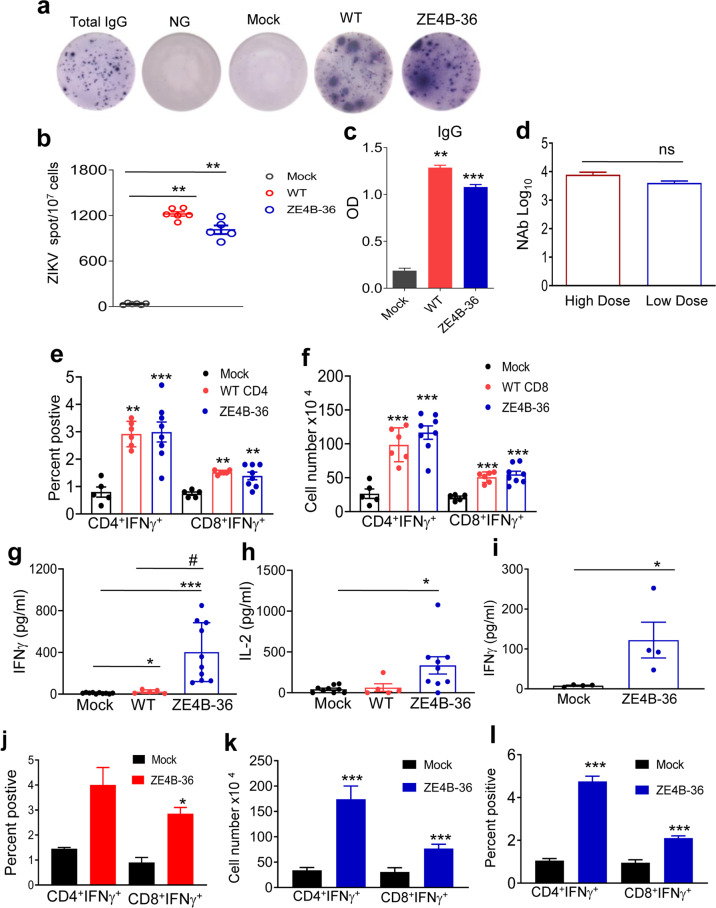
Although live attenuated vaccines (LAVs) have been effective in the control of flavivirus infections, to date they have been excluded from Zika virus (ZIKV) vaccine trials due to safety concerns. We have previously reported two ZIKV mutants, each of which has a single substitution in either envelope (E) glycosylation or nonstructural (NS) 4B P36 and displays a modest reduction in mouse neurovirulence and neuroinvasiveness, respectively. Here, we generated a ZIKV mutant, ZE4B-36, which combines mutations in both E glycosylation and NS4B P36. The ZE4B-36 mutant is stable and attenuated in viral replication. Next-generation sequence analysis showed that the attenuating mutations in the E and NS4B proteins are retained during serial cell culture passages. The mutant exhibits a significant reduction in neuroinvasiveness and neurovirulence and low infectivity in mosquitoes. It induces robust ZIKV-specific memory B cell, antibody, and T cell-mediated immune responses in type I interferon receptor (IFNR) deficient mice. ZIKV-specific T cell immunity remains strong months post-vaccination in wild-type C57BL/6 (B6) mice. Vaccination with ZE4B-36 protects mice from ZIKV-induced diseases and vertical transmission. Our results suggest that combination mutations in E glycosylation and NS4B P36 contribute to a candidate LAV with significantly increased safety but retain strong immunogenicity for prevention and control of ZIKV infection.
尽管减毒活疫苗(LAVs)在控制黄病毒感染方面已显示出有效性,但由于安全问题,迄今为止它们被排除在寨卡病毒(ZIKV)疫苗试验之外。我们之前报道过两种ZIKV突变体,其中一种在包膜(E)糖基化位点有单个替换,另一种在非结构(NS)4B P36位点有单个替换,分别表现出小鼠神经毒力和神经侵袭性的适度降低。在此,我们构建了一种ZIKV突变体ZE4B - 36,它同时具备E糖基化和NS4B P36两个位点的突变。ZE4B - 36突变体在病毒复制方面稳定且减毒。下一代测序分析表明,E和NS4B蛋白中的减毒突变在连续细胞传代过程中得以保留。该突变体在神经侵袭性和神经毒力方面显著降低,且在蚊子中的感染性较低。它在I型干扰素受体(IFNR)缺陷小鼠中诱导出强烈的ZIKV特异性记忆B细胞、抗体以及T细胞介导的免疫反应。在野生型C57BL / 6(B6)小鼠中,接种ZE4B - 36疫苗后数月,ZIKV特异性T细胞免疫仍保持强劲。用ZE4B - 36疫苗接种可保护小鼠免受ZIKV诱导的疾病以及垂直传播的影响。我们的结果表明,E糖基化和NS4B P36位点的联合突变有助于构建一种安全性显著提高但仍保留强大免疫原性的候选减毒活疫苗,用于预防和控制ZIKV感染。