Department of Microbiology, College of Medicine, Korea University, Seoul 02841, Korea.
Department of Microbiology, College of Medicine, Hallym University, Chuncheon 24252, Korea.
Viruses. 2022 Mar 14;14(3):595. doi: 10.3390/v14030595.
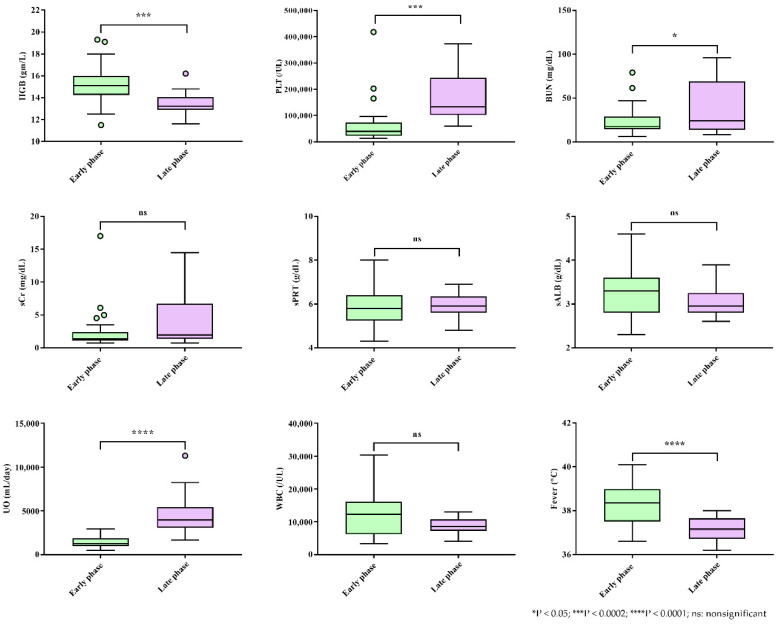
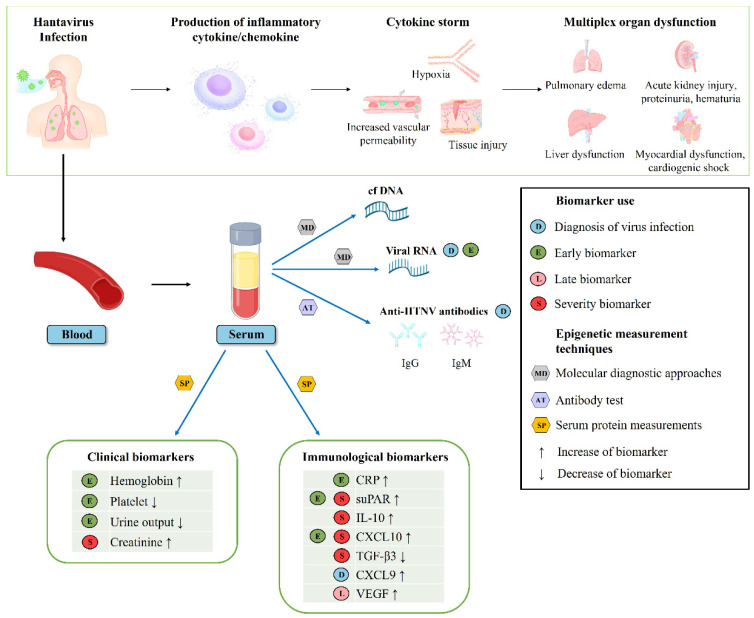
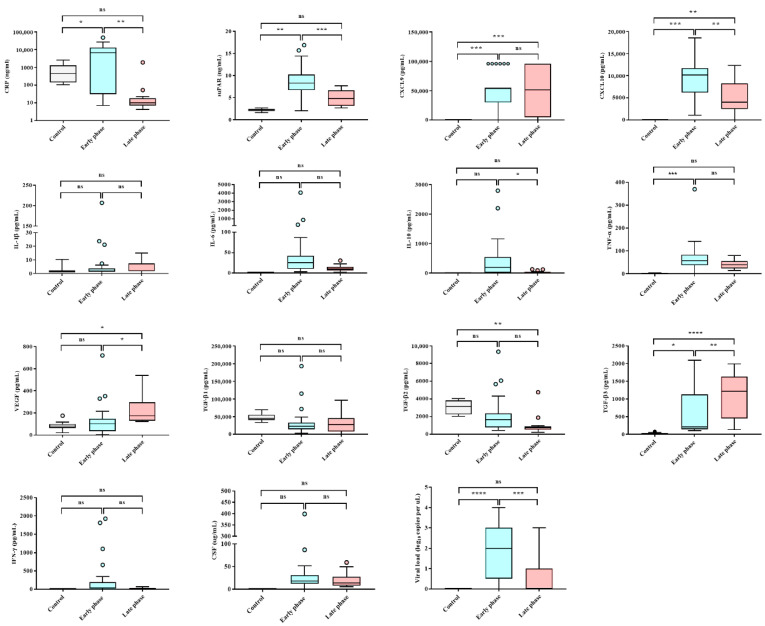
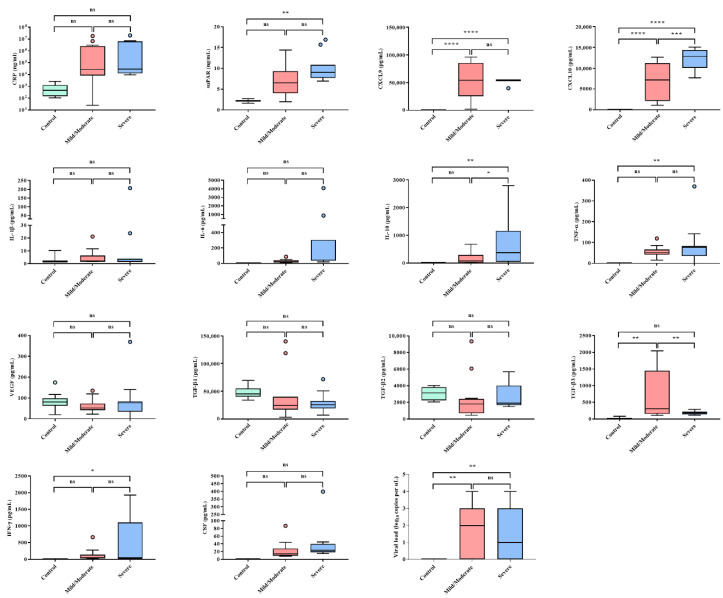
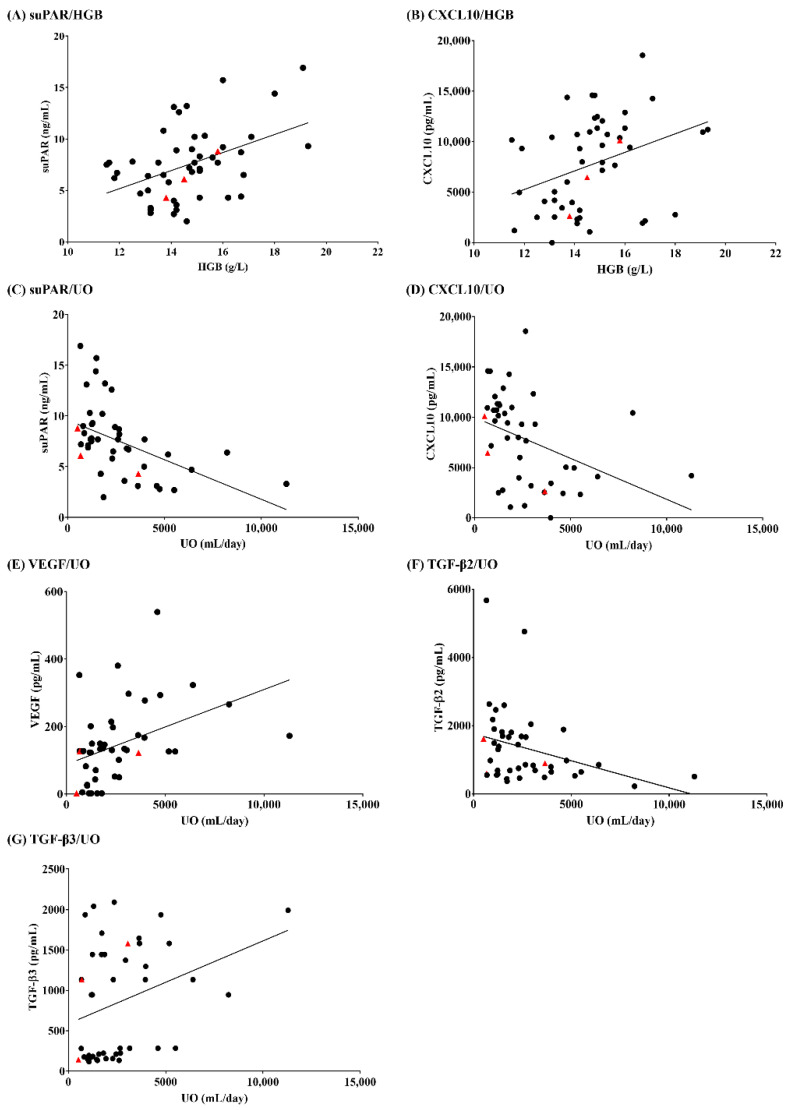
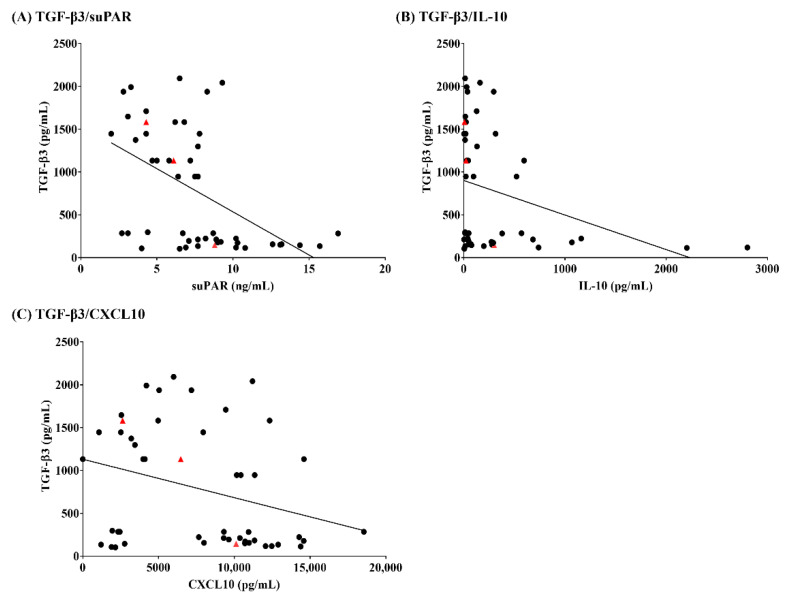
The ability to accurately predict the early progression of hemorrhagic fever with renal syndrome (HFRS) is crucial for reducing morbidity and mortality rates in severely affected patients. However, the utility of biomarkers for predicting clinical outcomes remains elusive in HFRS. The aims of the current study were to analyze the serum levels of immune function-related proteins and identify novel biomarkers that may help ascertain clinical outcomes of HFRS. Enzyme-linked immunosorbent assay, Luminex, and bioanalyzer assays were used to quantitatively detect 15 biomarkers in 49 serum samples of 26 patients with HFRS. High hemoglobin (HGB) and low urine output (UO) levels were identified as potential biomarkers associated with the acute HFRS. The serum soluble urokinase plasminogen activator receptor (suPAR) and C-X-C motif chemokine ligand 10 (CXCL10) values increased in the early phase of diseases. Elevated suPAR, interleukin-10 (IL-10), CXCL10, and decreased transforming growth factor-beta 3 (TGF-β3) were representative predictors of the disease severity. Upregulation of the HGB showed a significant correlation with high levels of suPAR and CXCL10. Reduced UO positively correlated with increased suPAR, CXCL10, and TGF-β2, and decreased vascular endothelial growth factor and TGF-β3. The changing HGB and UO criteria, high suPAR, IL-10, CXCL10, and low TGF-β3 of HFRS raise significant awareness for physicians regarding prospective biomarkers for monitoring early warning signs of HFRS. This study provides critical insights into the clinical and immunological biomarkers for disease severity and progression in patients with HFRS to identify early predictions of fatal outcomes.
准确预测肾综合征出血热(HFRS)早期进展对于降低重症患者的发病率和死亡率至关重要。然而,生物标志物在预测临床结局方面的应用仍不明确。本研究旨在分析与免疫功能相关的蛋白血清水平,并确定有助于确定 HFRS 临床结局的新型生物标志物。采用酶联免疫吸附试验、Luminex 和生物分析仪定量检测 26 例 HFRS 患者的 49 份血清样本中的 15 种生物标志物。高血红蛋白(HGB)和低尿输出(UO)水平被确定为与急性 HFRS 相关的潜在生物标志物。疾病早期血清可溶性尿激酶型纤溶酶原激活物受体(suPAR)和 C-X-C 基序趋化因子配体 10(CXCL10)水平升高。升高的 suPAR、白细胞介素-10(IL-10)、CXCL10 和降低的转化生长因子-β3(TGF-β3)是疾病严重程度的代表性预测因子。HGB 的上调与 suPAR 和 CXCL10 水平升高呈显著相关。UO 减少与 suPAR、CXCL10 和 TGF-β2 升高以及血管内皮生长因子和 TGF-β3 降低呈正相关。HFRS 的 HGB 和 UO 变化标准、suPAR、IL-10、CXCL10 升高和 TGF-β3 降低提示医生关注监测 HFRS 早期预警信号的潜在生物标志物。本研究为 HFRS 患者的疾病严重程度和进展的临床和免疫生物标志物提供了重要认识,以识别致命结局的早期预测指标。