MOE Key Laboratory of Cell Activities and Stress Adaptations, School of Life Sciences, Lanzhou University, Lanzhou, P.R. China.
MOE Key Laboratory of Environment and Genes Related to Diseases, School of Basic Medical Sciences, Xi'an Jiaotong University, Xi'an, P.R. China.
Commun Biol. 2022 Mar 25;5(1):268. doi: 10.1038/s42003-022-03220-3.
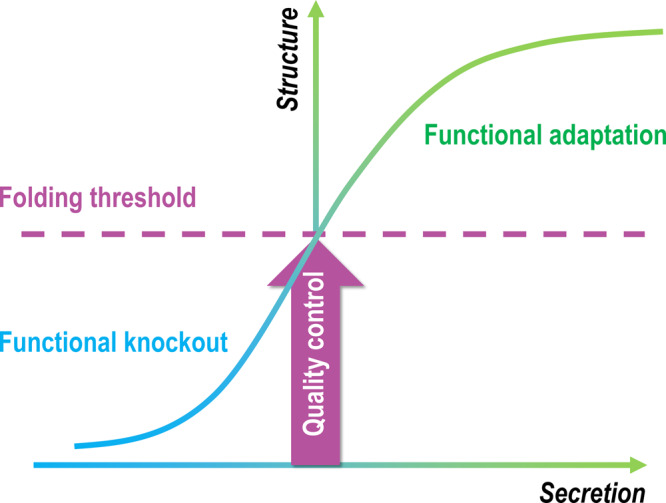
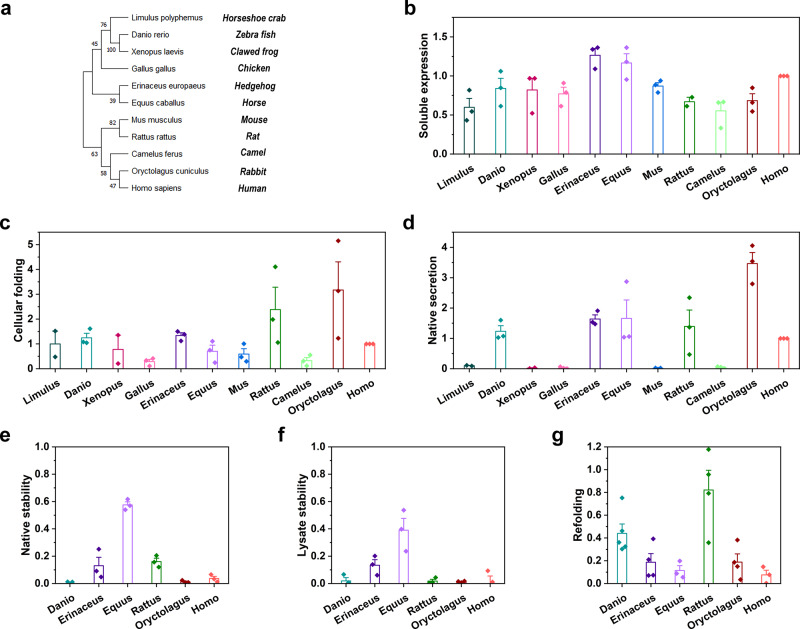
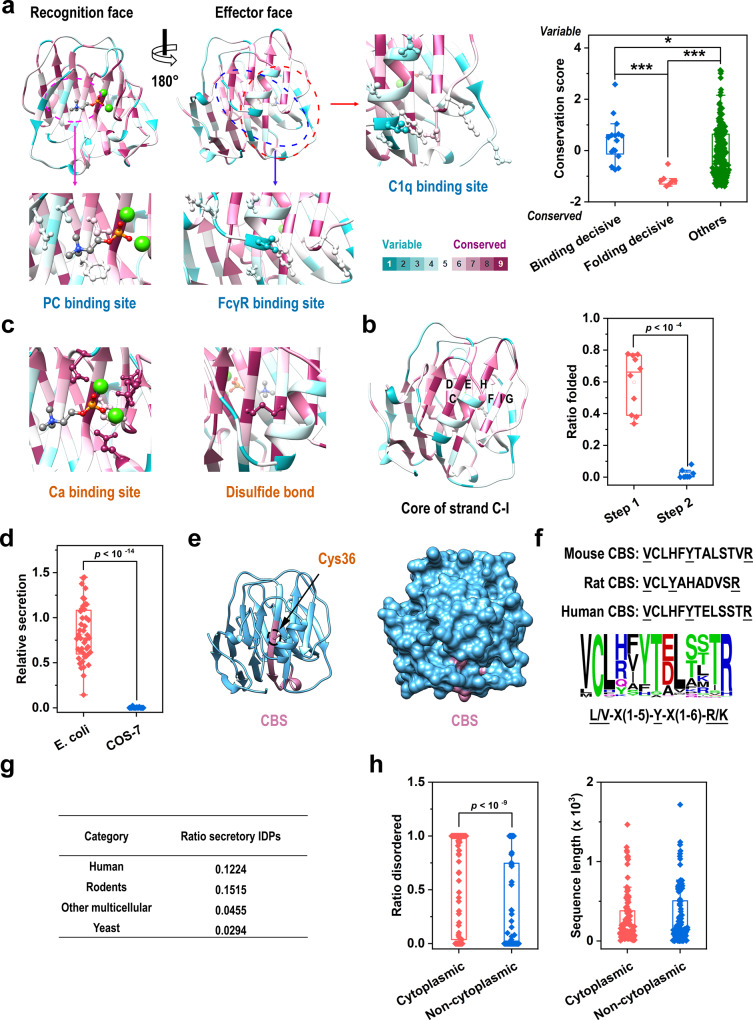
Biophysical models suggest a dominant role of structural over functional constraints in shaping protein evolution. Selection on structural constraints is linked closely to expression levels of proteins, which together with structure-associated activities determine in vivo functions of proteins. Here we show that despite the up to two orders of magnitude differences in levels of C-reactive protein (CRP) in distinct species, the in vivo functions of CRP are paradoxically conserved. Such a pronounced level-function mismatch cannot be explained by activities associated with the conserved native structure, but is coupled to hidden activities associated with the unfolded, activated conformation. This is not the result of selection on structural constraints like foldability and stability, but is achieved by folding determinants-mediated functional selection that keeps a confined carrier structure to pass the stringent eukaryotic quality control on secretion. Further analysis suggests a folding threshold model which may partly explain the mismatch between the vast sequence space and the limited structure space of proteins.
生物物理模型表明,在塑造蛋白质进化方面,结构约束比功能约束起着更主导的作用。对结构约束的选择与蛋白质的表达水平密切相关,而蛋白质的结构相关活性则共同决定了其在体内的功能。在这里,我们表明,尽管不同物种中 C 反应蛋白 (CRP) 的水平差异高达两个数量级,但 CRP 的体内功能却出人意料地保守。这种显著的水平-功能不匹配不能用与保守的天然结构相关的活性来解释,而是与折叠后、激活构象相关的隐藏活性相关。这不是折叠性和稳定性等结构约束选择的结果,而是通过折叠决定因素介导的功能选择来实现的,这种选择使折叠载体结构保持在一个受限制的状态,从而通过严格的真核生物质量控制进行分泌。进一步的分析表明了一个折叠阈值模型,它可以部分解释蛋白质的巨大序列空间和有限结构空间之间的不匹配。