Department of Anesthesiology, Laboratory of Mitochondria and Metabolism, National Clinical Research Center for Geriatrics, West China Hospital of Sichuan University, Chengdu 610041, China.
Department of Anesthesiology, The General Hospital of Western Theater Command, Chengdu 610083, China.
Oxid Med Cell Longev. 2022 Mar 18;2022:2513837. doi: 10.1155/2022/2513837. eCollection 2022.
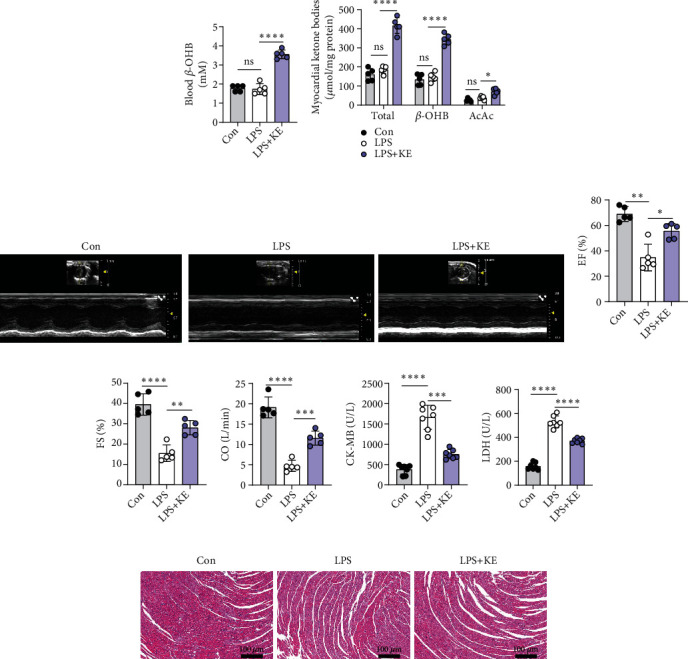
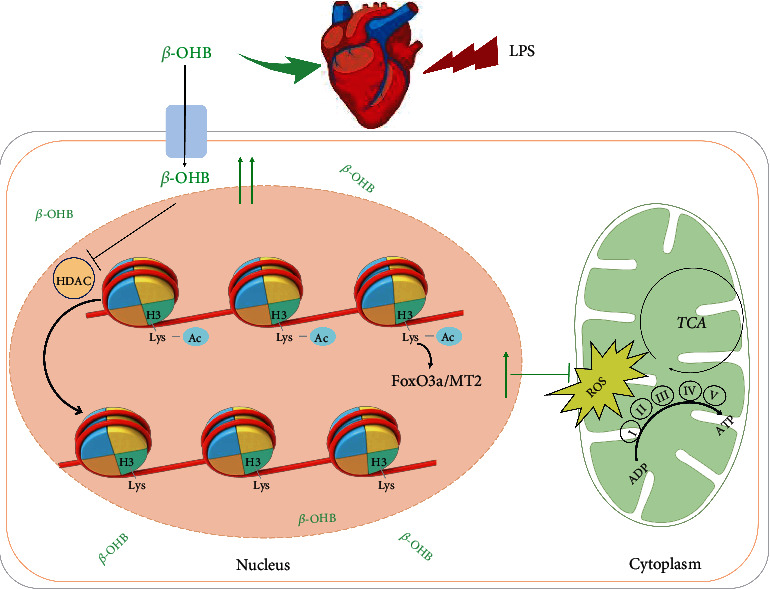
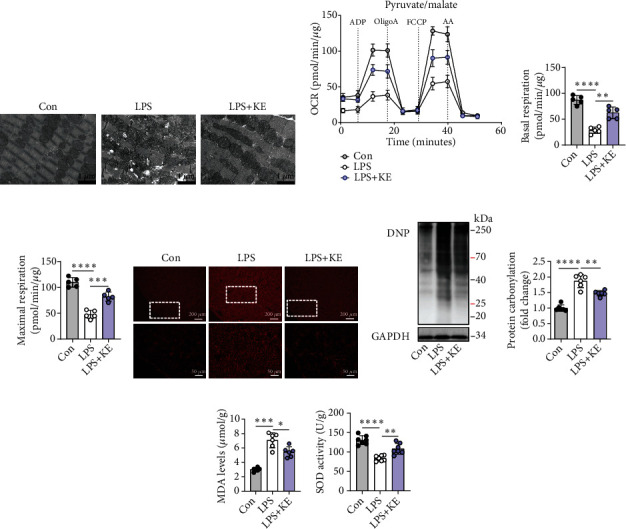
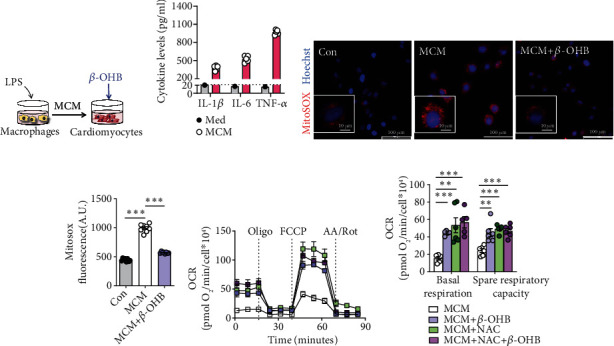
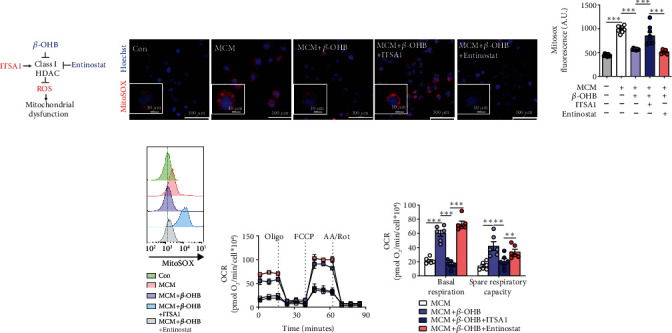
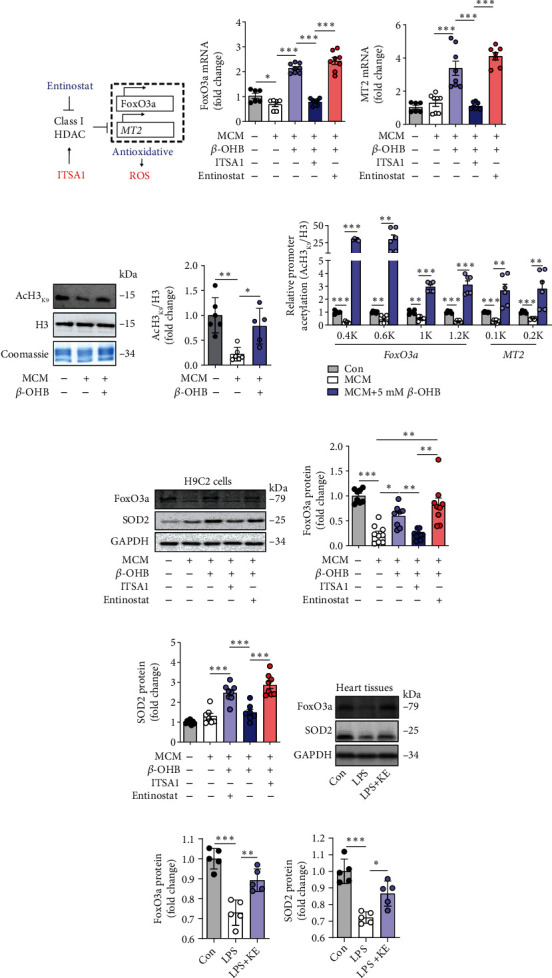
Septic cardiomyopathy is a life-threatening complication of severe sepsis and septic shock. Oxidative stress and mitochondrial dysfunction have been identified as significant abnormalities in septic cardiomyopathy. However, specific treatments are rare. This study aims to investigate the impact of -hydroxybutyrate (-OHB) on septic cardiomyopathy and explore the underlying mechanism(s). We found that pretreatment of D--hydroxybutyrate-(R)-1,3 butanediol monoester (ketone ester, 3 mg/g body weight, once daily) by gavage for three days elevated the levels of ketone bodies, especially that of -hydroxybutyrate (-OHB) in the circulation and mouse hearts, which exerted a protective effect against lipopolysaccharide (LPS, 20 mg/kg)-induced septic cardiomyopathy in mice. In addition, an LPS-stimulated macrophage-conditioned medium (MCM) was used to mimic the pathological process of septic cardiomyopathy. Mechanistically, -OHB alleviated myocardial oxidative stress and improved mitochondrial respiratory function through the antioxidant FoxO3a/MT2 pathway activated via histone deacetylase (HDAC) inhibition, which ultimately enhanced heart performance in septic cardiomyopathy. Our results, therefore, suggested an unappreciated critical role of -OHB in septic heart protection as well as highlighted the potential of -OHB as a simple remedy for the septic cardiomyopathy population.
脓毒症性心肌病是严重脓毒症和脓毒性休克的一种危及生命的并发症。氧化应激和线粒体功能障碍已被确定为脓毒性心肌病的显著异常。然而,特定的治疗方法却很少。本研究旨在探讨β-羟丁酸(β-OHB)对脓毒性心肌病的影响,并探讨其潜在机制。我们发现,通过灌胃预处理 D-β-羟丁酸-(R)-1,3 丁二醇单酯(酮酯,3mg/g 体重,每天一次)三天,可提高循环和小鼠心脏中酮体的水平,特别是β-羟丁酸(β-OHB)的水平,从而对小鼠脂多糖(LPS,20mg/kg)诱导的脓毒性心肌病发挥保护作用。此外,还使用脂多糖刺激的巨噬细胞条件培养基(MCM)来模拟脓毒性心肌病的病理过程。在机制上,β-OHB 通过抑制组蛋白去乙酰化酶(HDAC)激活的抗氧化 FoxO3a/MT2 途径减轻心肌氧化应激并改善线粒体呼吸功能,从而最终增强脓毒性心肌病中的心脏功能。因此,我们的研究结果表明,β-OHB 在脓毒性心脏保护中具有未被充分认识的关键作用,并强调了β-OHB 作为脓毒性心肌病人群的简单治疗方法的潜力。