Bassan Arianna, Alves Vinicius M, Amberg Alexander, Anger Lennart T, Auerbach Scott, Beilke Lisa, Bender Andreas, Cronin Mark T D, Cross Kevin P, Hsieh Jui-Hua, Greene Nigel, Kemper Raymond, Kim Marlene T, Mumtaz Moiz, Noeske Tobias, Pavan Manuela, Pletz Julia, Russo Daniel P, Sabnis Yogesh, Schaefer Markus, Szabo David T, Valentin Jean-Pierre, Wichard Joerg, Williams Dominic, Woolley David, Zwickl Craig, Myatt Glenn J
Innovatune srl, Via Giulio Zanon 130/D, 35129 Padova, Italy.
The National Institute of Environmental Health Sciences, Division of the National Toxicology, Program, Research Triangle Park, NC 27709, USA.
Comput Toxicol. 2021 Nov;20. doi: 10.1016/j.comtox.2021.100187. Epub 2021 Sep 9.
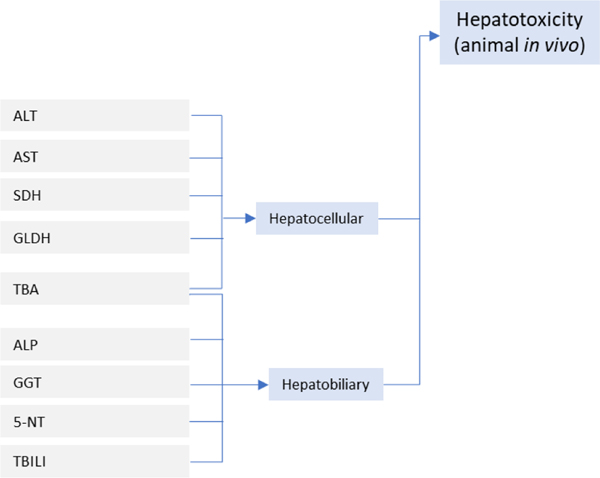
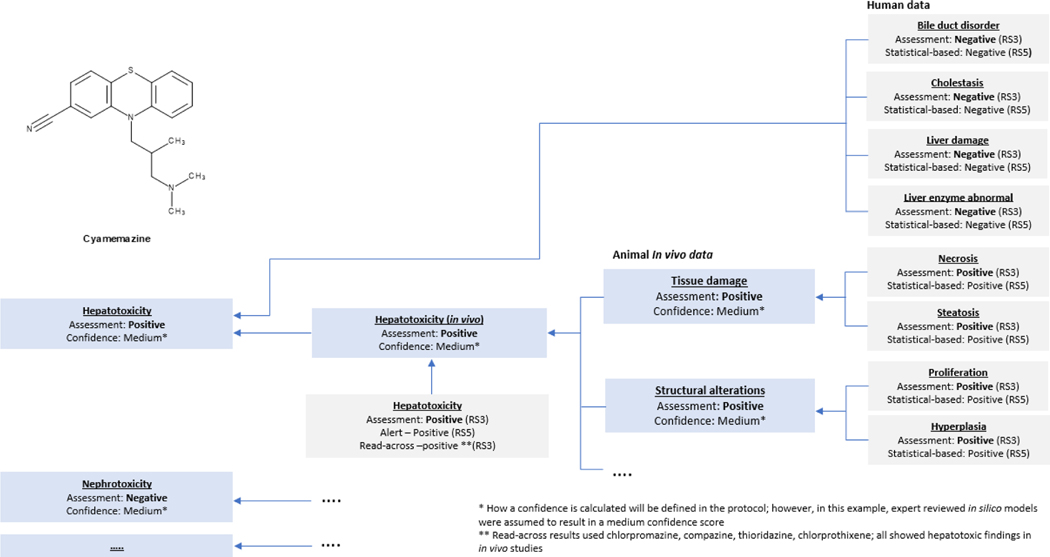
Hepatotoxicity is one of the most frequently observed adverse effects resulting from exposure to a xenobiotic. For example, in pharmaceutical research and development it is one of the major reasons for drug withdrawals, clinical failures, and discontinuation of drug candidates. The development of faster and cheaper methods to assess hepatotoxicity that are both more sustainable and more informative is critically needed. The biological mechanisms and processes underpinning hepatotoxicity are summarized and experimental approaches to support the prediction of hepatotoxicity are described, including toxicokinetic considerations. The paper describes the increasingly important role of approaches and highlights challenges to the adoption of these methods including the lack of a commonly agreed upon protocol for performing such an assessment and the need for solutions that take dose into consideration. A proposed framework for the integration of and experimental information is provided along with a case study describing how computational methods have been used to successfully respond to a regulatory question concerning non-genotoxic impurities in chemically synthesized pharmaceuticals.
肝毒性是接触外源性物质最常观察到的不良反应之一。例如,在药物研发中,它是药物撤市、临床失败以及候选药物停用的主要原因之一。迫切需要开发出更快、更便宜、更具可持续性且信息更丰富的肝毒性评估方法。本文总结了肝毒性背后的生物学机制和过程,并描述了支持肝毒性预测的实验方法,包括毒代动力学考量。本文还描述了这些方法日益重要的作用,并强调了采用这些方法所面临的挑战,包括缺乏进行此类评估的普遍认可的方案,以及需要考虑剂量的解决方案。本文提供了一个整合计算方法和实验信息的框架,并通过一个案例研究描述了如何使用计算方法成功回应有关化学合成药物中非遗传毒性杂质的监管问题。