Ponomarenko M P, Chadaeva I V, Ponomarenko P M, Bogomolov A G, Oshchepkov D Yu, Sharypova E B, Suslov V V, Osadchuk A V, Osadchuk L V, Matushkin Yu G
Institute of Cytology and Genetics of the Siberian Branch of the Russian Academy of Sciences, Novosibirsk, Russia.
Vavilovskii Zhurnal Genet Selektsii. 2022 Feb;26(1):96-108. doi: 10.18699/VJGB-22-13.
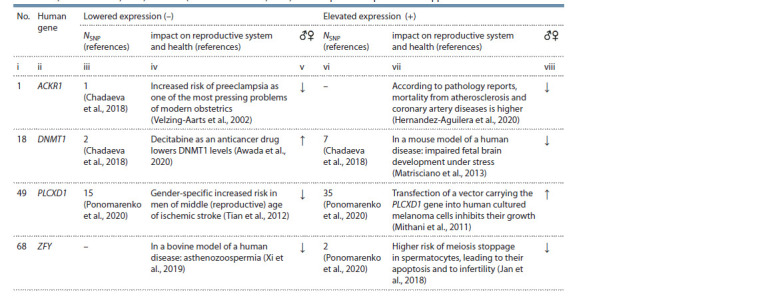
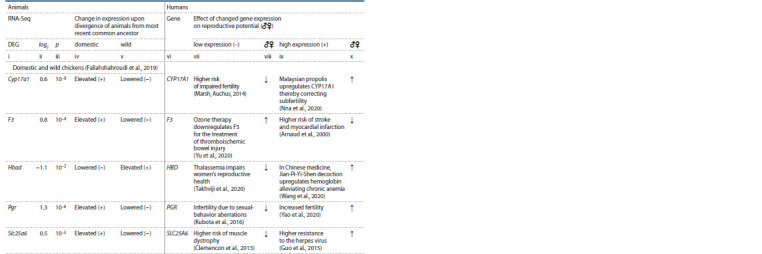
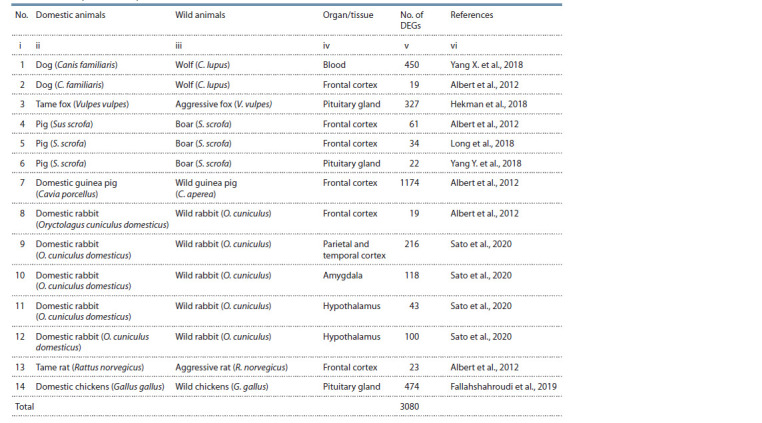
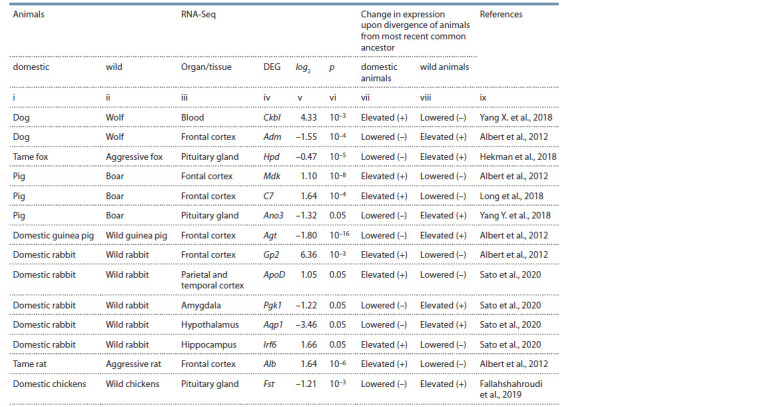
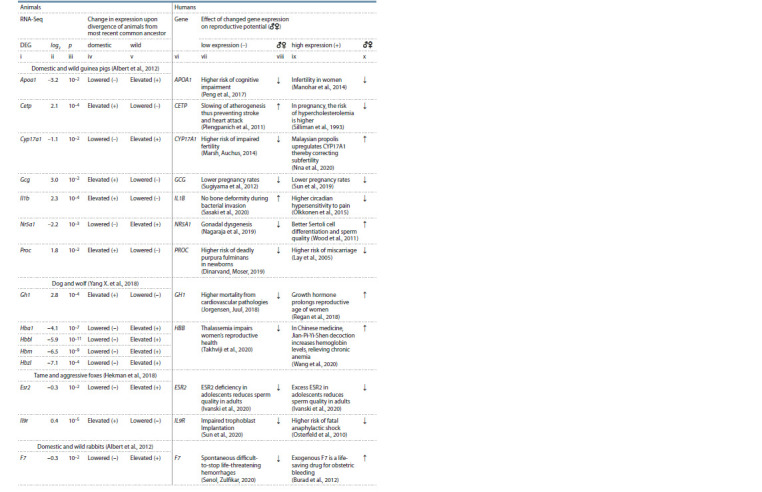
One of the greatest achievements of genetics in the 20th century is D.K. Belyaev's discovery of destabilizing selection during the domestication of animals and that this selection affects only gene expression regulation (not gene structure) and inf luences systems of neuroendocrine control of ontogenesis in a stressful environment. Among the experimental data generalized by Belyaev's discovery, there are also f indings about accelerated extinc tion of testes' hormonal function and disrupted seasonality of reproduction of domesticated foxes in comparison with their wild congeners. To date, Belyaev's discovery has already been repeatedly conf irmed, for example, by independent observations during deer domestication, during the use of rats as laboratory animals, after the reintroduction of endangered species such as Przewalski's horse, and during the creation of a Siberian reserve population of the Siberian grouse when it had reached an endangered status in natural habitats. A genome-wide comparison among humans, several domestic animals, and some of their wild congeners has given rise to the concept of self-domestication syndrome, which includes autism spectrum disorders. In our previous study, we created a bioinformatic model of human self-domestication syndrome using differentially expressed genes (DEGs; of domestic animals versus their wild congeners) orthologous to the human genes (mainly, nervous-system genes) whose changes in expression affect reproductive potential, i. e., growth of the number of humans in the absence of restrictions caused by limiting factors. Here, we applied this model to 68 human genes whose changes in expression alter the reproductive health of women and men and to 3080 DEGs of domestic versus wild animals. As a result, in domestic animals, we identif ied 16 and 4 DEGs, the expression changes of which are codirected with changes in the expression of the human orthologous genes decreasing and increasing human reproductive potential, respectively. The wild animals had 9 and 11 such DEGs, respectively. This difference between domestic and wild animals was signif icant according to Pearson's χ2 test (p < 0.05) and Fisher's exact test (p < 0.05). We discuss the results from the standpoint of restoration of endangered animal species whose natural habitats are subject to an anthropogenic impact.
20世纪遗传学最伟大的成就之一是D.K. 别利亚耶夫发现了动物驯化过程中的不稳定选择,且这种选择仅影响基因表达调控(而非基因结构),并在应激环境中影响个体发育的神经内分泌控制系统。在别利亚耶夫的发现所概括的实验数据中,还有关于家养狐狸与野生同类相比睾丸激素功能加速衰退以及繁殖季节性紊乱的研究结果。迄今为止,别利亚耶夫的发现已多次得到证实,例如,在鹿的驯化过程中、将大鼠用作实验动物时、普氏野马等濒危物种重新引入之后,以及在西伯利亚松鸡在自然栖息地达到濒危状态时创建其西伯利亚保护区种群的过程中。人类、几种家养动物及其一些野生同类之间的全基因组比较催生了自我驯化综合征的概念,其中包括自闭症谱系障碍。在我们之前的研究中,我们利用与人类基因(主要是神经系统基因)直系同源的差异表达基因(家养动物与其野生同类的)创建了人类自我驯化综合征的生物信息模型,这些基因表达的变化会影响生殖潜力,即在没有限制因素造成的限制情况下人类数量的增长。在这里,我们将这个模型应用于68个其表达变化会改变男性和女性生殖健康的人类基因,以及3080个家养动物与野生动物的差异表达基因。结果,在家养动物中,我们分别鉴定出16个和4个差异表达基因,其表达变化分别与人类直系同源基因表达变化同向,导致人类生殖潜力降低和增加。野生动物分别有9个和11个这样的差异表达基因。根据皮尔逊卡方检验(p < 0.05)和费舍尔精确检验(p < 0.05),家养动物和野生动物之间的这种差异是显著的。我们从自然栖息地受到人为影响的濒危动物物种恢复的角度讨论了这些结果。