Shenzhen Engineering Laboratory of phosphorene and Optoelectronics, International Collaborative Laboratory of 2D Materials for Optoelectronics Science and Technology of Ministry of Education, Shenzhen Institute of Translational Medicine, Department of Otolaryngology, Shenzhen Second People's Hospital, the First Affiliated Hospital, Institute of Microscale Optoelectronics, Shenzhen University, Shenzhen, 518060, P.R. China.
Shenzhen International Institute for Biomedical Research, Shenzhen, 518110, China.
Adv Sci (Weinh). 2022 May;9(14):e2105231. doi: 10.1002/advs.202105231. Epub 2022 Mar 27.
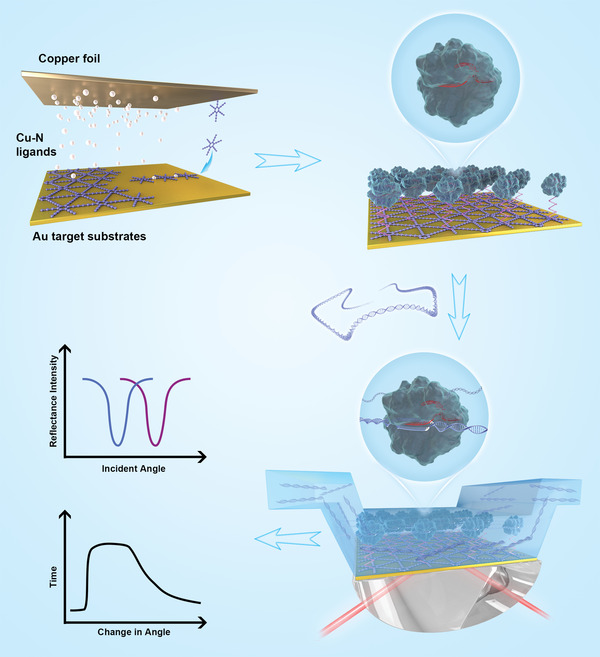
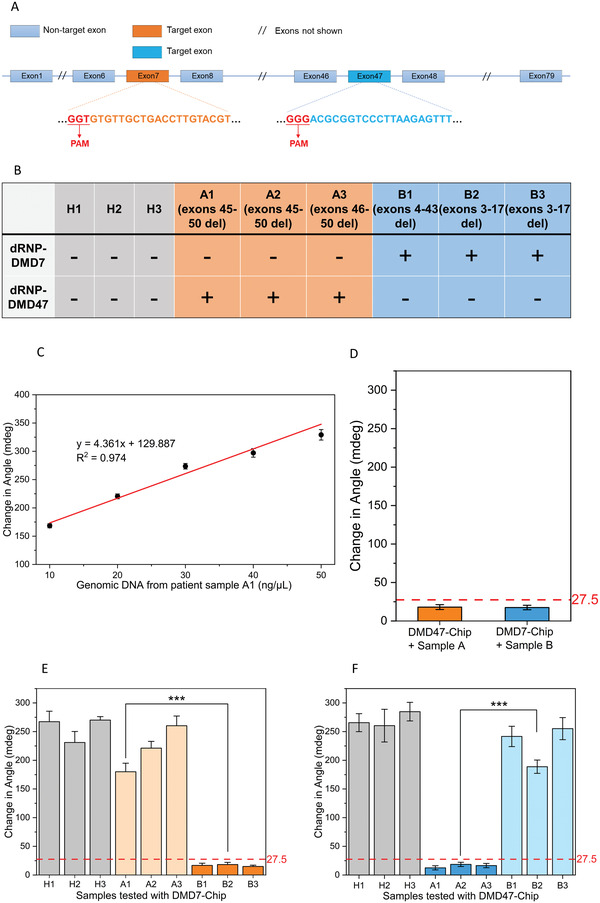
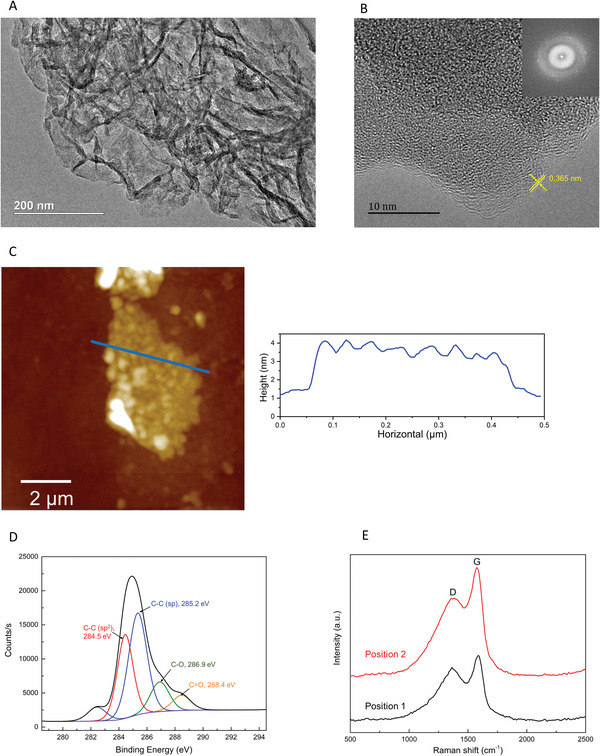
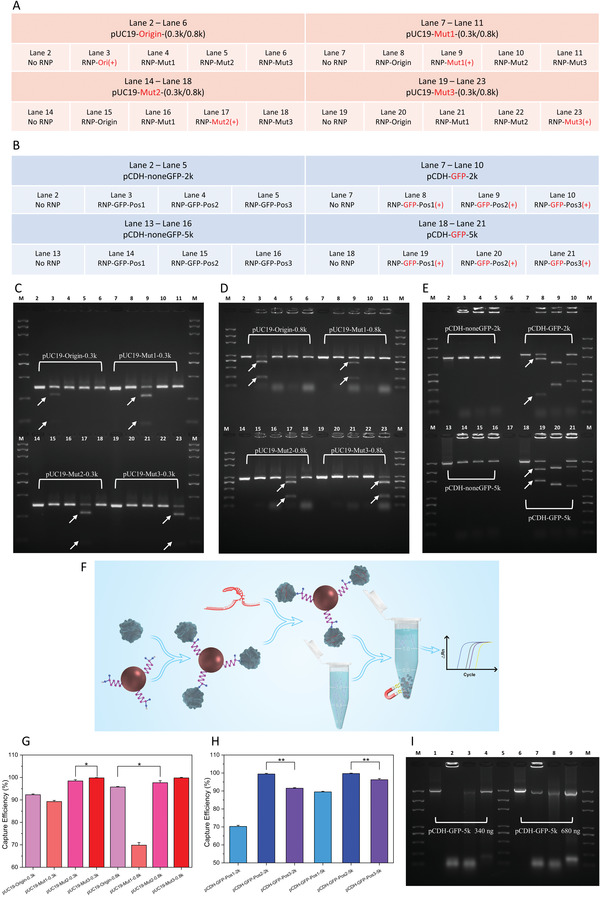
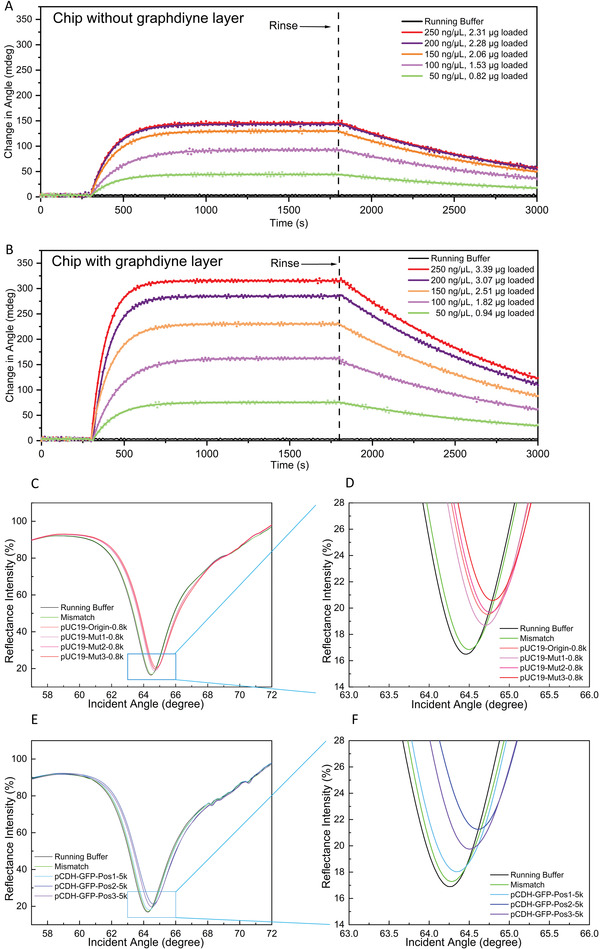
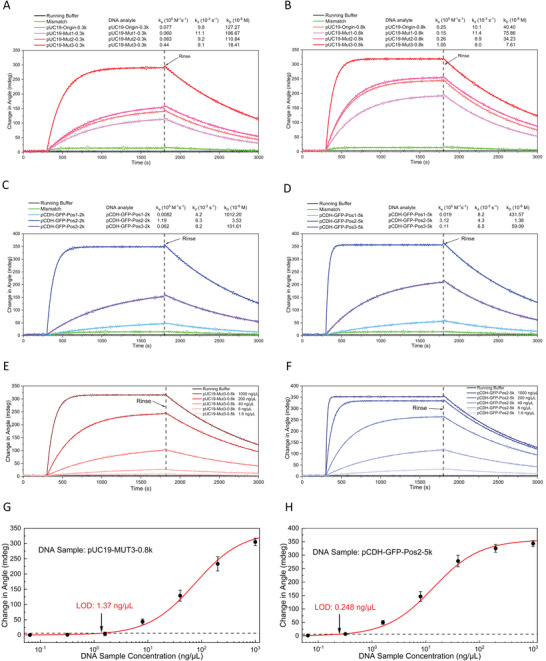
The clustered regularly interspaced short palindromic repeats (CRISPR) molecular system has emerged as a promising technology for the detection of nucleic acids. Herein, the development of a surface plasmon resonance (SPR) sensor that is functionalized with a layer of locally grown graphdiyne film, achieving excellent sensing performance when coupled with catalytically deactivated CRISPR-associated protein 9 (dCas9), is reported. dCas9 protein is immobilized on the sensor surface and complexed with a specific single-guide RNA, enabling the amplification-free detection of target sequences within genomic DNA. The sensor, termed CRISPR-SPR-Chip, is used to successfully analyze recombinant plasmids with only three-base mutations with a limit of detection as low as 1.3 fM. Real-time monitoring CRISPR-SPR-Chip is used to analyze clinical samples of patients with Duchenne muscular dystrophy with two exon deletions, which are detected without any pre-amplification step, yielding significantly positive results within 5 min. The ability of this novel CRISPR-empowered SPR (CRISPR-eSPR) sensing platform to rapidly, precisely, sensitively, and specifically detect a target gene sequence provides a new on-chip optic approach for clinical gene analysis.
成簇规律间隔短回文重复(CRISPR)分子系统已成为一种很有前途的核酸检测技术。在此,我们报道了一种表面等离子体共振(SPR)传感器的开发,该传感器功能化了一层局部生长的石墨炔薄膜,与催化失活的 CRISPR 相关蛋白 9(dCas9)结合时具有出色的传感性能。dCas9 蛋白固定在传感器表面,并与特定的单链向导 RNA 复合,从而实现对基因组 DNA 中目标序列的无扩增检测。该传感器称为 CRISPR-SPR-Chip,可成功分析仅具有三个碱基突变的重组质粒,检测限低至 1.3 fM。使用实时监测的 CRISPR-SPR-Chip 分析了两名患有杜氏肌营养不良症的患者的临床样本,该样本无需任何预扩增步骤即可检测到两个外显子缺失,5 分钟内即可获得显著的阳性结果。这种新型的 CRISPR 增强 SPR(CRISPR-eSPR)传感平台具有快速、精确、灵敏和特异性检测靶基因序列的能力,为临床基因分析提供了一种新的片上光学方法。