Zhao Ling-Xiao, Fan Yong-Gang, Zhang Xue, Li Chan, Cheng Xue-Yan, Guo Feng, Wang Zhan-You
Key Laboratory of Medical Cell Biology of Ministry of Education, Key Laboratory of Major Chronic Diseases of Nervous System of Liaoning Province, Health Sciences Institute of China Medical University, Shenyang, 110122, China.
Central Laboratory, Cancer Hospital of Dalian University of Technology, Liaoning Cancer Hospital & Institute, Shenyang, 110042, China.
J Nanobiotechnology. 2025 Mar 4;23(1):169. doi: 10.1186/s12951-025-03227-y.
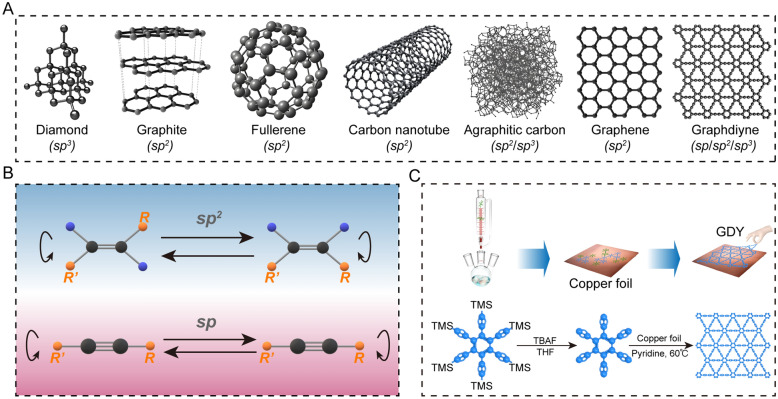
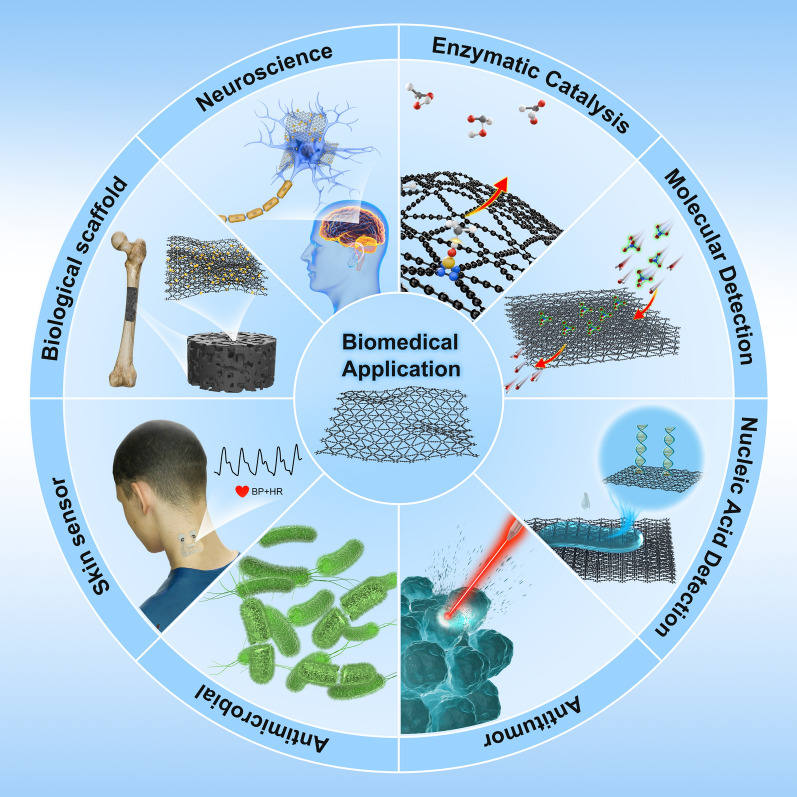
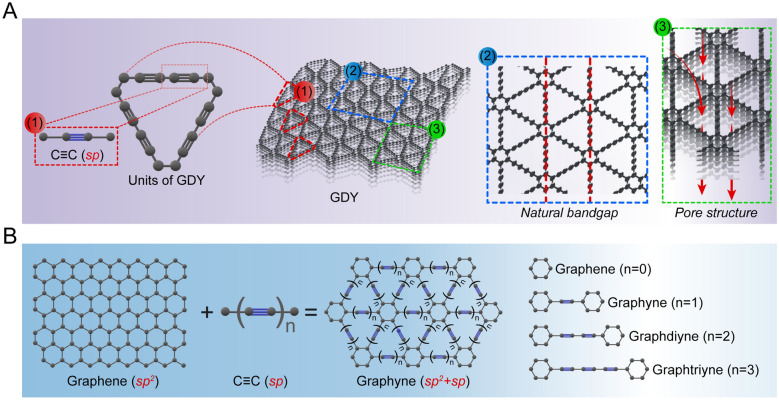
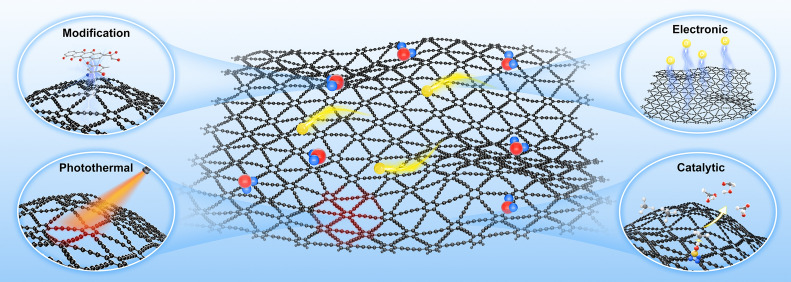
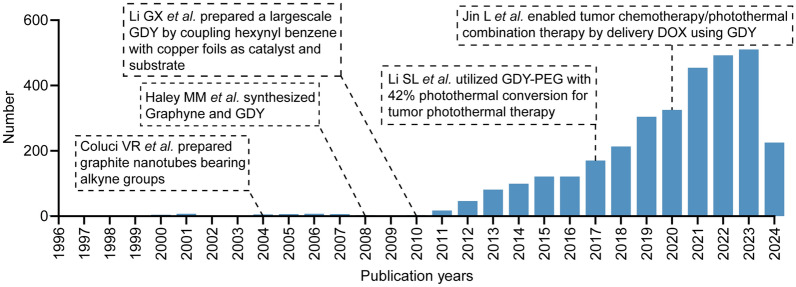
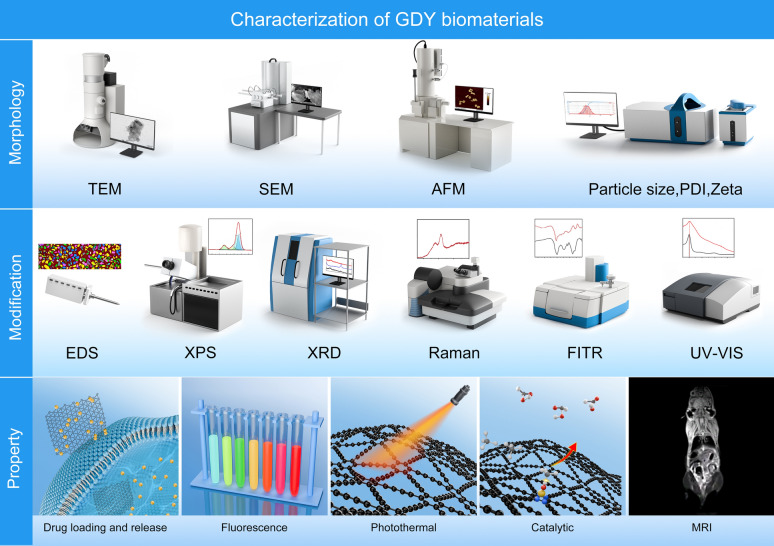
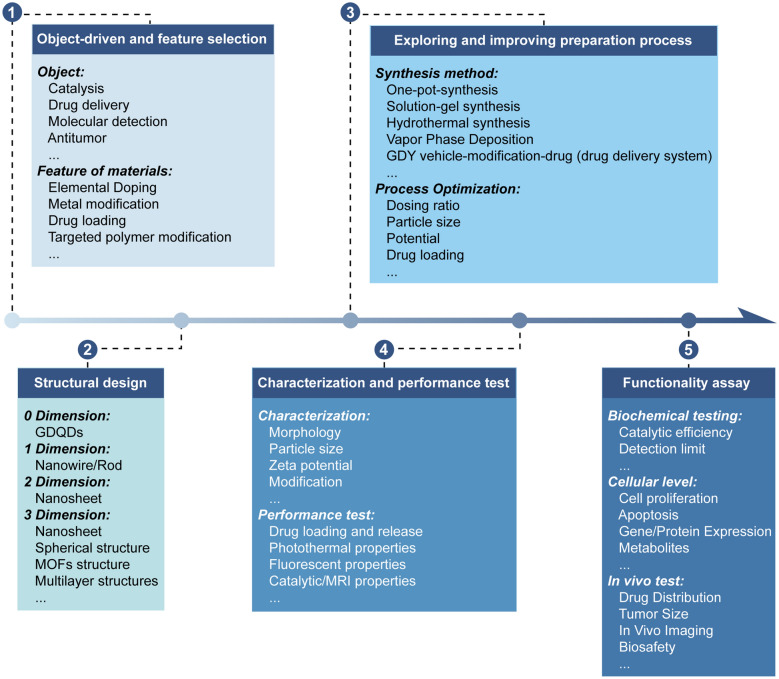
Graphdiyne (GDY), the sole synthetic carbon allotrope with sp-hybridized carbon atoms, has been extensively researched that benefit from its pore structure, fully conjugated surfaces, wide band gaps, and more reactive C≡C bonds. In addition to the intrinsic features of GDY, engineering at the nanoscale, including metal/transition metal ion modification, chemical elemental doping, and other biomolecular modifications, endowed GDY with a broader functionality. This has led to its involvement in biomedical applications, including enzyme catalysis, molecular assays, targeted drug delivery, antitumor, and sensors. These promising research developments have been made possible by the rational design and critical characterization of GDY biomaterials. In contrast to other research areas, GDY biomaterials research has led to the development of characterization techniques and methods with specific patterns and some innovations based on the integration of materials science and biology, which are crucial for the biomedical applications of GDY. The objective of this review is to provide a comprehensive overview of the biomedical applications of GDY and the characterization techniques and methods that are essential in this process. Additionally, a general strategy for the biomedical research of GDY will be proposed, which will be of limited help to researchers in the field of GDY or nanomedicine.
石墨炔(GDY)是唯一具有sp杂化碳原子的合成碳同素异形体,因其孔隙结构、完全共轭表面、宽带隙以及更具反应性的C≡C键而受到广泛研究。除了GDY的固有特性外,纳米尺度的工程设计,包括金属/过渡金属离子修饰、化学元素掺杂以及其他生物分子修饰,赋予了GDY更广泛的功能。这使其参与到生物医学应用中,包括酶催化、分子检测、靶向药物递送、抗肿瘤以及传感器。这些有前景的研究进展得益于对GDY生物材料的合理设计和关键表征。与其他研究领域不同,GDY生物材料研究促使了具有特定模式的表征技术和方法的发展,以及基于材料科学与生物学整合的一些创新,这些对于GDY的生物医学应用至关重要。本综述的目的是全面概述GDY的生物医学应用以及在此过程中必不可少的表征技术和方法。此外,还将提出一种GDY生物医学研究的总体策略,这对GDY或纳米医学领域的研究人员帮助有限。