Department of Kinesiology, Kansas State University, Manhattan, KS, USA.
Department of Anatomy and Physiology, Kansas State University, Manhattan, KS, USA.
J Physiol. 2022 May;600(9):2105-2125. doi: 10.1113/JP282923. Epub 2022 Apr 13.
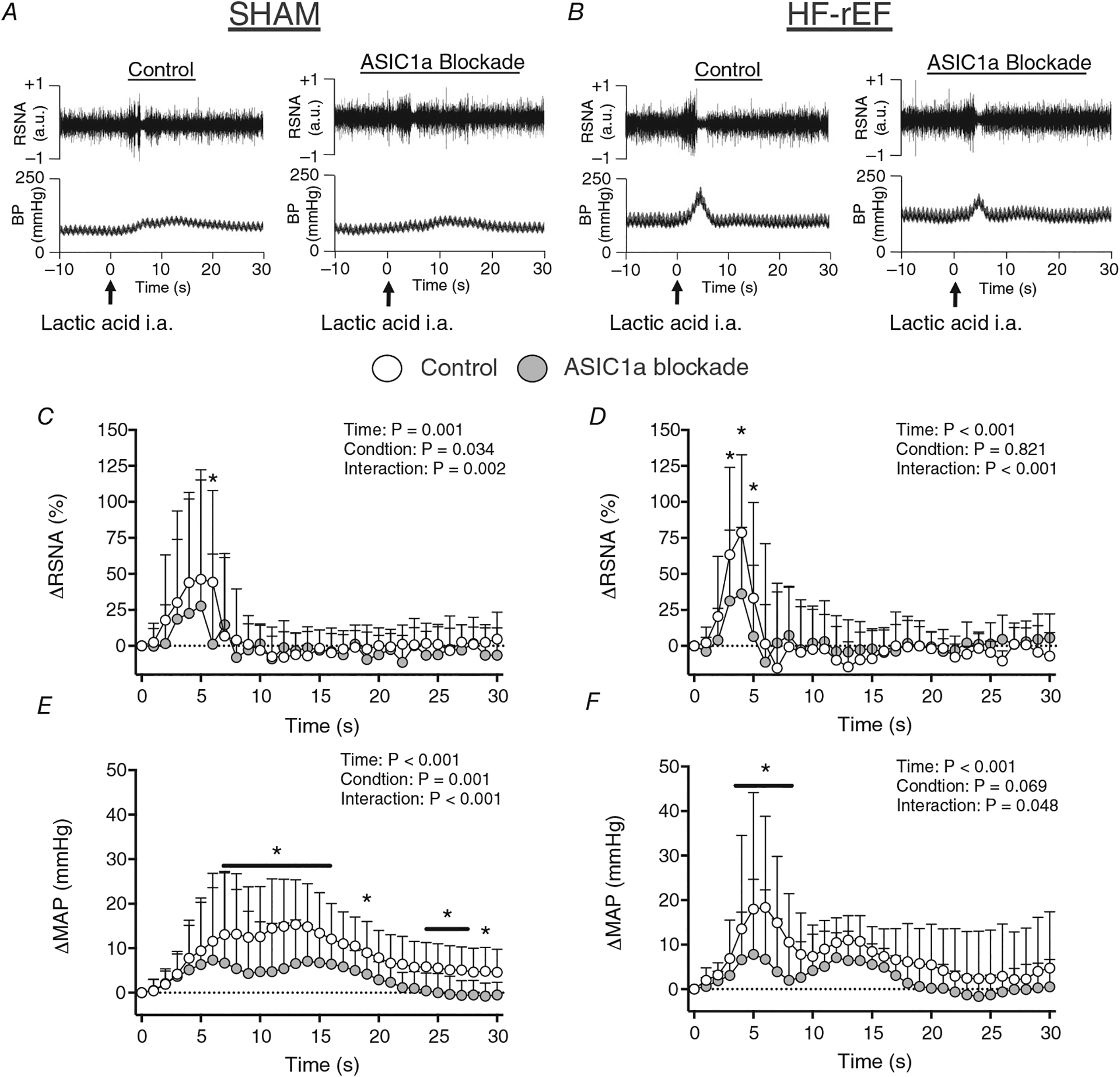
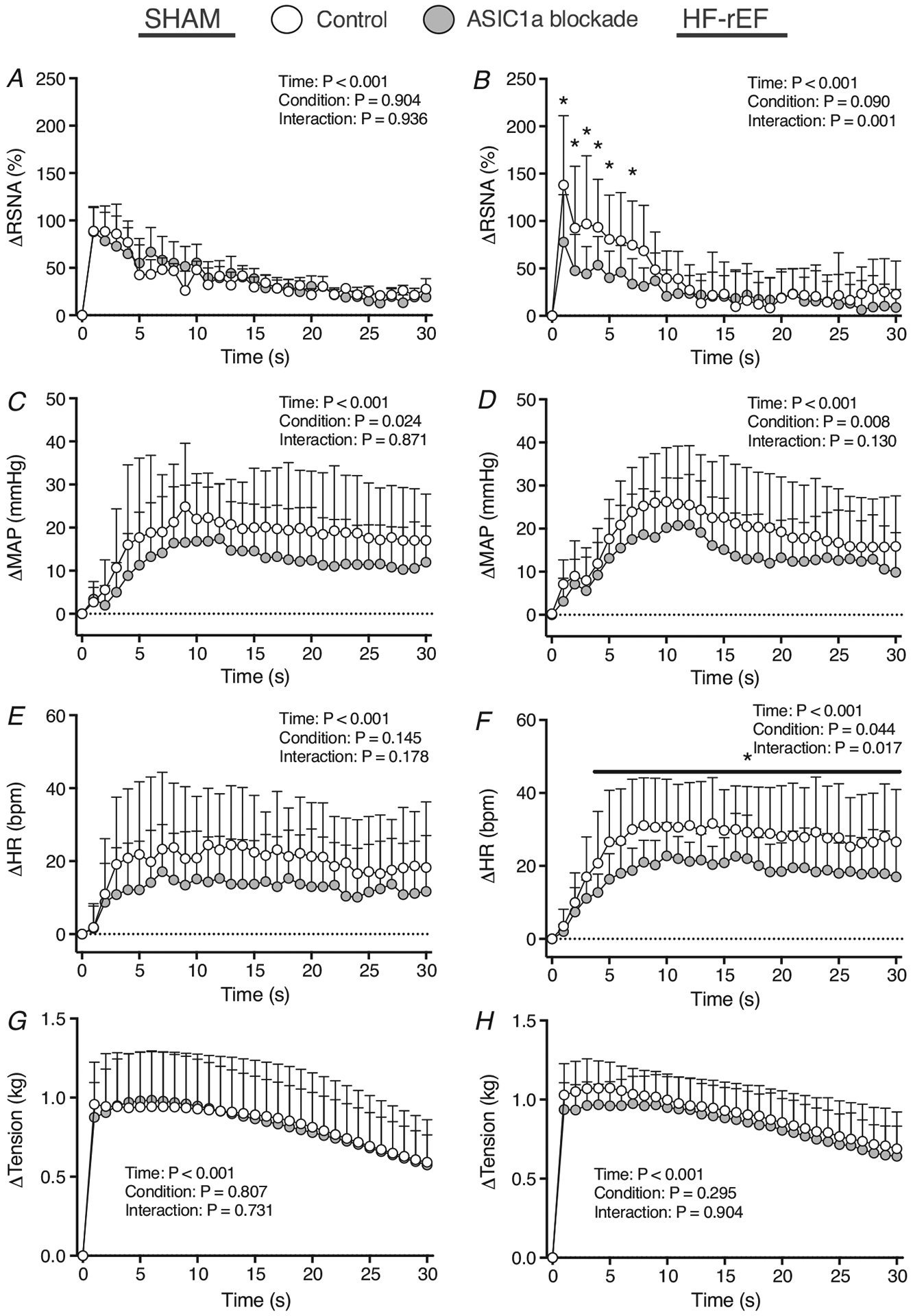
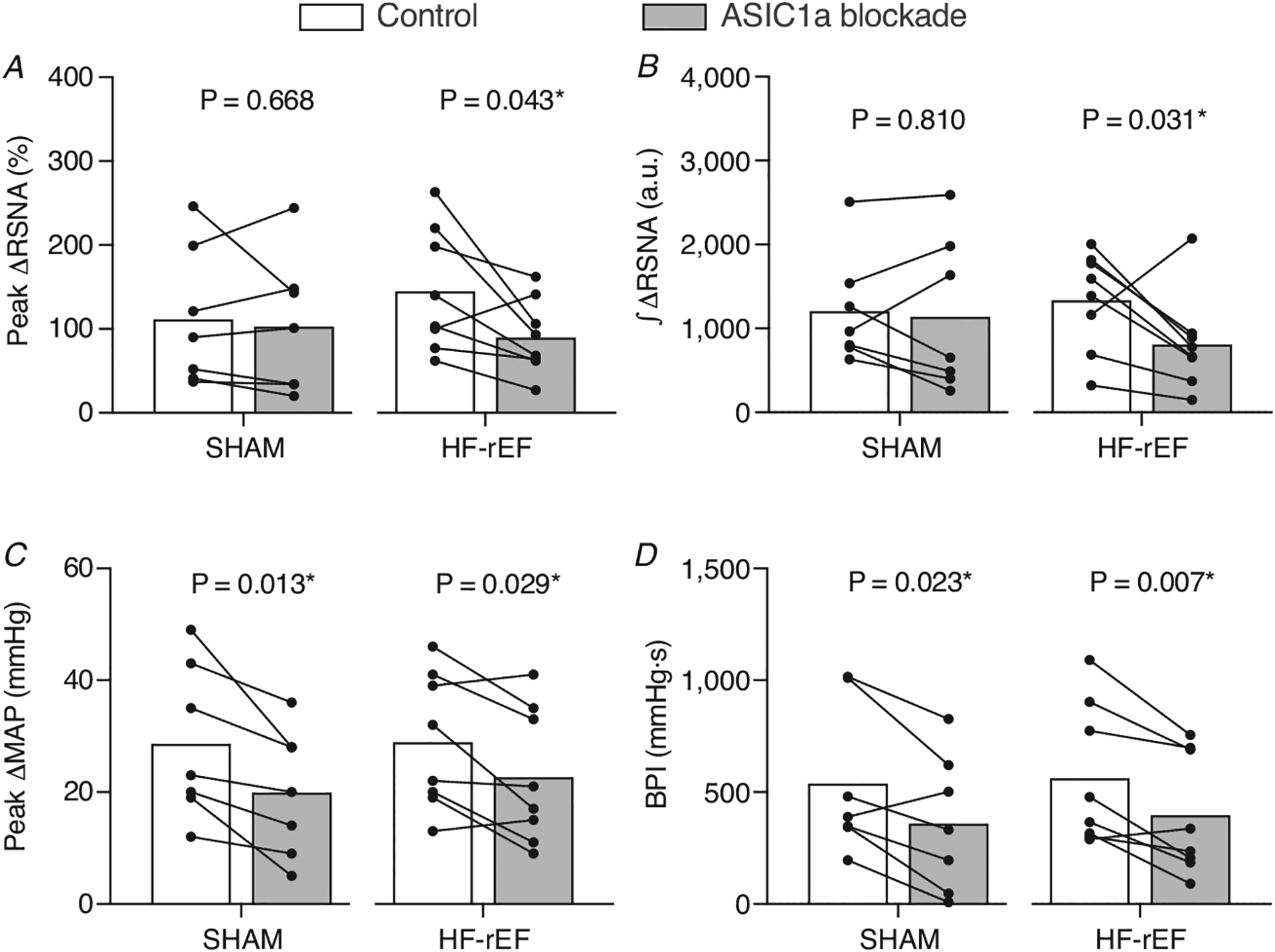
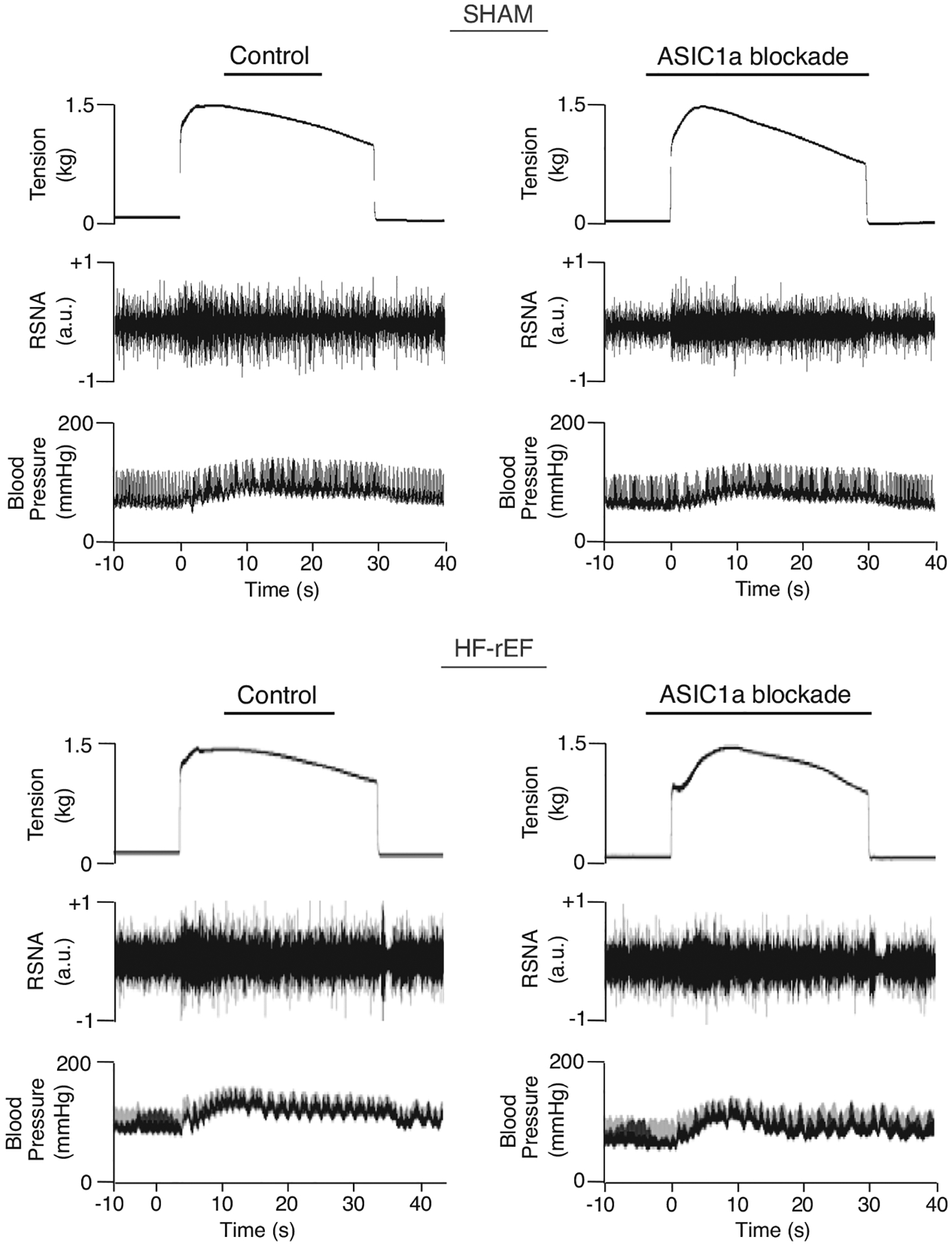
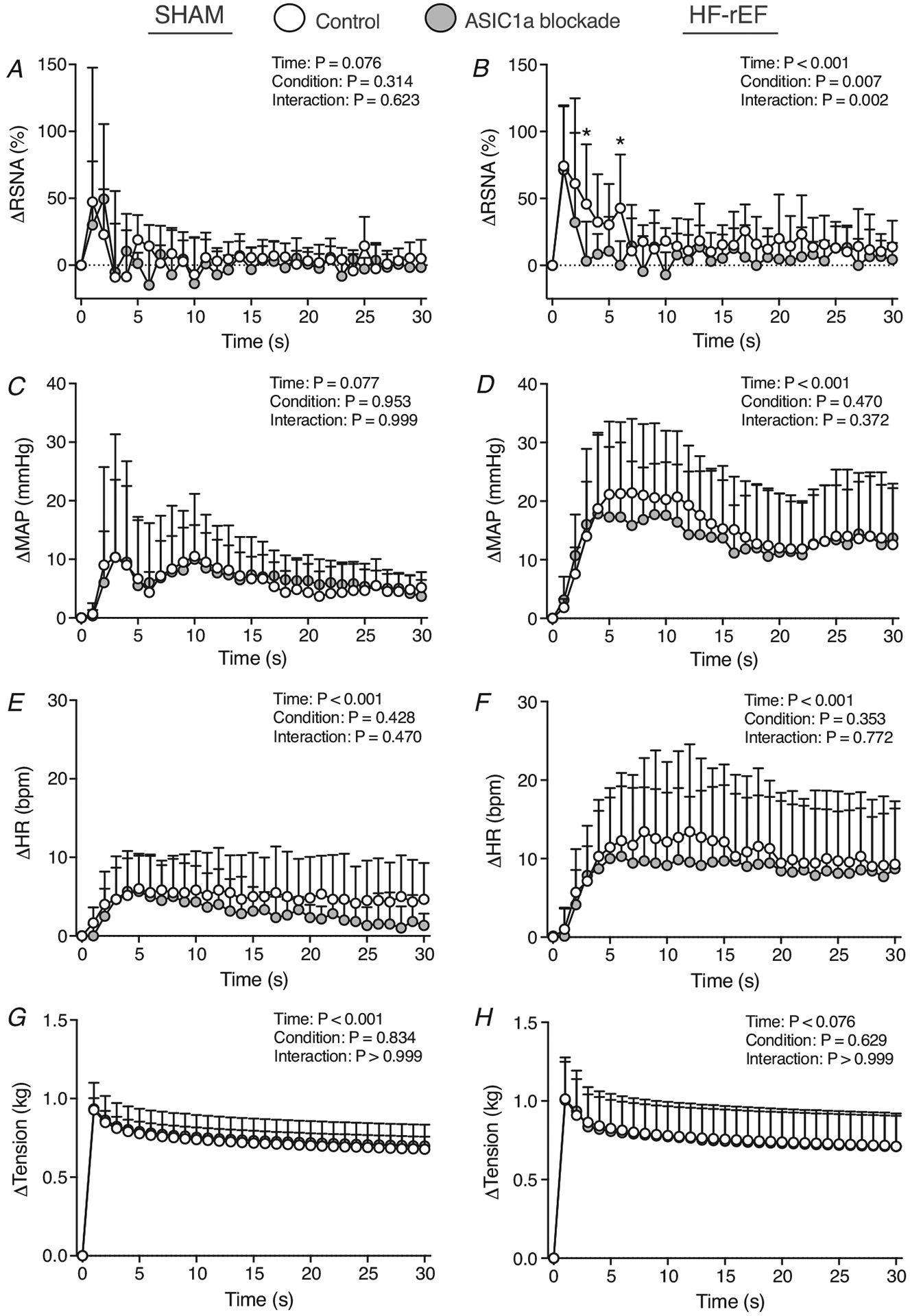
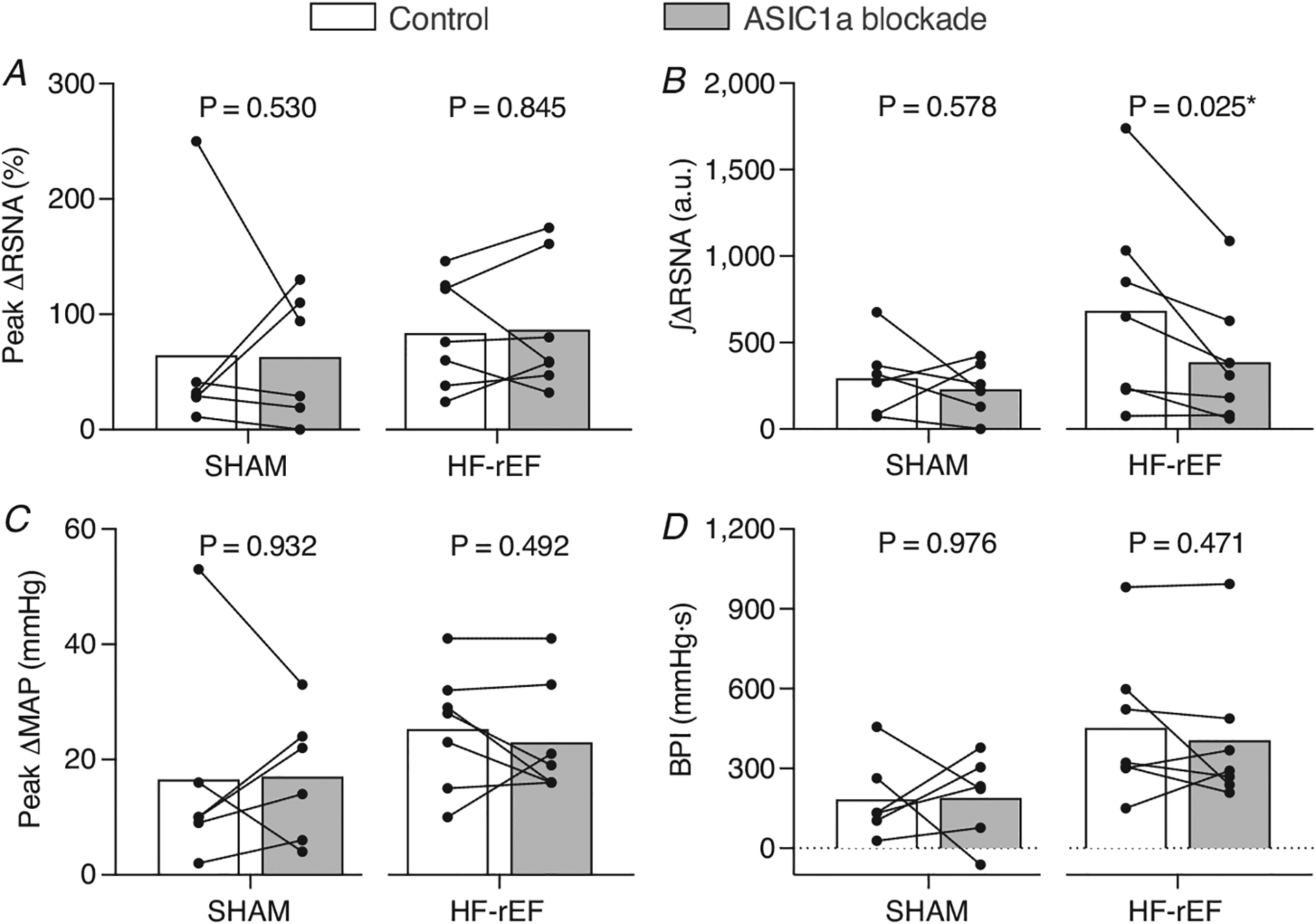
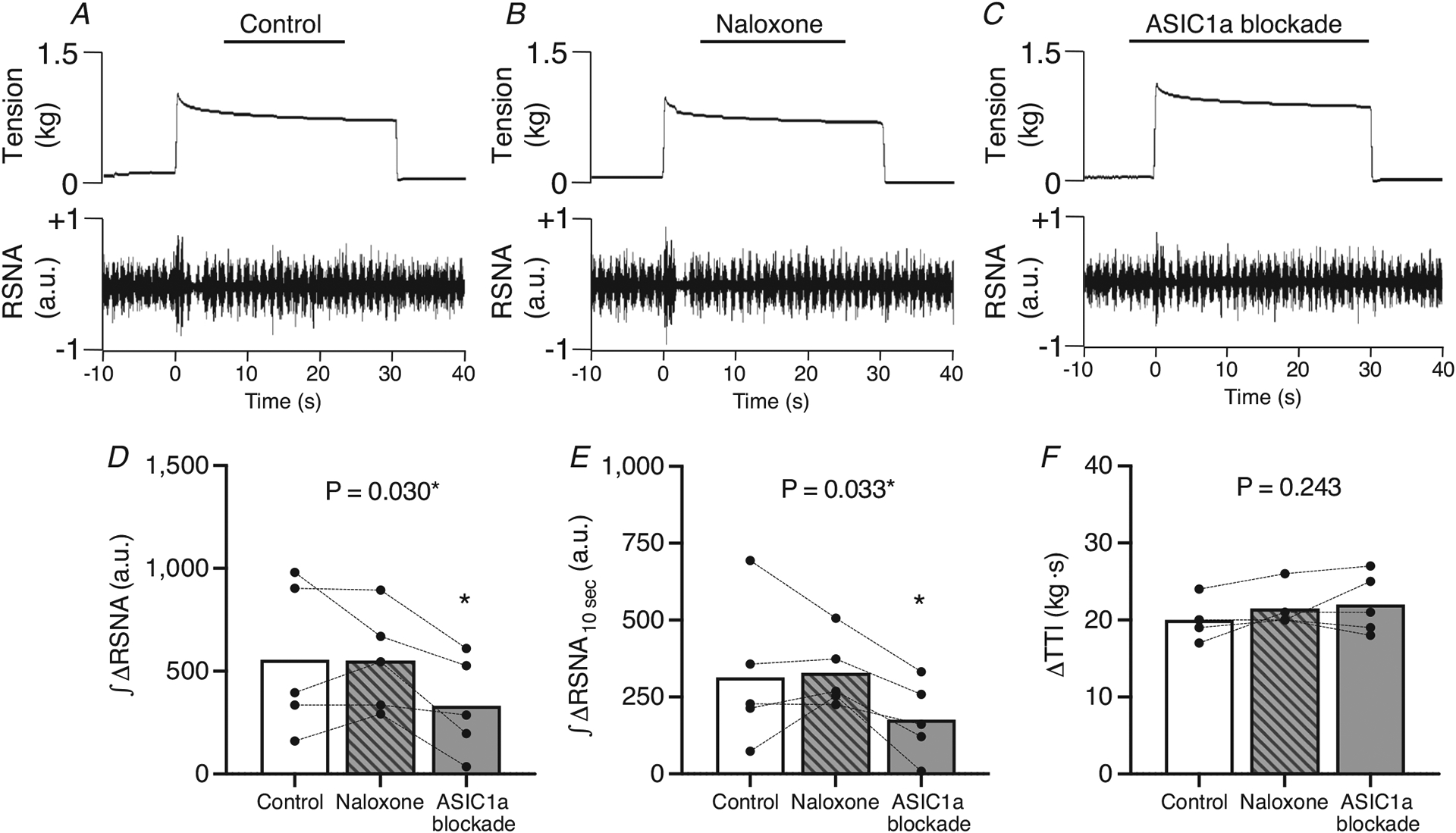
Mechanical and metabolic signals associated with skeletal muscle contraction stimulate the sensory endings of thin fibre muscle afferents, which, in turn, generates reflex increases in sympathetic nerve activity (SNA) and blood pressure (the exercise pressor reflex; EPR). EPR activation in patients and animals with heart failure with reduced ejection fraction (HF-rEF) results in exaggerated increases in SNA and promotes exercise intolerance. In the healthy decerebrate rat, a subtype of acid sensing ion channel (ASIC) on the sensory endings of thin fibre muscle afferents, namely ASIC1a, has been shown to contribute to the metabolically sensitive portion of the EPR (i.e. metaboreflex), but not the mechanically sensitive portion of the EPR (i.e. the mechanoreflex). However, the role played by ASIC1a in evoking the EPR in HF-rEF is unknown. We hypothesized that, in decerebrate, unanaesthetized HF-rEF rats, injection of the ASIC1a antagonist psalmotoxin-1 (PcTx-1; 100 ng) into the hindlimb arterial supply would reduce the reflex increase in renal SNA (RSNA) evoked via 30 s of electrically induced static hindlimb muscle contraction, but not static hindlimb muscle stretch (model of mechanoreflex activation isolated from contraction-induced metabolite-production). We found that PcTx-1 reduced the reflex increase in RSNA evoked in response to muscle contraction (n = 8; mean (SD) ∫ΔRSNA pre: 1343 (588) a.u.; post: 816 (573) a.u.; P = 0.026) and muscle stretch (n = 6; ∫ΔRSNA pre: 688 (583) a.u.; post: 304 (370) a.u.; P = 0.025). Our data suggest that, in HF-rEF rats, ASIC1a contributes to activation of the exercise pressor reflex and that contribution includes a novel role for ASIC1a in mechanosensation that is not present in healthy rats. KEY POINTS: Skeletal muscle contraction results in exaggerated reflex increases in sympathetic nerve activity in heart failure patients compared to healthy counterparts, which likely contributes to increased cardiovascular risk and impaired tolerance for even mild exercise (i.e. activities of daily living) for patients suffering with this condition. Activation of acid sensing ion channel subtype 1a (ASIC1a) on the sensory endings of thin fibre muscle afferents during skeletal muscle contraction contributes to reflex increases in sympathetic nerve activity and blood pressure, at least in healthy subjects. In this study, we demonstrate that ASIC1a on the sensory endings of thin fibre muscle afferents plays a role in both the mechanical and metabolic components of the exercise pressor reflex in male rats with heart failure. The present data identify a novel role for ASIC1a in evoking the exercise pressor reflex in heart failure and may have important clinical implications for heart failure patients.
机械和代谢信号与骨骼肌收缩相关,这些信号会刺激细纤维肌传入神经的感觉末梢,进而引起交感神经活动(SNA)和血压的反射性增加(运动升压反射;EPR)。在射血分数降低的心力衰竭(HF-rEF)患者和动物中,EPR 的激活会导致 SNA 过度增加,并促进运动不耐受。在健康去大脑大鼠中,细纤维肌传入神经感觉末梢上的一种酸感应离子通道(ASIC)亚型(即 ASIC1a)已被证明有助于 EPR 的代谢敏感部分(即代谢反射),但不参与 EPR 的机械敏感部分(即机械反射)。然而,ASIC1a 在 HF-rEF 中引发 EPR 的作用尚不清楚。我们假设,在去大脑、未麻醉的 HF-rEF 大鼠中,向后肢动脉供应中注射 ASIC1a 拮抗剂 psalmotoxin-1(PcTx-1;100ng),将减少通过 30 秒电诱导的静态后肢肌肉收缩引起的肾 SNA(RSNA)的反射性增加,但不会减少静态后肢肌肉拉伸(从收缩诱导的代谢产物产生中分离出的机械反射激活模型)。我们发现,PcTx-1 减少了肌肉收缩(n=8;∫ΔRSNA 预:1343(588)a.u.;后:816(573)a.u.;P=0.026)和肌肉拉伸(n=6;∫ΔRSNA 预:688(583)a.u.;后:304(370)a.u.;P=0.025)引起的 RSNA 反射性增加。我们的数据表明,在 HF-rEF 大鼠中,ASIC1a 有助于运动升压反射的激活,并且这种作用包括 ASIC1a 在机械感觉中的新作用,而在健康大鼠中不存在这种作用。关键点:与健康对照组相比,心力衰竭患者的骨骼肌收缩会导致交感神经活动的反射性过度增加,这可能导致心血管风险增加,并使患者对即使是轻度运动(即日常活动)的耐受性降低。在骨骼肌收缩过程中,细纤维肌传入神经感觉末梢上的酸感应离子通道亚型 1a(ASIC1a)的激活有助于交感神经活动和血压的反射性增加,至少在健康受试者中是如此。在这项研究中,我们证明了细纤维肌传入神经感觉末梢上的 ASIC1a 在心力衰竭雄性大鼠的运动升压反射的机械和代谢成分中都发挥作用。目前的数据确定了 ASIC1a 在心力衰竭中引发运动升压反射的新作用,这可能对心力衰竭患者具有重要的临床意义。