Brown Benjamin, O'Hara Robert William, Guiver Malcolm, Davies Emma, Birtles Andrew, Farooq Hamzah, Verma Arpana, Guo Hui, Hayden Katharine, Machin Nicholas
UK Health Security Agency, United Kingdom.
Manchester University NHS Foundation Trust, United Kingdom.
J Clin Virol Plus. 2022 Jun;2(2):100074. doi: 10.1016/j.jcvp.2022.100074. Epub 2022 Mar 24.
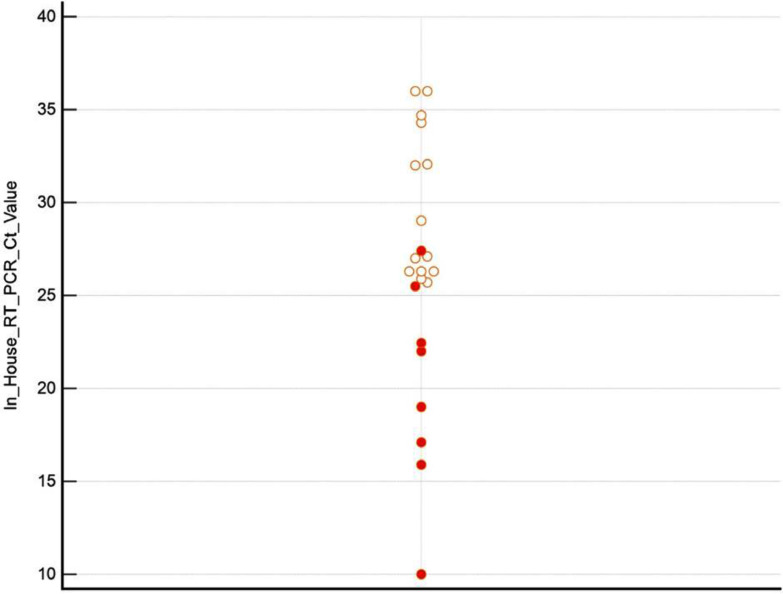
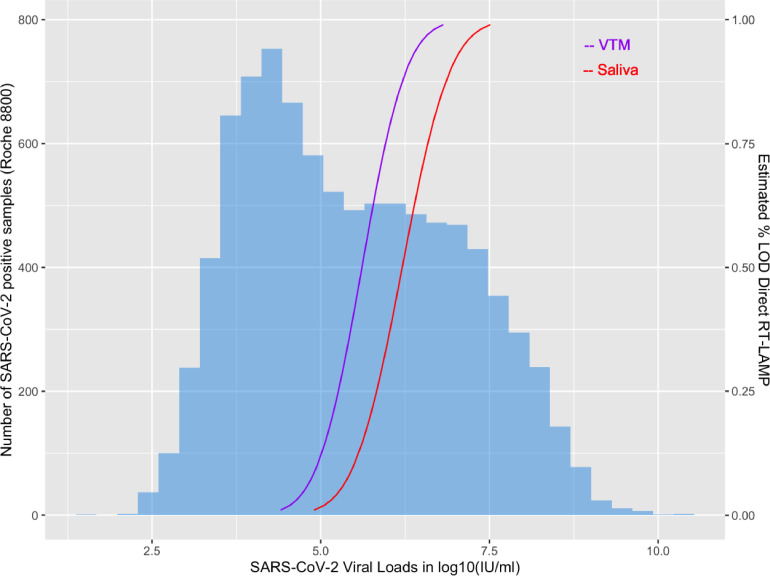
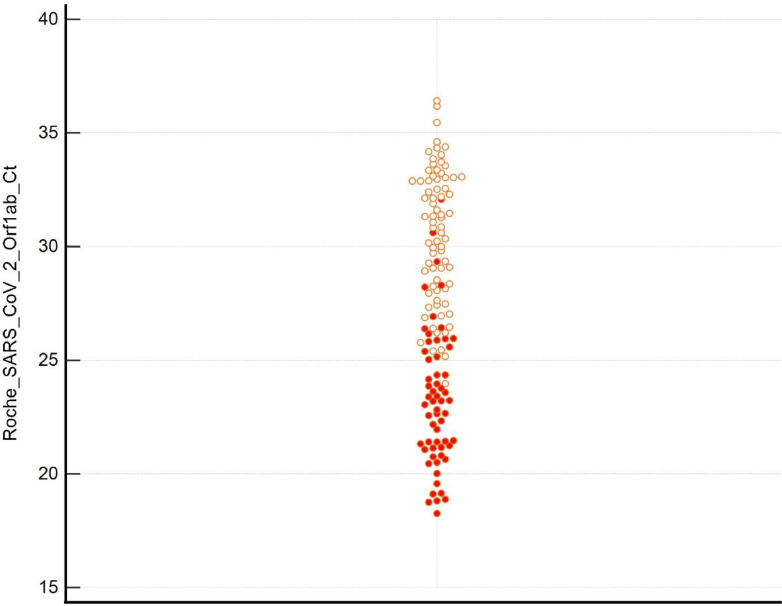
Large scale screening of health care workers and the general population for asymptomatic COVID-19 infection requires modalities that are amenable to testing at scale while retaining acceptable levels of sensitivity and specificity. This study evaluated a novel COVID-19 Direct-RT LAMP assay using saliva samples in asymptomatic individuals by comparison to RT-PCR. Additional studies were performed using VTM collected from routine diagnostic testing. Analytical sensitivity was determined for Direct RT-LAMP assay using the WHO International Standard. Finally, quantified results from RT-PCR testing of 9177 nose and throat swabs obtained from routine diagnostic testing were used to estimate the sensitivity of Direct RT-LAMP using the limit of detection curve obtained from the analytical sensitivity data. Results from saliva testing demonstrated a sensitivity of 40.91% and a specificity of 100% for Direct RT-LAMP. The sensitivity and specificity for nose and throat swabs were 44.85% and 100% respectively. The 95% limit of detection (LOD) for Direct RT-LAMP was log 7.13 IU/ml (95% 6.9-7.5). The estimated sensitivity for Direct-RT LAMP based on the results of 9117 nose and throat swabs was 34% and 45% for saliva and VTM respectively. The overall diagnostic sensitivity of Direct RT-LAMP was low compared to RT-PCR. Testing of nose and throat swabs and estimating the sensitivity based on a large cohort of clinical samples demonstrated similar results. This study highlights the importance of utilising the prospective collection of samples from the intended target population in the assessment of diagnostic sensitivity.
对医护人员和普通人群进行大规模无症状新冠病毒感染筛查,需要采用能够大规模检测且保持可接受的灵敏度和特异性水平的检测方法。本研究通过与逆转录聚合酶链反应(RT-PCR)比较,评估了一种使用无症状个体唾液样本的新型新冠病毒直接逆转录环介导等温扩增(Direct-RT LAMP)检测方法。还使用从常规诊断检测中收集的病毒运输培养基(VTM)进行了额外研究。使用世界卫生组织国际标准确定了Direct RT-LAMP检测方法的分析灵敏度。最后,利用从常规诊断检测中获得的9177份鼻拭子和咽拭子的RT-PCR检测定量结果,根据从分析灵敏度数据获得的检测限曲线,估算Direct RT-LAMP的灵敏度。唾液检测结果显示,Direct RT-LAMP的灵敏度为40.91%,特异性为100%。鼻拭子和咽拭子的灵敏度和特异性分别为44.85%和100%。Direct RT-LAMP的95%检测限(LOD)为log 7.13 IU/ml(95% 6.9 - 7.5)。根据9117份鼻拭子和咽拭子的结果,Direct-RT LAMP对唾液和VTM的估计灵敏度分别为34%和45%。与RT-PCR相比,Direct RT-LAMP的总体诊断灵敏度较低。对鼻拭子和咽拭子进行检测,并基于大量临床样本估算灵敏度,结果相似。本研究强调了在评估诊断灵敏度时,从目标人群中前瞻性收集样本的重要性。