Song Yuanxiu, Li Hongxia, Ma Shuhong, Zhu Min, Lu Wen-Jing, Lan Feng, Cui Ming
Department of Cardiology, Peking University Third Hospital, Beijing, 100191, China.
Department of Pathology, Zhuzhou Hospital Affiliated to Xiangya School of Medicine, Central South University, Zhuzhou, China.
Cell Death Discov. 2022 Mar 28;8(1):134. doi: 10.1038/s41420-022-00945-2.
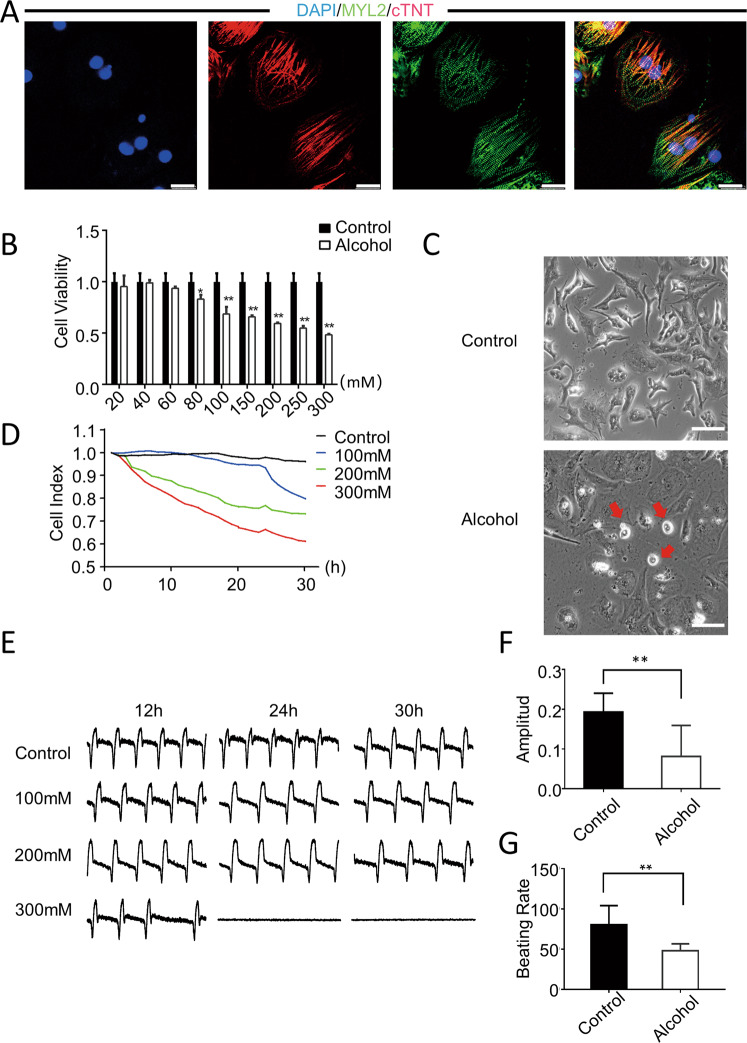
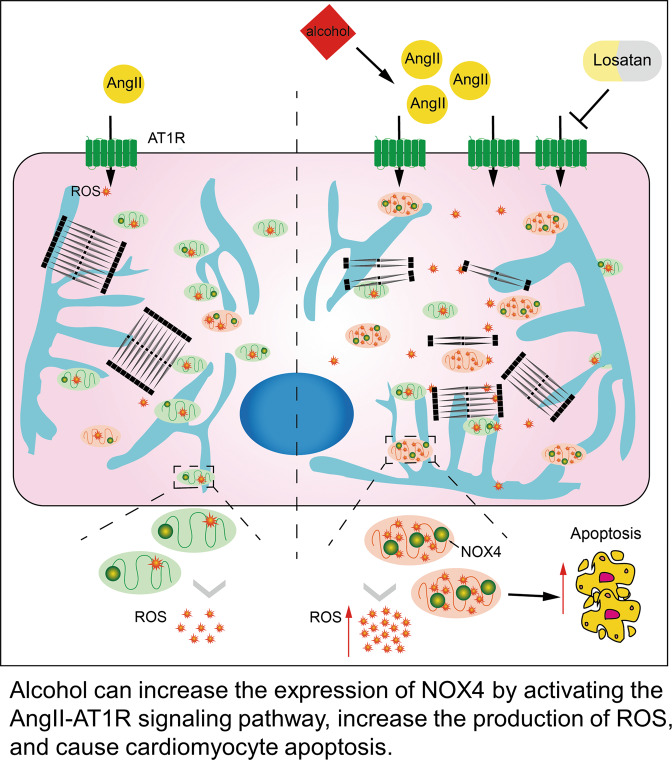
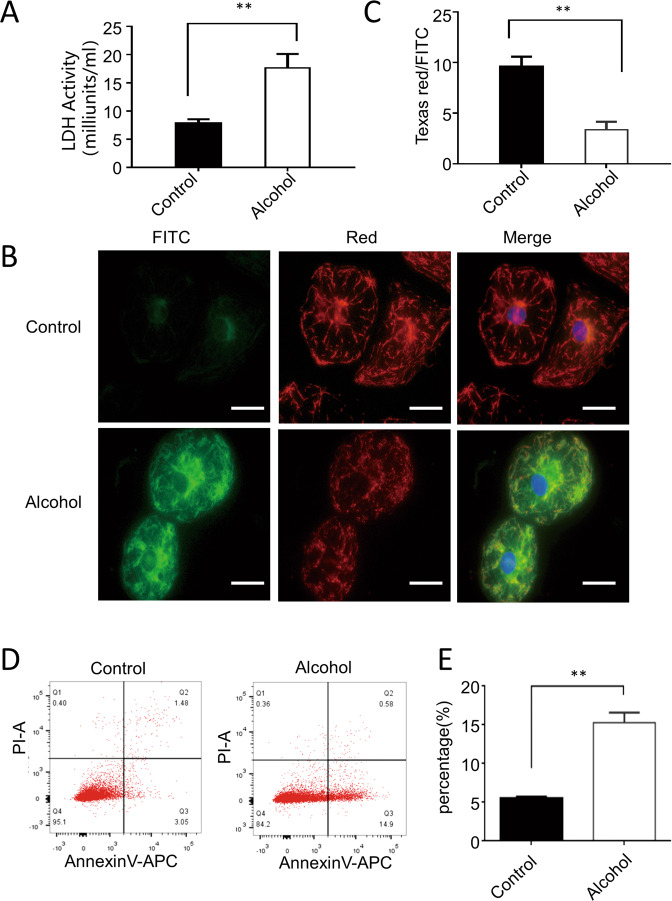
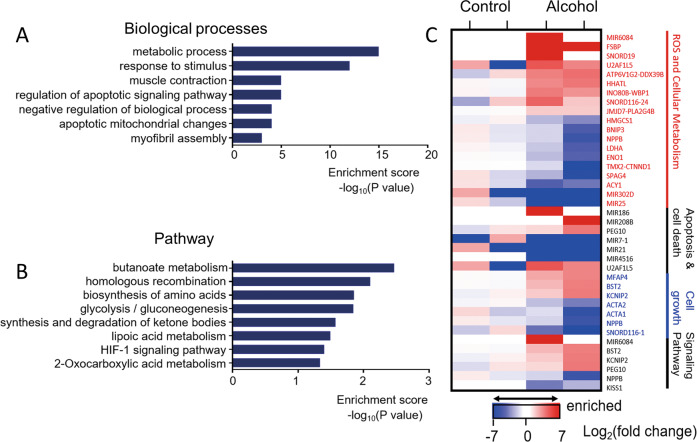
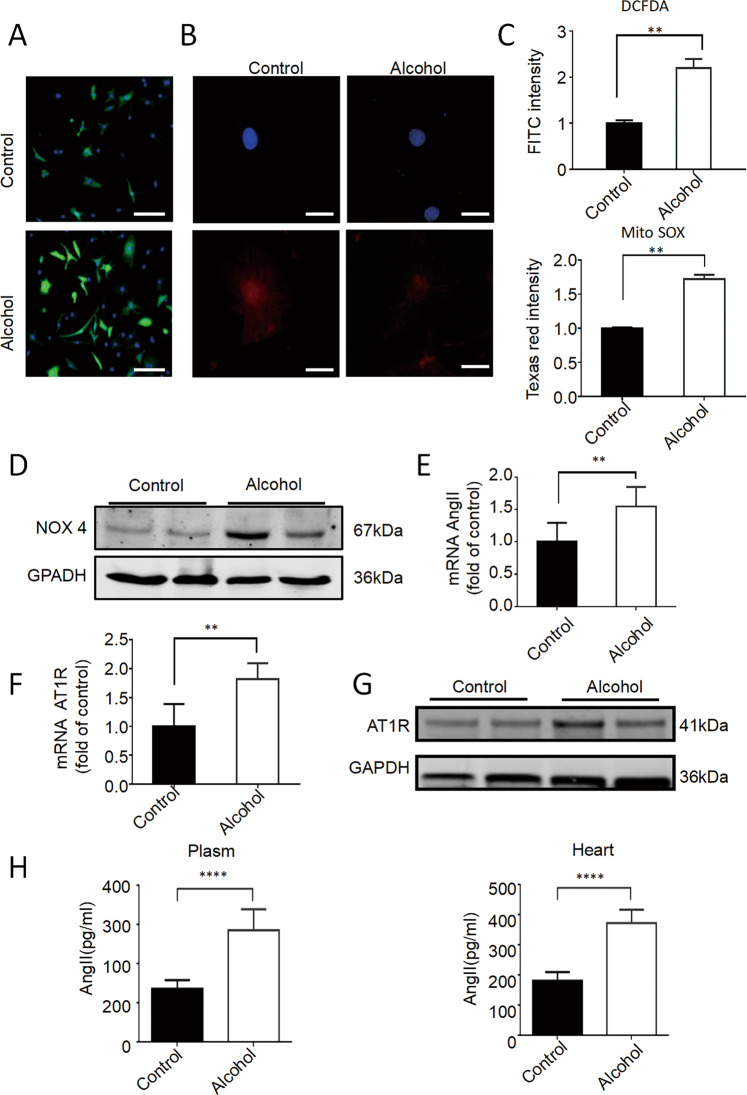
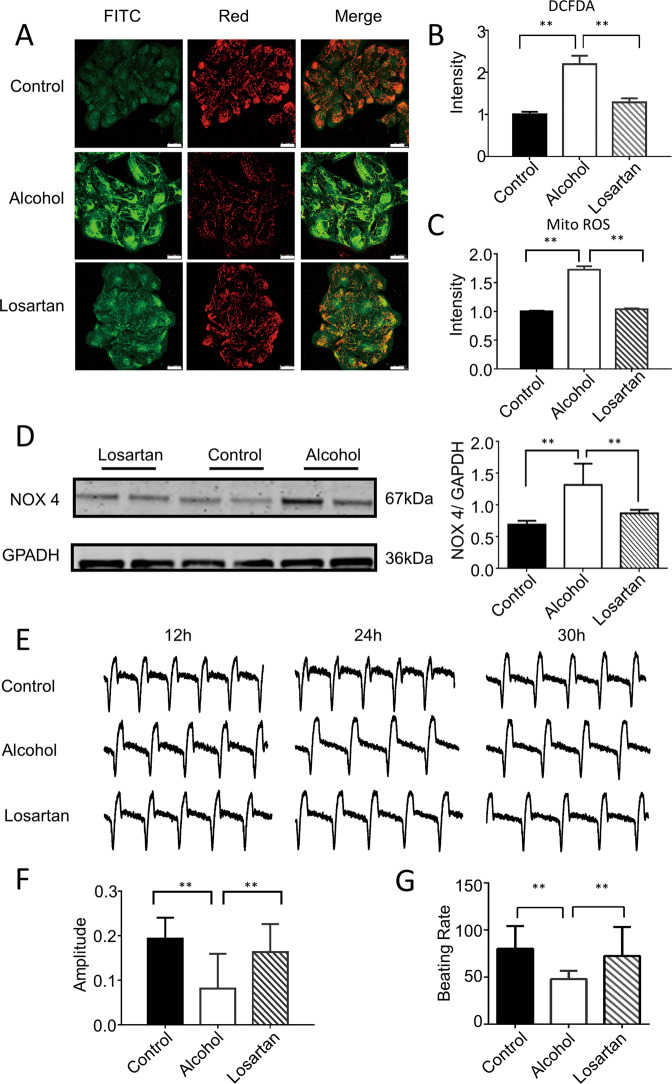
Alcoholic cardiomyopathy (ACM) is a myocardial injury caused by long-term heavy drinking. Existing evidence indicates that high levels of oxidative stress are the key to pathological cardiomyopathy caused by long-term exposure to high concentrations of alcohol, while angiotensin II (AngII) and its type 1 receptor (AT1R) play an important role in excessive drinking. Whether oxidative stress-induced damage in ACM is related to AngII and AT1R is unclear, and the effects of alcohol on the electrophysiology of myocardial cells have not been reported. Most existing studies have used animal models. This study established an in vitro model of ACM based on human induced pluripotent stem cell-derived cardiomyocytes (hiPSC-CMs). The transcriptional profiling of alcohol treatment was performed by RNA-seq analysis. The role of oxidative stress, the expression of nicotinamide adenine dinucleotide phosphate oxidase (NOX), and the role of AngII and AT1R in the overactivation of oxidative stress were studied using fluorescent labeling, Western blotting, and high-content quantitative analysis. Real-time cell analysis(RTCA) and microelectrode array (MEA) were used to continuously monitor myocardial beating, observe the effects of alcohol on myocardial electrophysiological activity, and clarify the protective effects of the AT1R blocker losartan on ACM. We found that AngII and AT1R contribute to the effects of alcohol on the myocardium through oxidative stress damage, the mechanism of which may be achieved by regulating NOX.
酒精性心肌病(ACM)是一种由长期大量饮酒引起的心肌损伤。现有证据表明,高水平的氧化应激是长期暴露于高浓度酒精导致病理性心肌病的关键,而血管紧张素II(AngII)及其1型受体(AT1R)在过度饮酒中起重要作用。ACM中氧化应激诱导的损伤是否与AngII和AT1R相关尚不清楚,且酒精对心肌细胞电生理学的影响尚未见报道。大多数现有研究使用动物模型。本研究基于人诱导多能干细胞衍生的心肌细胞(hiPSC-CMs)建立了ACM的体外模型。通过RNA测序分析进行酒精处理的转录谱分析。使用荧光标记、蛋白质免疫印迹和高内涵定量分析研究氧化应激的作用、烟酰胺腺嘌呤二核苷酸磷酸氧化酶(NOX)的表达以及AngII和AT1R在氧化应激过度激活中的作用。使用实时细胞分析(RTCA)和微电极阵列(MEA)连续监测心肌搏动,观察酒精对心肌电生理活性的影响,并阐明AT1R阻滞剂氯沙坦对ACM的保护作用。我们发现,AngII和AT1R通过氧化应激损伤促成酒精对心肌的作用,其机制可能通过调节NOX实现。