Centre for Lipid Research & Key Laboratory of Molecular Biology for Infectious Diseases (Ministry of Education), Institute for Viral Hepatitis, Department of Infectious Diseases, the Second Affiliated Hospital, Chongqing Medical University, 400016, Chongqing, China.
Department of General Medicine, Affiliated Cancer Hospital of Chongqing University, Chongqing, 400016, China.
J Exp Clin Cancer Res. 2022 Mar 30;41(1):116. doi: 10.1186/s13046-022-02306-4.
Hepatocellular carcinoma (HCC) is one of the most malignant tumors and the fourth leading cause of cancer-related death worldwide. Sorafenib is currently acknowledged as a standard therapy for advanced HCC. However, acquired resistance substantially limits the clinical efficacy of sorafenib. Therefore, further investigations of the associated risk factors are highly warranted.
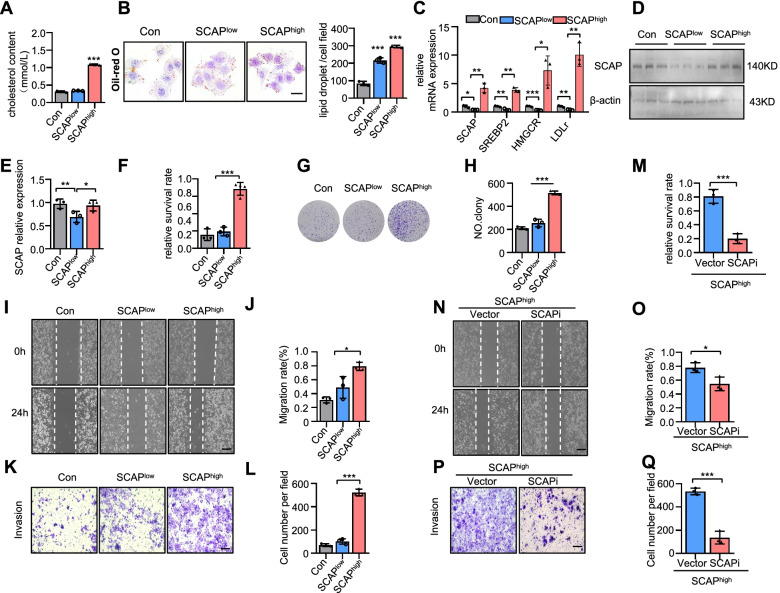
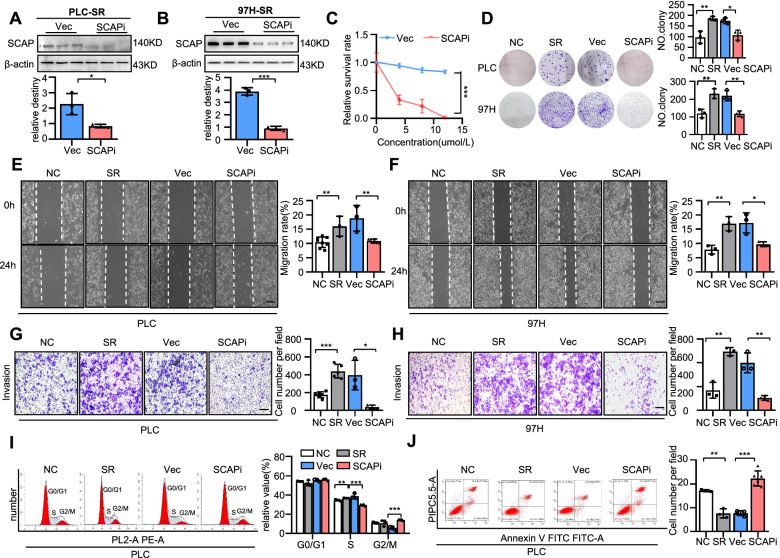
We analysed a group of 78 HCC patients who received sorafenib treatment after liver resection surgery. The expression of SCAP and its correlation with sorafenib resistance in HCC clinical samples were determined by immunohistochemical analyses. Overexpression and knockdown approaches in vitro were used to characterize the functional roles of SCAP in regulating sorafenib resistance. The effects of SCAP inhibition in HCC cell lines were analysed in proliferation, apoptosis, and colony formation assays. Autophagic regulation by SCAP was assessed by immunoblotting, immunofluorescence and immunoprecipitation assays. The combinatorial effect of a SCAP inhibitor and sorafenib was tested using nude mice.
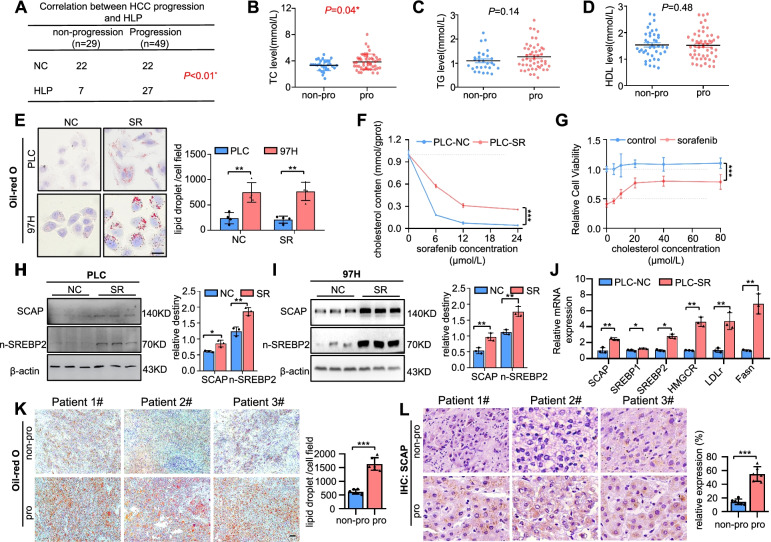
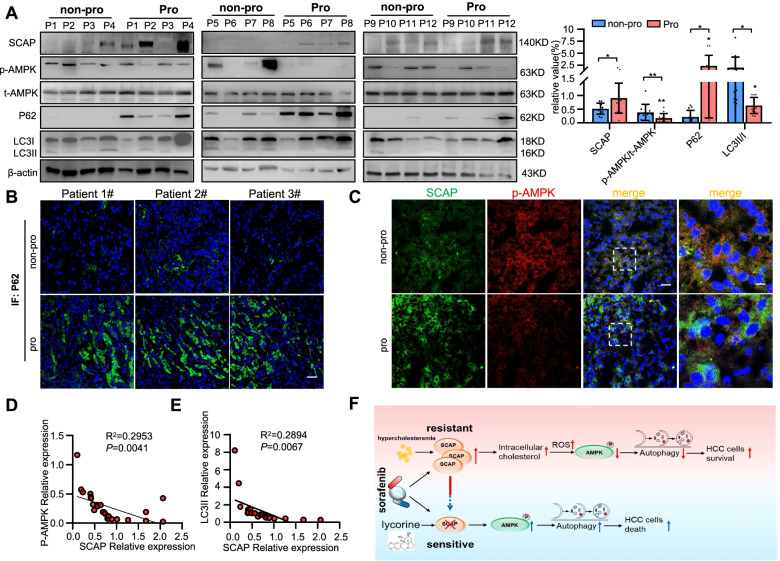
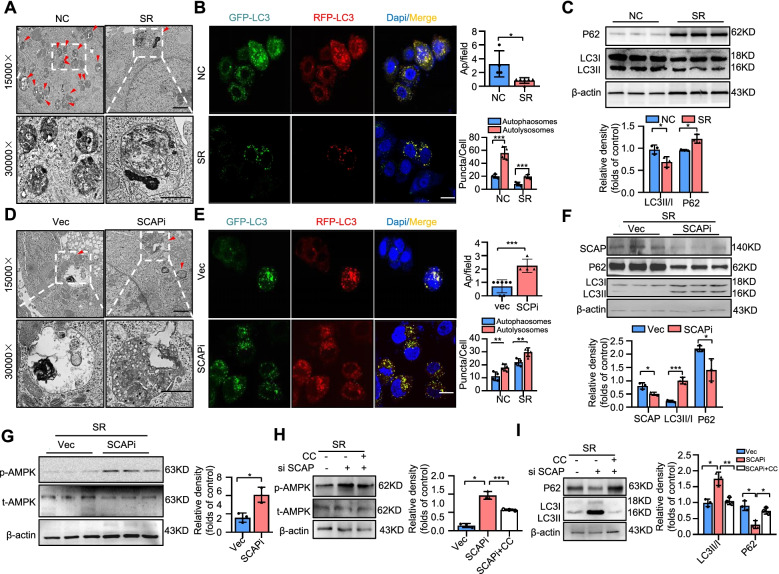
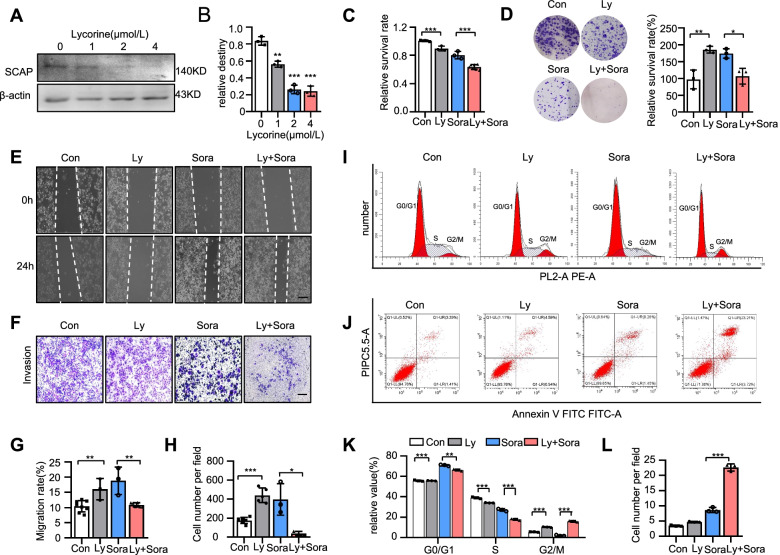
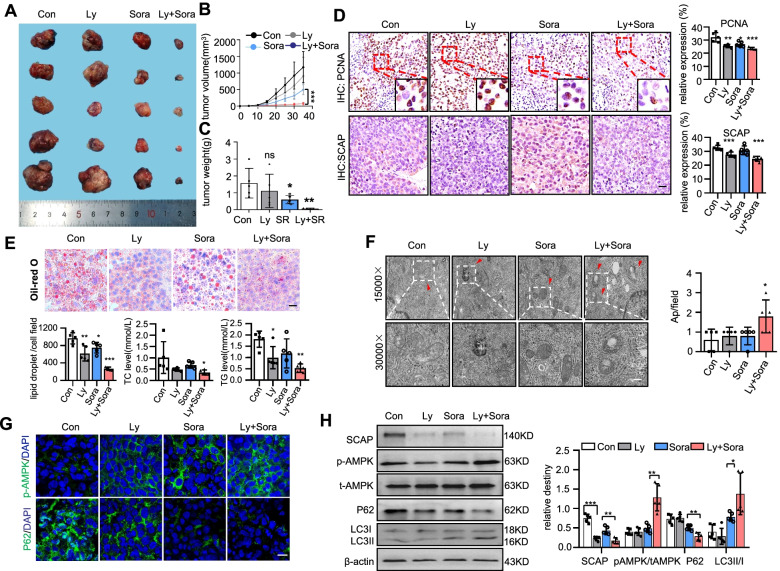
Hypercholesterolemia was associated with sorafenib resistance in HCC treatment. The degree of sorafenib resistance was correlated with the expression of the cholesterol sensor SCAP and consequent deposition of cholesterol. SCAP is overexpressed in HCC tissues and hepatocellular carcinoma cell lines with sorafenib resistance, while SCAP inhibition could improve sorafenib sensitivity in sorafenib-resistant HCC cells. Furthermore, we found that SCAP-mediated sorafenib resistance was related to decreased autophagy, which was connected to decreased AMPK activity. A clinically significant finding was that lycorine, a specific SCAP inhibitor, could reverse acquired resistance to sorafenib in vitro and in vivo.
SCAP contributes to sorafenib resistance through AMPK-mediated autophagic regulation. The combination of sorafenib and SCAP targeted therapy provides a novel personalized treatment to enhance sensitivity in sorafenib-resistant HCC.
肝细胞癌(HCC)是最恶性的肿瘤之一,也是全球癌症相关死亡的第四大主要原因。索拉非尼目前被认为是晚期 HCC 的标准治疗方法。然而,获得性耐药严重限制了索拉非尼的临床疗效。因此,进一步研究相关的危险因素是非常必要的。
我们分析了一组 78 名接受索拉非尼治疗的 HCC 患者,这些患者在肝切除术后接受了索拉非尼治疗。通过免疫组织化学分析确定了 HCC 临床样本中 SCAP 的表达及其与索拉非尼耐药的相关性。体外过表达和敲低方法用于研究 SCAP 在调节索拉非尼耐药中的功能作用。在 HCC 细胞系中分析了 SCAP 抑制对细胞增殖、凋亡和集落形成的影响。通过免疫印迹、免疫荧光和免疫沉淀分析评估了 SCAP 对自噬的调节作用。在裸鼠中测试了 SCAP 抑制剂和索拉非尼的联合效应。
高胆固醇血症与 HCC 治疗中的索拉非尼耐药有关。耐药程度与胆固醇传感器 SCAP 的表达及其随后的胆固醇沉积相关。SCAP 在具有索拉非尼耐药性的 HCC 组织和肝癌细胞系中过度表达,而 SCAP 抑制可提高索拉非尼耐药 HCC 细胞对索拉非尼的敏感性。此外,我们发现 SCAP 介导的索拉非尼耐药与自噬减少有关,这与 AMPK 活性降低有关。一个具有临床意义的发现是,石蒜碱,一种特异性的 SCAP 抑制剂,可在体外和体内逆转索拉非尼的获得性耐药。
SCAP 通过 AMPK 介导的自噬调节促进索拉非尼耐药。索拉非尼和 SCAP 靶向治疗的联合为增强索拉非尼耐药 HCC 的敏感性提供了一种新的个体化治疗方法。