Institute of Basic Medical Sciences, College of Medicine, National Cheng Kung University, Tainan, Taiwan.
Department of Medical Laboratory Science and Biotechnology, College of Medicine, National Cheng Kung University, Tainan, Taiwan.
Mol Oncol. 2019 Apr;13(4):928-945. doi: 10.1002/1878-0261.12449. Epub 2019 Feb 22.
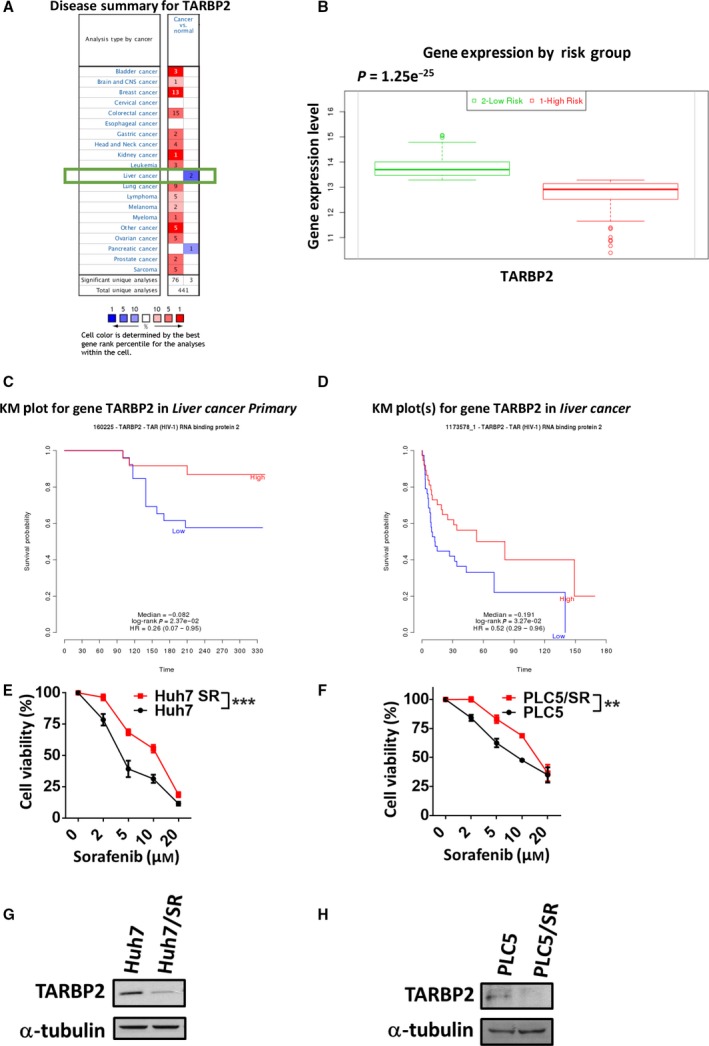
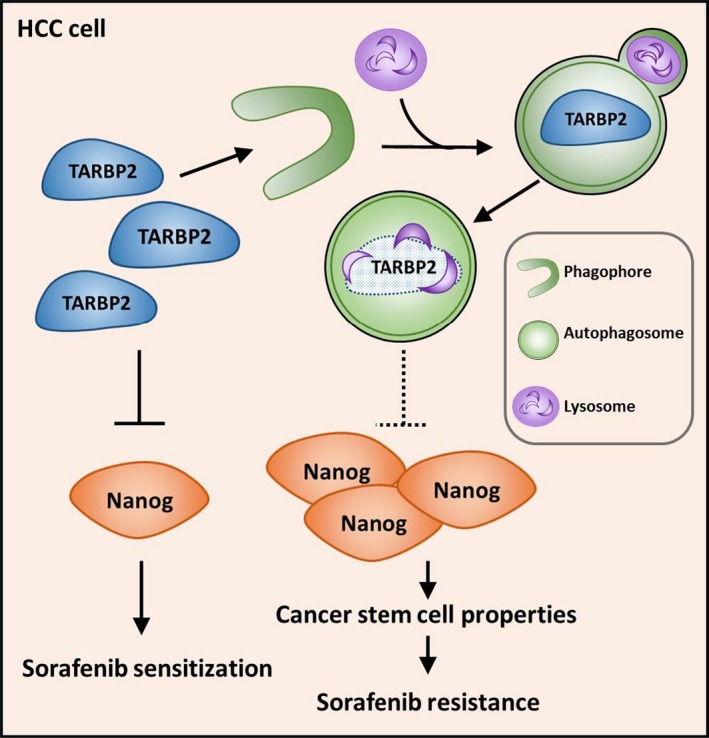
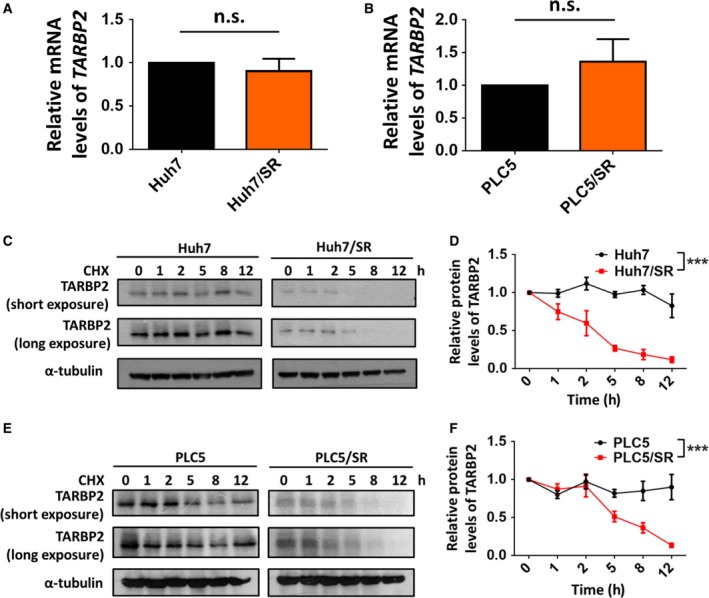
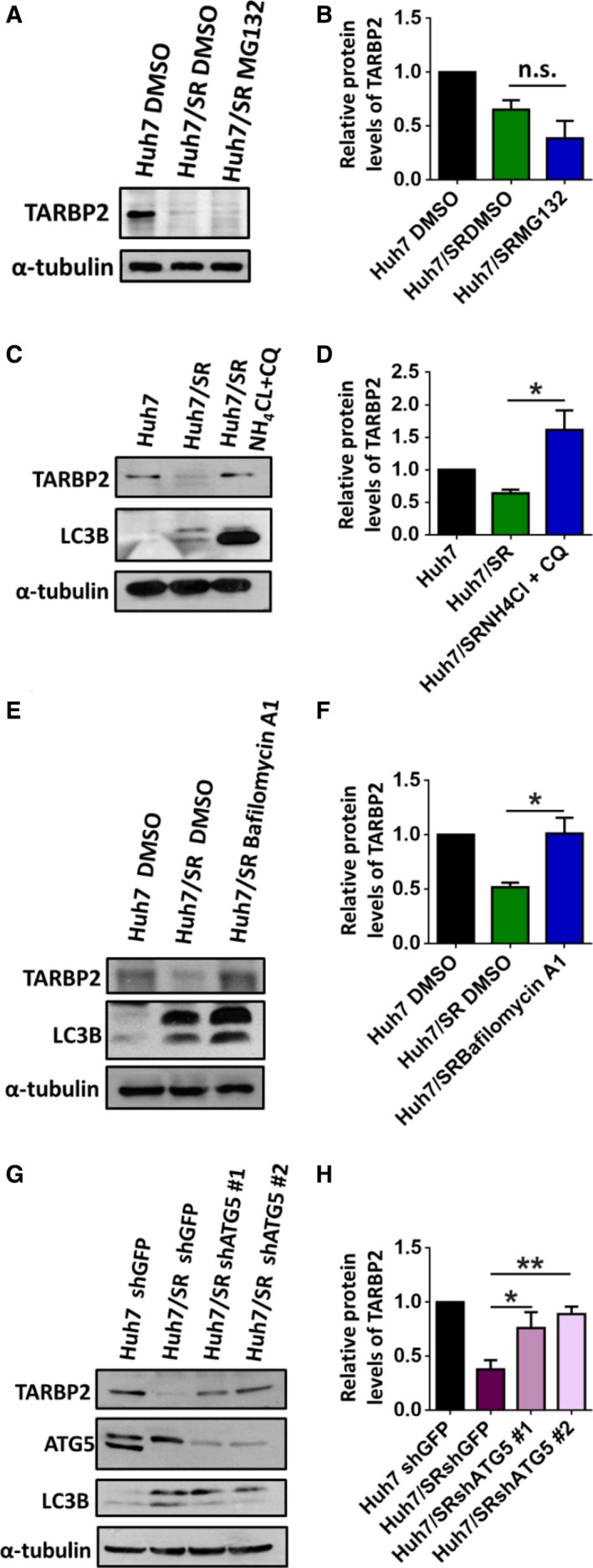
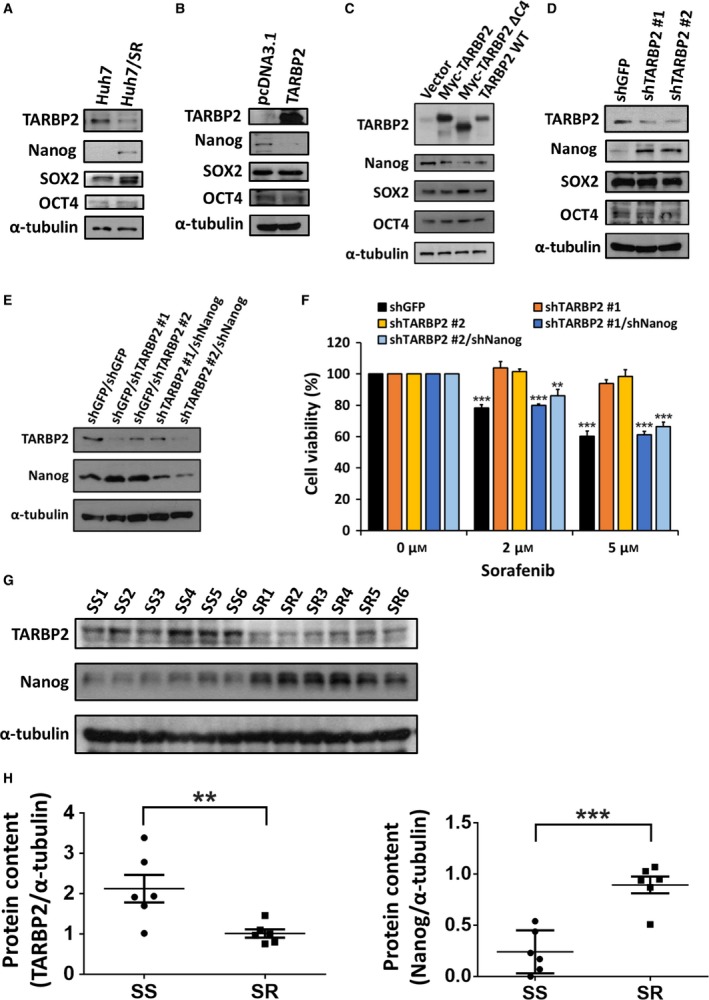
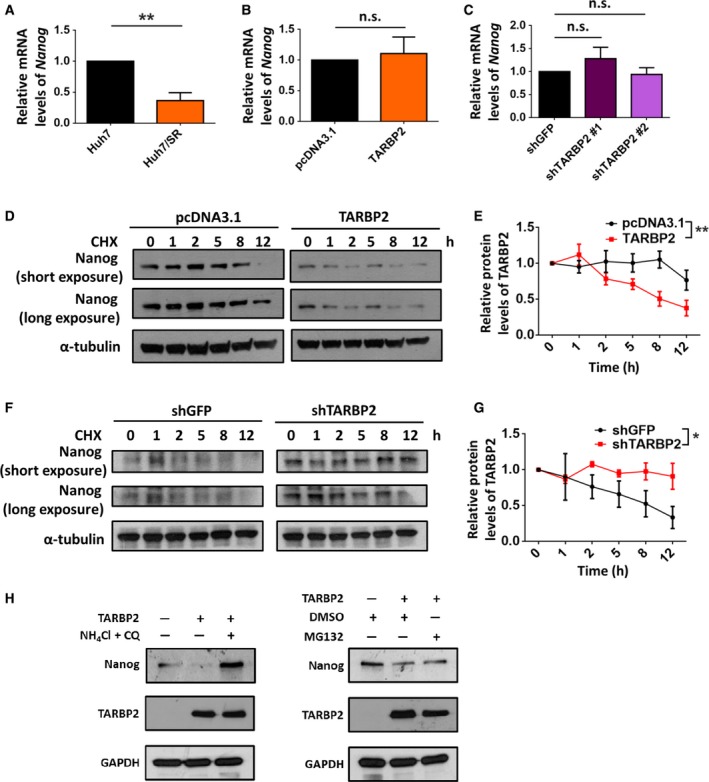
Hepatocellular carcinoma (HCC) is a lethal human malignancy and a leading cause of cancer-related death worldwide. Patients with HCC are often diagnosed at an advanced stage, and the prognosis is usually poor. The multikinase inhibitor sorafenib is the first-line treatment for patients with advanced HCC. However, cases of primary or acquired resistance to sorafenib have gradually increased, leading to a predicament in HCC therapy. Thus, it is critical to investigate the mechanism underlying sorafenib resistance. Transactivation response element RNA-binding protein 2 (TARBP2) is a multifaceted miRNA biogenesis factor that regulates cancer stem cell (CSC) properties. The tumorigenicity and drug resistance of cancer cells are often enhanced due to the acquisition of CSC features. However, the role of TARBP2 in sorafenib resistance in HCC remains unknown. Our results demonstrate that TARBP2 is significantly downregulated in sorafenib-resistant HCC cells. The TARBP2 protein was destabilized through autophagic-lysosomal proteolysis, thereby stabilizing the expression of the CSC marker protein Nanog, which facilitates sorafenib resistance in HCC cells. In summary, here we reveal a novel miRNA-independent role of TARBP2 in regulating sorafenib resistance in HCC cells.
肝细胞癌 (HCC) 是一种致命的人类恶性肿瘤,也是全球癌症相关死亡的主要原因。 HCC 患者通常在晚期被诊断出来,预后通常较差。多激酶抑制剂索拉非尼是晚期 HCC 患者的一线治疗药物。然而,索拉非尼原发性或获得性耐药的病例逐渐增加,导致 HCC 治疗陷入困境。因此,研究索拉非尼耐药的机制至关重要。反式激活反应元件 RNA 结合蛋白 2 (TARBP2) 是一种多功能 miRNA 生成因子,可调节癌症干细胞 (CSC) 特性。由于获得 CSC 特征,癌细胞的致瘤性和耐药性通常会增强。然而,TARBP2 在 HCC 中对索拉非尼耐药的作用尚不清楚。我们的研究结果表明,TARBP2 在索拉非尼耐药的 HCC 细胞中显著下调。TARBP2 蛋白通过自噬溶酶体蛋白水解而不稳定,从而稳定 CSC 标记蛋白 Nanog 的表达,促进 HCC 细胞对索拉非尼的耐药性。总之,我们在这里揭示了 TARBP2 在调节 HCC 细胞索拉非尼耐药中的一种新的 miRNA 非依赖性作用。