Women's Health Development Unit, Universiti Sains Malaysia - Kampus Kesihatan, Kubang Kerian, Kelantan, Malaysia.
Department of Family Medicine, Universiti Sains Malaysia - Kampus Kesihatan, Kubang Kerian, Kelantan, Malaysia
BMJ Open. 2022 Mar 30;12(3):e057132. doi: 10.1136/bmjopen-2021-057132.
To assess the prevalence, risk factors and psychological impact of infertility among females. This review summarises the available evidence, effect estimates and strength of statistical associations between infertility and its risk factors.
Systematic review and meta-analysis.
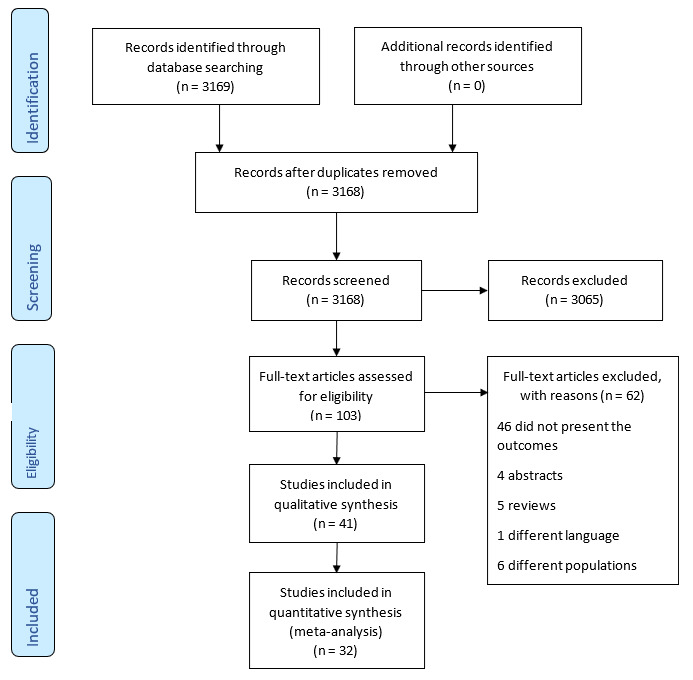
MEDLINE, CINAHL and ScienceDirect were searched through 23 January 2022.
The inclusion criteria involved studies that reported the psychological impact of infertility among women. We included cross-sectional, case-control and cohort designs, published in the English language, conducted in the community, and performed at health institution levels on prevalence, risk factors and psychological impact of infertility in women.
Two reviewers independently extracted and assess the quality of data using the Joanna Briggs Institute Meta-Analysis. The outcomes were assessed with random-effects model and reported as the OR with 95% CI using the Review Manager software.
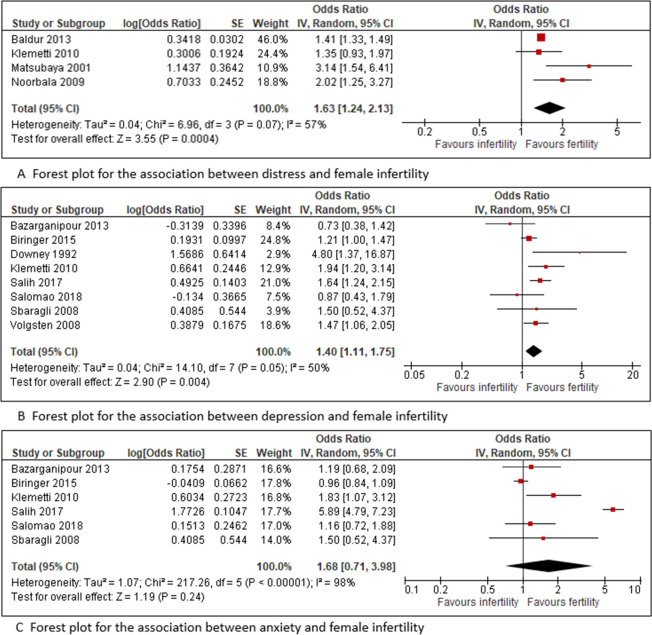
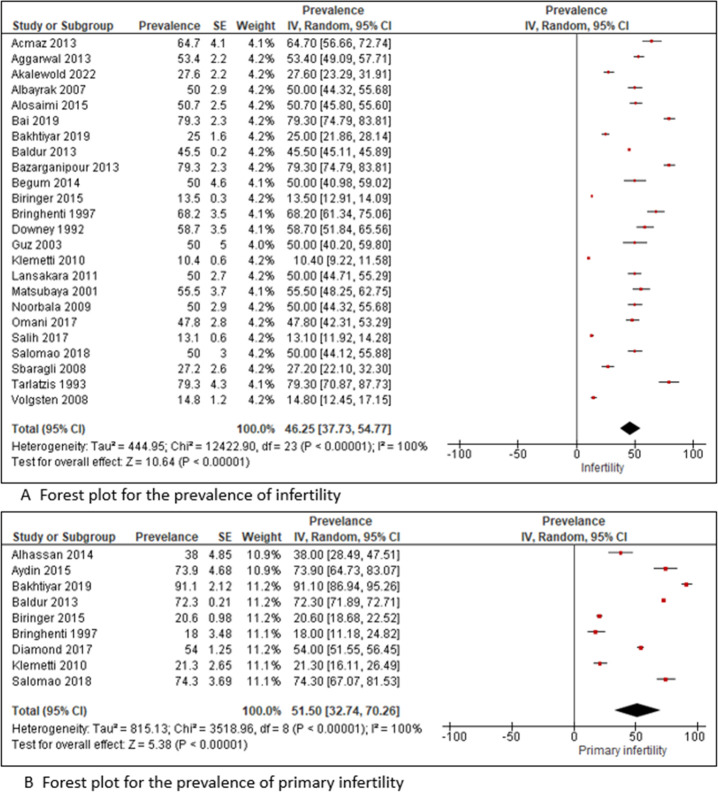
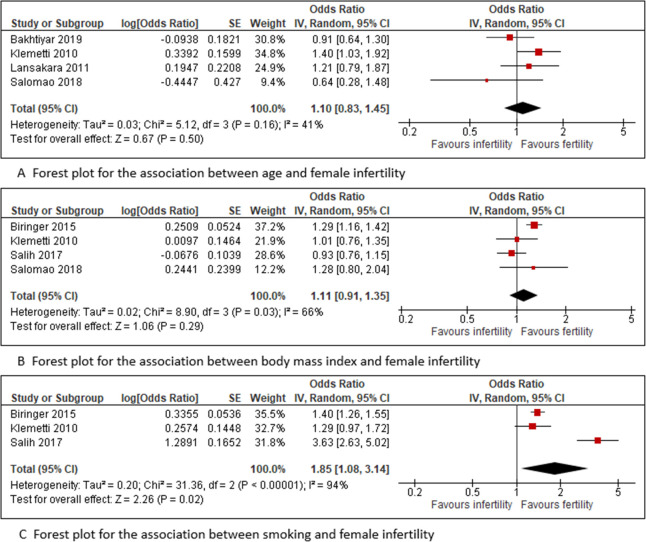
Thirty-two studies with low risk of bias involving 124 556 women were included. The findings indicated the overall pooled prevalence to be 46.25% and 51.5% for infertility and primary infertility, respectively. Smoking was significantly related to infertility, with the OR of 1.85 (95% CI 1.08 to 3.14) times higher than females who do not smoke. There was a statistical significance between infertility and psychological distress among females, with the OR of 1.63 (95% CI 1.24 to 2.13). A statistical significance was noted between depression and infertility among females, with the OR of 1.40 (95% CI 1.11 to 1.75) compared with those fertile.
The study results highlight an essential and increasing mental disorder among females associated with infertility and may be overlooked. Acknowledging the problem and providing positive, supportive measures to females with infertility ensure more positive outcomes during the therapeutic process. This review is limited by the differences in definitions, diagnostic cut points, study designs and source populations.
CRD42021226414.
评估女性不孕的患病率、风险因素和心理影响。本综述总结了现有证据,估计了不孕及其风险因素之间的统计学关联的效应量和强度。
系统综述和荟萃分析。
通过 MEDLINE、CINAHL 和 ScienceDirect 检索,截至 2022 年 1 月 23 日。
纳入的研究报告了女性不孕的心理影响。我们纳入了横断面、病例对照和队列设计,发表在英文,在社区进行,在卫生机构水平上针对女性不孕的患病率、风险因素和心理影响进行的研究。
两名评审员独立提取数据并使用 Joanna Briggs 研究所的荟萃分析评估数据质量。使用 Review Manager 软件,采用随机效应模型和报告 OR 及其 95%CI 的方法评估结果。
纳入了 32 项低偏倚风险研究,涉及 124556 名女性。研究结果表明,总体汇总患病率分别为不孕和原发性不孕的 46.25%和 51.5%。与不吸烟的女性相比,吸烟与不孕显著相关,OR 为 1.85(95%CI 1.08 至 3.14)倍。女性不孕与心理困扰之间存在统计学意义,OR 为 1.63(95%CI 1.24 至 2.13)。与生育能力正常的女性相比,女性抑郁与不孕之间存在统计学意义,OR 为 1.40(95%CI 1.11 至 1.75)。
研究结果突出了女性不孕与心理障碍之间的重要且日益增加的关联,可能被忽视。承认这个问题,并为不孕女性提供积极、支持性的措施,可确保在治疗过程中获得更积极的结果。本综述受到定义、诊断切点、研究设计和源人群差异的限制。
PROSPERO 注册号:CRD42021226414。