
早产儿与足月儿在 COVID-19 大流行限制期间的情绪和注意力缺陷/多动障碍症状。
Emotional and attention-deficit/hyperactivity disorder symptoms of preterm vs. full-term children during COVID-19 pandemic restrictions.
机构信息
CHU de Bordeaux, Pole de pediatrie, Place Amélie Raba Léon, F-33000, Bordeaux, France.
Univ. Bordeaux, Bordeaux, France.
出版信息
Pediatr Res. 2022 Dec;92(6):1749-1756. doi: 10.1038/s41390-022-02037-4. Epub 2022 Mar 30.
BACKGROUND
Preterm children are at higher risk of developing mental health problems than full-term children. Deterioration of children's mental health was observed during COVID-19 pandemic restrictive measures. Our study compared emotional and attention-deficit/hyperactivity disorder (ADHD) symptoms during school closure between preterm and full-term children.
METHODS
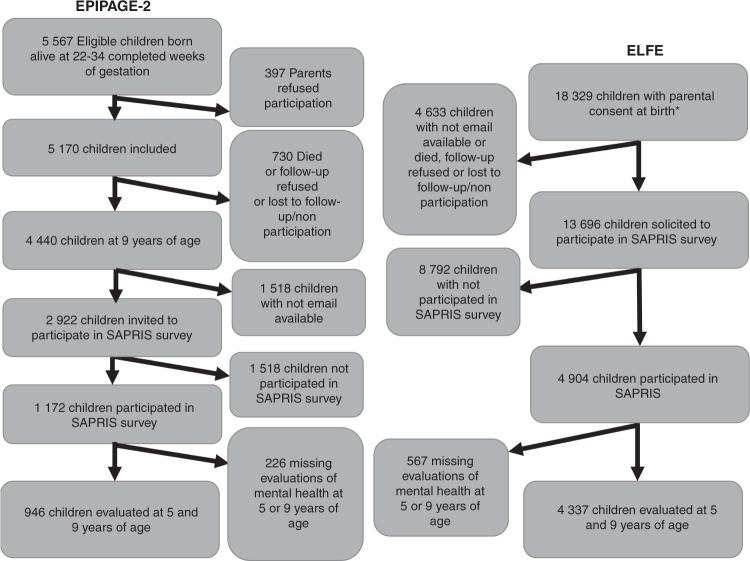
Data from two French birth cohorts-ELFE and EPIPAGE-2-were used. In 2011, infants born ≥22 weeks' gestation were recruited. Parents completed the Strengths and Difficulties Questionnaire when the children were 9 years old and experiencing school closure. Multivariate multinomial logistic regression models were used.
RESULTS
Subjects included 4164 full-term and 1119 preterm children. In univariate analyses, compared to full-term children: extremely and very preterm children more frequently had abnormal and borderline ADHD scores (odds ratio [OR] 1.86, 95% confidence interval [CI] 1.50-2.30, OR 1.42, 95% CI 1.08-1.85, respectively) and abnormal emotional scores (OR 1.86, 95% CI 1.43-2.40); moderate to late preterm children more often had abnormal ADHD scores (OR 1.33, 95% CI 1.01-1.78). The associations did not remain when previous symptoms at 5 years old were considered.
CONCLUSIONS
School closure during lockdown did not appear to increase the risk of mental health problems in preterm compared to full-term children.
IMPACT STATEMENT
Preterm children are at higher risk of developing mental health problems than full-term children. Deterioration in children's mental health was observed during COVID-19 pandemic restrictions. However, whether preterm children were a particularly vulnerable subgroup during school closure is unclear. In univariate analyses, extremely and very preterm children more often had abnormal and borderline ADHD symptoms and abnormal emotional symptom scores than full-term children. The associations did not remain significantly associated when previous symptoms were considered. Preterm compared to full-term children more often suffer from ADHD and emotional symptoms, but school closure during lockdown did not appear to increase this risk.
背景
早产儿患心理健康问题的风险高于足月儿。在 COVID-19 大流行限制措施期间,观察到儿童的心理健康恶化。我们的研究比较了学校关闭期间早产儿和足月儿的情绪和注意缺陷/多动障碍(ADHD)症状。
方法
使用来自法国两个出生队列-ELFE 和 EPIPAGE-2 的数据。在 2011 年,招募了胎龄≥22 周的婴儿。当孩子 9 岁且正在经历学校关闭时,父母完成了长处和困难问卷。使用多变量多项逻辑回归模型。
结果
受试者包括 4164 名足月儿和 1119 名早产儿。在单变量分析中,与足月儿相比:极早产儿和非常早产儿更常出现异常和边缘 ADHD 评分(优势比 [OR] 1.86,95%置信区间 [CI] 1.50-2.30,OR 1.42,95% CI 1.08-1.85)和异常情绪评分(OR 1.86,95% CI 1.43-2.40);中晚期早产儿更常出现异常 ADHD 评分(OR 1.33,95% CI 1.01-1.78)。当考虑到 5 岁时的先前症状时,这些关联不再存在。
结论
与足月儿相比,学校关闭期间锁定对早产儿的心理健康问题风险似乎没有增加。
影响说明
早产儿患心理健康问题的风险高于足月儿。在 COVID-19 大流行限制期间,观察到儿童的心理健康恶化。然而,在学校关闭期间,早产儿是否是一个特别脆弱的亚组尚不清楚。在单变量分析中,极早产儿和非常早产儿比足月儿更常出现异常和边缘 ADHD 症状和异常情绪症状评分。当考虑到先前的症状时,这些关联不再具有显著相关性。与足月儿相比,早产儿更常患有 ADHD 和情绪症状,但学校关闭期间锁定似乎并未增加这种风险。
 Zotero 插件