Mejia Maria C, Zoorob Roger, Levine Robert S, Huang Xiaofan, Hennekens Charles H
Department of Family and Community Medicine, Baylor College of Medicine, Houston, TX.
Charles E. Schmidt College of Medicine, Florida Atlantic University, Boca Raton, FL.
Ochsner J. 2022 Spring;22(1):48-60. doi: 10.31486/toj.21.0082.
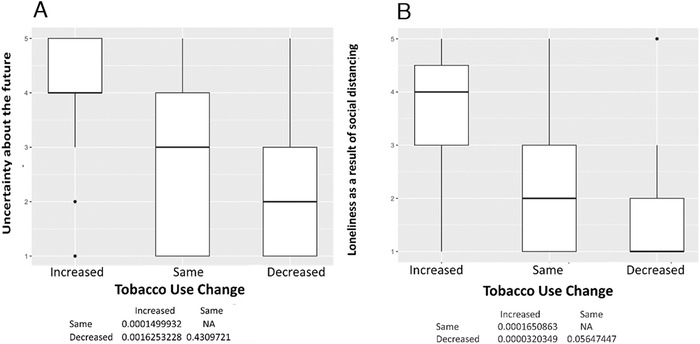
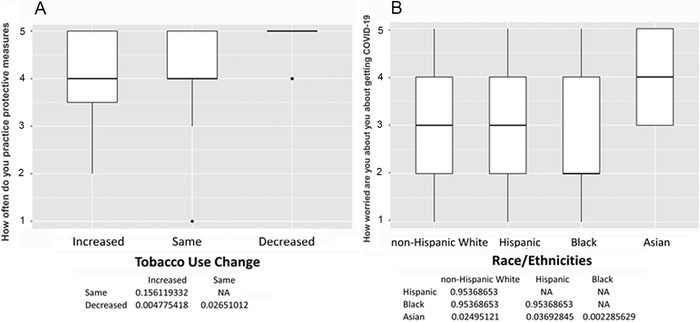
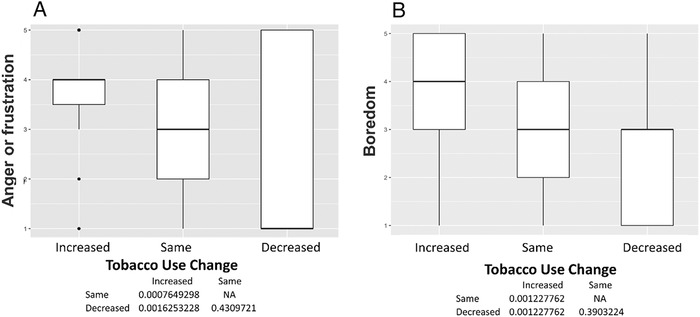
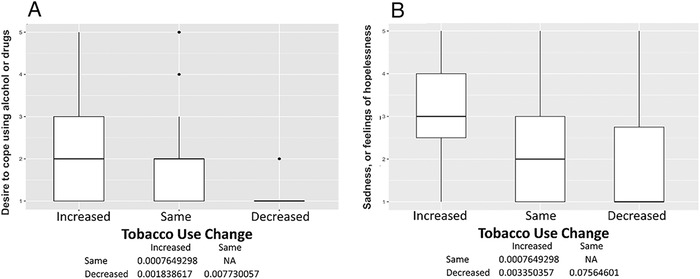
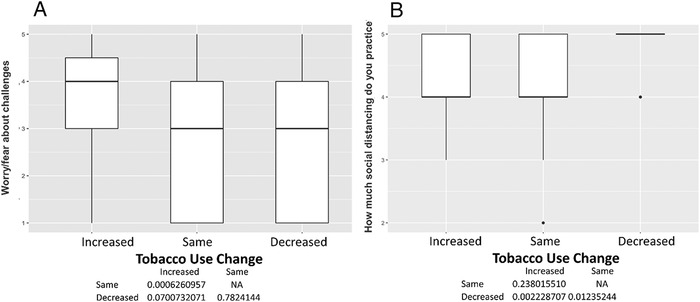
Coronavirus disease 2019 (COVID-19) produces a wide array of deleterious consequences, some of which are unintended. Data are sparse on whether, and if so, how, current cigarette smoking habits are affected by COVID-19. We describe changes to smoking habits and their correlates during the COVID-19 pandemic among participants in a tobacco cessation and lung cancer screening program. Between June and October 2020, we conducted a cross-sectional survey of a convenience sample of 150 participants in a lung cancer screening and tobacco cessation program. The survey consisted of 3 parts: (1) changes in tobacco use, (2) impact and coping strategies toward COVID-19, and (3) COVID-19 exposure and use of protective measures. Demographic variables included age, sex, race/ethnicity, and marital status. All 150 participants who were contacted agreed to participate in this cross-sectional survey. The statistically significant correlates of increased tobacco use were high uncertainty about the future (<0.001), loneliness because of social distancing or self-isolating (<0.001), anger or frustration with how the pandemic has disrupted daily life (<0.001), boredom resulting from inability to work or engage in regular daily activities/routines (<0.001), desire to cope using alcohol or drugs (=0.002), sadness or feelings of hopelessness (=0.003), and worry or fear about challenges to securing basic needs such as groceries or medication (<0.001). In contrast, those who smoked less were more likely to practice social distancing (=0.002) and use protective measures (=0.005). Among those who decreased or stopped smoking, correlates included greater use of protective measures for COVID-19, including social distancing and testing. These data may aid healthcare providers to identify and provide counsel to cigarette smokers at greater risks for increasing tobacco consumption during stresses such as COVID-19.
2019冠状病毒病(COVID-19)会产生一系列有害后果,其中一些是意想不到的。关于当前吸烟习惯是否受到COVID-19影响以及如果受到影响又是如何受到影响的数据很少。我们描述了在一个戒烟和肺癌筛查项目的参与者中,COVID-19大流行期间吸烟习惯的变化及其相关因素。2020年6月至10月期间,我们对一个肺癌筛查和戒烟项目的150名便利样本参与者进行了横断面调查。该调查包括三个部分:(1)烟草使用的变化,(2)对COVID-19的影响和应对策略,以及(3)COVID-19暴露和防护措施的使用。人口统计学变量包括年龄、性别、种族/民族和婚姻状况。所有被联系的150名参与者都同意参加这项横断面调查。烟草使用增加的统计学显著相关因素包括对未来的高度不确定性(<0.001)、因社交距离或自我隔离导致的孤独感(<0.001)、对大流行扰乱日常生活的愤怒或沮丧(<0.001)、因无法工作或参与日常常规活动而产生的无聊感(<0.001)、使用酒精或药物来应对的欲望(=0.002)、悲伤或绝望感(=0.003),以及对确保食品杂货或药物等基本需求面临挑战的担忧或恐惧(<0.001)。相比之下,吸烟较少的人更有可能采取社交距离措施(=0.002)和使用防护措施(=0.005)。在减少或戒烟的人群中,相关因素包括更多地使用针对COVID-19的防护措施,包括社交距离和检测。这些数据可能有助于医疗保健提供者识别在COVID-19等压力期间烟草消费增加风险较高的吸烟者,并为他们提供咨询。